Choosing CCTV cable by brand name or advertised distance alone can leave you with weak night-time images, intermittent video or cameras that repeatedly restart. By the end, you will be able to match coaxial, Siamese and Ethernet cable to the camera format, route, power demand and termination method, then specify what to verify before ordering.
Key takeaways
- Choose RG59 for suitable 75-ohm analogue or HD-over-coax camera runs.
- Choose RG6 when longer coaxial routes need lower signal loss.
- Keep CCTV cable away from mains wiring and protect it from moisture.
- Use compatible BNC connectors, correct crimping and strain relief.
Which CCTV cable matches your camera system?
Choose RG59 for a 75-ohm analogue, AHD, TVI or CVI camera run when the distance and manufacturer’s limit suit its smaller coaxial construction. Choose RG6 for a longer coaxial route or where its lower signal loss justifies the larger cable and different termination effort.
Check the camera, DVR, BNC connectors and cable for 75-ohm compatibility; 50-ohm RF cable can cause reflections, ringing and lost detail.
| Option | What it means | When it applies |
|---|---|---|
| RG59 | 75-ohm coaxial video cable | Standard analogue or HD-over-coax runs within the specified distance |
| RG6 | Thicker, lower-loss 75-ohm coaxial cable | Longer coaxial runs, if the camera and DVR support the format at that distance |
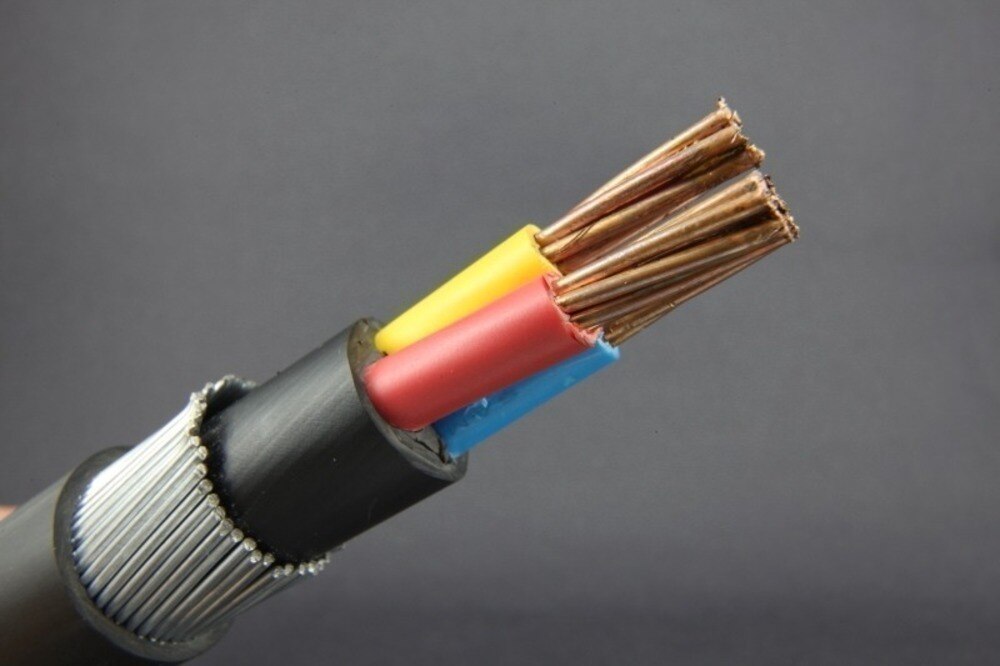
| Siamese cable | Coaxial video cable plus a separate DC power pair | Installations where one cable route must carry video and camera power |
| Ethernet | Twisted-pair network cable | IP cameras connected to a switch, network recorder or PoE equipment |
Siamese cable simplifies routing, but inspect its two specifications separately: adequate video distance does not guarantee acceptable power voltage at the camera. For IP and PoE, use solid-copper category cable; CCA has higher resistance, greater voltage drop and more heating.
The cctv cable benefits disappear when the cable cannot deliver power reliably, so verify conductor material, category, shielding and jacket rating before ordering.
How do resolution, distance and cable specifications affect performance?
Match the cable to the camera’s transmission method, output format and receiver—not to the advertised distance alone. Analogue, AHD, TVI and CVI systems require a 75-ohm coaxial path from camera to DVR; IP cameras require balanced-pair Ethernet to a network switch or PoE device.
| Format | Cable match | Main performance limit |
|---|---|---|
| Analogue | 75-ohm CCTV coaxial, often RG59 or RG6 | Attenuation, interference and impedance mismatch |
| AHD, TVI or CVI | 75-ohm coaxial rated for the specific HD format | Resolution, receiver sensitivity and format-specific distance |
| IP | Cat5e or Cat6 Ethernet | Network bandwidth, link length and PoE voltage drop |
Use a 75-ohm cable, BNC connectors and DVR inputs throughout. Substituting ordinary 50-ohm RF cable creates reflections, ghosting, ringing and loss of fine detail. A distance rating for one HD-over-coax format does not guarantee the same result for another.
Siamese cable separates video and power inside one jacket, but assess both paths independently. The coax may carry the signal while a thin power pair causes voltage drop and camera resets. Check conductor size, copper construction, shield coverage, dielectric, jacket rating and the camera’s voltage and current demand.
Measure the complete route, including risers, bends, service loops and termination allowances. For CCTV cable benefits in Ahmedabad, ask a Polycab cable dealer for the exact product code, batch marking and current datasheet; “Polycab security cable” alone does not identify coaxial, Siamese or Ethernet construction.
How should you plan the route, environment and power supply?
A 12-volt camera that works by day can reset after its infrared LEDs switch on. Measure the complete installed route, not the floor-to-floor distance: include vertical risers, bends, tray runs, service loops and termination allowances.
- Add enough cable for each service loop without leaving coils beside mains conductors.
- Keep CCTV cable away from mains, fluorescent-ballast wiring, lifts, pumps and motor cables; cross unavoidable power runs at right angles.
- Use conduit or trunking where cable faces crushing, abrasion, rodents, moisture or outdoor sunlight. Select a jacket rated for the installation environment.
- Record the final route length and cable identification for future replacement.
Check the Siamese cable’s video and power specifications separately. For a 12-volt camera, voltage drop depends on camera current, route length and the resistance of both outgoing and return power conductors.
Infrared cameras, PTZ cameras and other high-demand units need a larger power conductor or a shorter run; calculate the load at night, not only during daytime testing.
Do not accept copper-clad aluminium as an equivalent substitute for solid copper. Its higher resistance increases voltage drop and heating, especially on long or high-power Ethernet or PoE runs. Confirm conductor material, conductor size, cable category, shielding and datasheet test details before buying.
A listing for Polycab security cable in Ahmedabad is not a technical specification: match the exact product code to the route, environment and power demand.
Which connectors and terminations prevent intermittent CCTV faults?
A reel can meet its specification and still produce intermittent video at the connector. A badly stripped coax, loose crimp, braid strands touching the centre conductor, or excessive flex at the BNC can cause colour noise, ghosting, dropouts or total signal loss.
| Termination | Effect on the signal | Main failure to prevent |
|---|---|---|
| BNC crimp | Maintains the 75-ohm coaxial path when correctly sized and compressed | Loose crimp, wrong connector size or braid touching the centre pin |
| BNC compression | Gives a consistent seal and mechanical grip for fixed installations | Incomplete compression or cable not fully seated |
| Ethernet termination | Preserves balanced pairs for IP video and PoE | Excessive untwisting, incorrect T568A/T568B pairing or poor strain relief |
Use compression fittings where the cable will remain fixed and exposed to movement or moisture. Use a crimp connector only with the manufacturer’s specified stripping dimensions and matching cable diameter. A 75-ohm camera system needs compatible cable, BNCs, DVR inputs and terminations; a 50-ohm RF connector creates reflections and high-frequency loss.
Before closing each connector, check:
- The centre conductor reaches the contact without bending.
- No braid strand touches the centre conductor.
- The connector matches the cable’s diameter and construction.
- The cable does not bend sharply at the termination.
- Ethernet pairs remain twisted close to the plug.
Ask a polycab cctv cable supplier for connector compatibility with the exact cable code, not merely a product described as security cable.
What should you verify before buying CCTV cable in Ahmedabad?
A reel is not verified by brand name alone. Match the planned camera type and route to the cable’s printed identity and current datasheet; “Polycab security cable in Ahmedabad” does not specify whether you need coaxial, Siamese, or Ethernet.
1. Ask for the exact product code, conductor material and size, coaxial impedance, or Ethernet category and solid-copper construction. Reject copper-clad aluminium as a like-for-like PoE substitute because its higher resistance increases voltage drop and heating.
2. Check shield coverage, dielectric, jacket rating, operating environment and connector compatibility. For Siamese cable, verify the video core and DC pair separately; acceptable video distance does not prove acceptable power delivery.
3. Compare the packing length with the measured route, adding risers, bends, tray detours, service loops and termination allowances. Treat an advertised transmission distance as format-specific, not as a universal guarantee.
4. Record the product code, batch marking, meter marks, reel length, invoice number and datasheet revision. Photograph the reel label before installation so a future replacement can match the original cable.
A Polycab CCTV cable dealer in Ahmedabad or Polycab CCTV cable supplier should let you reconcile the delivered reel with its invoice and documentation. Prabhat Cables Pvt. Ltd is useful to a buyer when that traceable product-and-document check is completed before the cable enters the site.
Related products
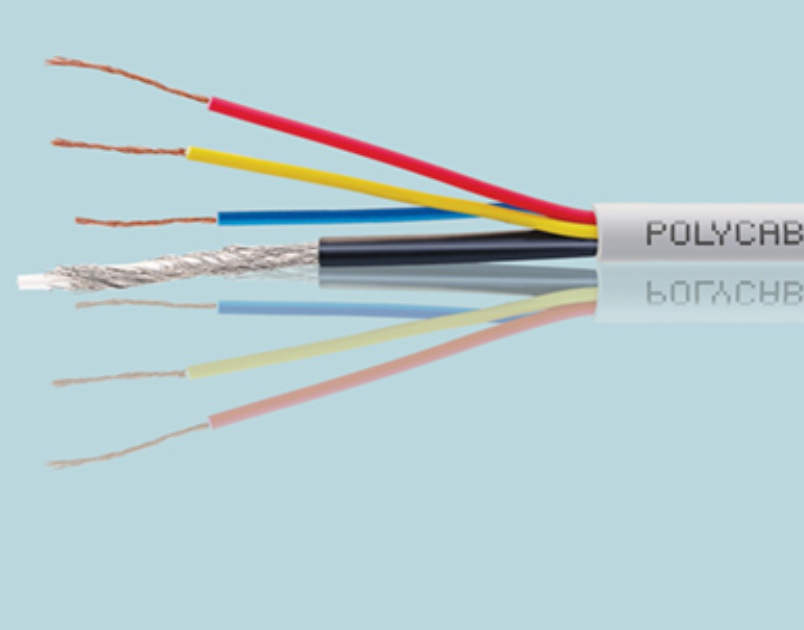 | Polycab CCTV Cables Polycab CCTV cables are specifically designed for use in closed-circuit television (CCTV) systems, offering reliable video signal transmission and... View product → |
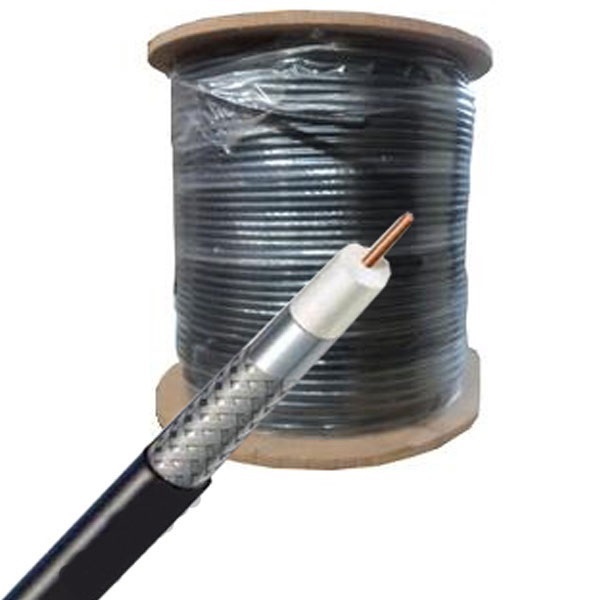 | Polycab Co-Axial Cables Polycab coaxial cable is a type of cable designed for transmitting high-frequency electrical signals, commonly used in cable television (CATV) and... View product → |
Frequently asked questions
Which CCTV cable matches your camera system?
Use 75-ohm RG59 for analogue, AHD, TVI or CVI cameras when the manufacturer’s distance limit suits the run. Select RG6 for a longer coaxial route when its lower signal loss justifies the larger cable and different termination effort. IP cameras require the cable type specified for the network link, such as Cat5e or Cat6.
How do resolution, distance and cable specifications affect performance?
Higher-resolution signals and longer runs leave less margin for cable loss, impedance mismatch and interference. Compare the camera manufacturer’s maximum distance with the cable’s impedance, conductor size, shielding, attenuation and bandwidth specifications before buying.
How should you plan the route, environment and power supply?
Measure the complete route, add service loops and keep signal cable separated from power cables, motors and fluorescent-light wiring. Use outdoor-rated, UV-resistant or waterproof cable where the route is exposed. Check voltage drop, current demand and the camera’s power method before selecting the power supply.
Which connectors and terminations prevent intermittent CCTV faults?
Match BNC connectors to the cable diameter and construction, then use the correct compression or crimping tool. Ensure the shield, centre conductor and connector body make secure contact, protect outdoor joins from water and add strain relief so cable movement cannot loosen the termination.
What should you verify before buying CCTV cable in Ahmedabad?
Confirm the cable type, 75-ohm impedance where coaxial cable is required, conductor material, shielding, jacket rating, length, batch details and compatibility with your camera system. Ask a Polycab CCTV cable supplier for product documentation and buy through an authorised Polycab cable dealer in Ahmedabad when authenticity and traceability matter.