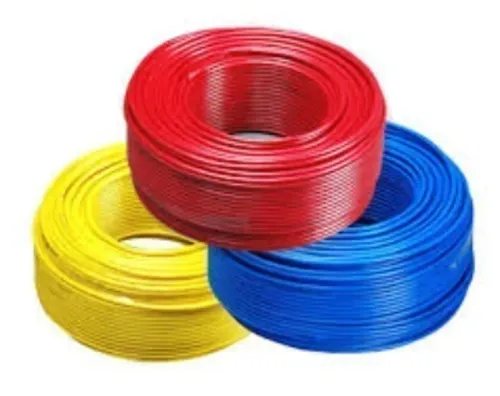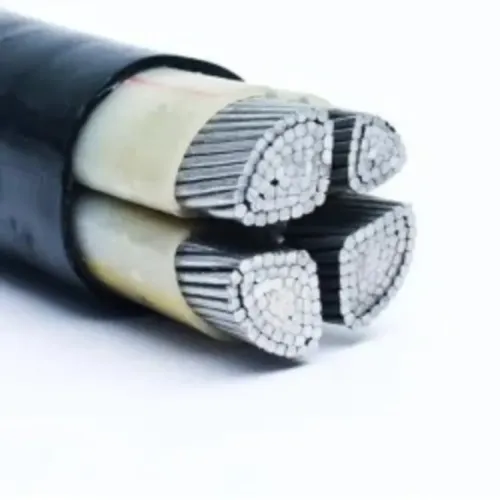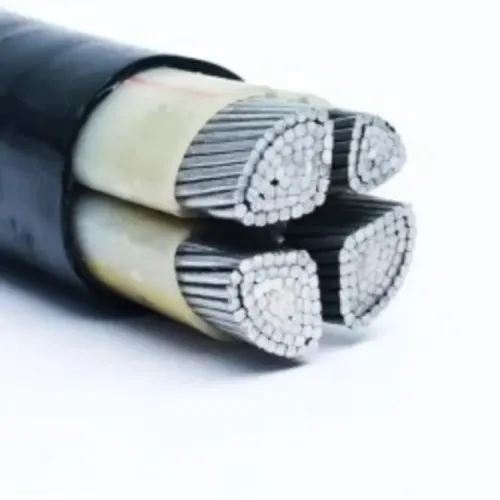
Jelly filling helps limit moisture movement along a telephone cable, but it does not prove that the cable will restrict flame spread. You will be able to match the exact cable construction, installation location and documented fire test before approving it for a flame-retardant requirement.
Key takeaways
- Jelly filling blocks moisture; it does not prove flame retardancy.
- Match cable construction to the location and fire objective.
- Ask for the named fire test and supporting manufacturer documents.
- Confirm conductor size, pair count, route and termination requirements.
Jelly filling does not establish flame retardancy
No. A Polycab jelly-filled telephone cable does not automatically qualify as a flame-retardant telephone cable. Petroleum jelly is a water-blocking compound that limits longitudinal moisture migration; flame-retardant insulation or sheathing is designed and tested for fire behaviour. The product name is not a fire rating.
Before approval, confirm the construction of the exact catalogue item:
- Solid copper conductor material and diameter
- Number of pairs or cores
- Insulation material
- Jelly-filled layer
- Outer sheath material
- Marking printed on the sheath
A product described only as “Polycab jelly filled telephone cable” must not be presented as a “Polycab flame retardant cable” unless the manufacturer’s datasheet, cable marking or test certificate confirms that claim. Request documents for the exact catalogue number and supplied construction, not a generic brochure or invoice description.
The cable can be electrically suitable and resistant to moisture while lacking evidence of flame-propagation performance. That distinction matters inside buildings, where the specification may require a named test such as IEC 60332. A jelly-filled layer does not prove that the insulation or sheath passed it.
If the sheath marking identifies only the cable type, conductor arrangement or manufacturer, treat it as construction information—not fire-performance evidence. Approve the cable for a flame-retardant application only when the required test result is documented for that exact product.
Match the cable to the installation location and fire objective
A flame-retardant requirement arises when fire could travel along a cable route, especially in a cable tray, building riser, shaft or ceiling void covered by the building fire schedule. A flame-retardant telephone cable addresses flame propagation; jelly filling addresses water migration, not fire behaviour.
| Route | Main consequence | Cable direction |
|---|---|---|
| Outdoor route | Sun, water and mechanical damage govern selection | Standard jelly-filled outdoor cable, if its sheath, joint sealing and installation rating fit |
| Duct or underground route | Water can travel along the cable; burial can add crushing or impact loads | Jelly-filled cable with documented duct or burial suitability |
| Cable tray | Several cables can feed a spreading flame | Flame-retardant telephone cable with the specified bundled-cable test |
| Building riser or shaft | A vertical route can carry flame between floors | The fire-schedule-approved flame-retardant construction |
| Ceiling void | Hidden cable can spread fire before detection | The specified flame test; use LSZH where smoke and gases are also controlled |
| Occupied indoor space or escape route | Dense smoke and corrosive gases threaten people and equipment | LSZH communication cable where specified, supported by smoke and gas evidence |
These claims are not interchangeable. IEC 60332 covers flame propagation, IEC 60754 covers gases evolved during combustion, IEC 61034 covers smoke density, and IEC 60331 covers circuit integrity during fire exposure.
Do not choose jelly-filled cable for an occupied indoor route with an LSZH specification, a riser governed by a fire schedule, or an emergency circuit that must keep operating during a fire. A Polycab flame-retardant cable still does not become LSZH or fire-resistant without the matching evidence.
Ask for the named fire test, not an unsupported FR label
Request the exact manufacturer datasheet and test documentation for the catalogue number and supplied construction. A label such as “FR” on an invoice does not prove that a Polycab flame retardant cable for telephone wiring meets the project requirement.
| Installation or claim | Evidence to request | What it proves |
|---|---|---|
| Single insulated cable | IEC 60332-1-2 result | Vertical insulated-wire or cable flame-propagation performance |
| Several cables in a tray, shaft or bundle | Applicable IEC 60332-3 test, including IEC 60332-3-24 Category C where specified | Flame spread performance for grouped cables |
| Flame-retardant telephone cable | Result, test method, category, manufacturer identification, cable marking and document revision | Traceable evidence for the exact product |
| LSZH requirement | IEC 60754 and IEC 61034 documentation | Halogen-acid gas and smoke-density performance |
| Fire-survival requirement | IEC 60331 documentation | Circuit integrity during fire exposure |
Passing IEC 60332-1-2 does not demonstrate how several cables behave together in a tray, shaft or bundle. Compare the stated test and category with the tender’s required standard and actual installation arrangement.
An IEC 60332 result does not automatically establish LSZH performance under IEC 60754 or IEC 61034, and it does not establish fire survival under IEC 60331. Approve the proposed product only when the documents identify the exact catalogue item and supplied construction, not merely a generic “FR” description.
Confirm electrical and practical suitability alongside fire performance
Select one exact catalogue item against the installation, not against the words “jelly filled” or “FR”. A Polycab jelly filled telephone cable must document both jelly filling and the required fire performance; never combine those properties by assumption.
- Specify the conductor diameter or cross-sectional area, pair count, insulation material and sheath material.
- State whether the route is indoor or outdoor, and whether installation is by direct burial or through a duct.
- Confirm the operating voltage and termination method, including the compatible block, connector or splice hardware.
- Name the required flame test, such as IEC 60332-1-2 for a single cable or the applicable IEC 60332-3 category for bundled cables.
- Obtain one datasheet and test document covering the supplied catalogue number, construction and fire result.
“Copper” and “FR” do not prove telephone-system suitability. Check conductor resistance, insulation resistance, capacitance, capacitance unbalance and pair balance against the analogue telephone, intercom, alarm or data-over-pair requirement.
Jelly compound may need removal from conductors before termination or splicing, and incompatible hardware can create unreliable contacts. A cable that passes a fire test can still be inconvenient for a clean indoor telephone-panel installation. Conversely, a moisture-resistant cable can fail the specified fire requirement. Outdoor routes still need correctly sealed joints and protected terminations.
Approve the cable only when its electrical values, construction, termination method and named flame test all match the installation.
Use a document-led procurement checklist before placing the order
Do not place the order until the supplier proves that the exact Polycab jelly-filled telephone cable has both properties you need: jelly filling and documented flame performance. A “polycab flame retardant cable for telephone wiring” enquiry must identify the route, pair requirement and specified fire test, not merely request an FR cable.
- Request the exact Polycab catalogue number, manufacturer name and identification, batch number, and the manufacturer’s current datasheet.
- Match the document to the supplied cable: conductor material and size, pair or core count, insulation material, sheath material, and visible jelly-filled and flame-retardant markings.
- Record the applicable Indian or international standard, then request the flame-test report stating the IEC 60332 method and category. For bundled routes, check whether IEC 60332-3-24 Category C is required.
- Request LSZH evidence under IEC 60754 or IEC 61034, or fire-resistance evidence under IEC 60331, when the project specification names those properties. An IEC 60332 result alone proves neither.
- Obtain routine-test or batch documentation and compare every document with the route, pair requirement, termination hardware and building fire schedule before accepting a substitution.
A dealer’s description or invoice wording alone does not prove flame retardancy. A telephone cable dealer in Vadodara, including Prabhat Cables Pvt. Ltd, adds value by obtaining the exact documents and confirming the supplied variant rather than accepting “FR cable” as proof.
Safe quotation language: “Polycab jelly-filled telephone cable; flame-retardant variant available only where the specified product datasheet and test documentation confirm the required flame test.” Approve it only when both properties are documented for the exact installation.
Related product
 | Polycab Jelly Filled Telephone Cables Polycab Jelly Filled Telephone Cables Polycab Jelly Filled Telephone Cables are designed for outdoor telephone communication, offering protection against moisture, rodents, and other... View product → |
Frequently asked questions
Does jelly filling make a telephone cable flame retardant?
No. Petroleum jelly limits longitudinal moisture migration, while flame-retardant insulation or sheathing must be designed and tested for fire behaviour.
How should you choose a flame-retardant telephone cable?
Match the cable to the installation location and fire objective, then identify the exact fire test required for that route.
What should you ask for instead of an unsupported FR label?
Ask for the named fire test, the applicable standard, and manufacturer documentation identifying the tested cable construction.
What else must you confirm before ordering?
Check conductor size, pair count, voltage and transmission needs, cable route, termination method, environmental exposure and available product documents.