A screened cable only works as intended when its screen type, electrical construction, route, and termination match the interference problem. By the end, you will be able to identify the right cable category, prepare a technically complete quotation request, and check whether a Bengaluru supplier can support the installation rather than merely offer a drum labelled “screened.”
Key takeaways
- A cable screen reduces interference; it does not correct poor cable routing.
- Bond the screen continuously and terminate it according to the equipment manufacturer’s instructions.
- Check drive, motor, instrumentation and data-system compatibility before ordering cable.
- Ask a Polycab distributor for construction, voltage, temperature and test details in writing.
What a cable screen does—and what it does not replace
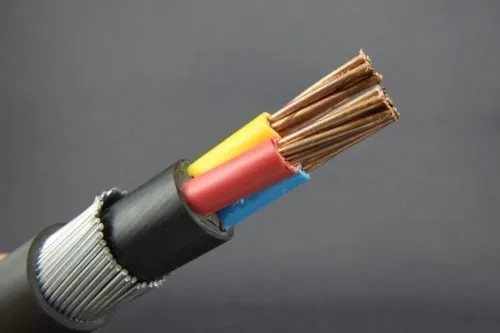
A metallic screen gives unwanted electrical energy a conductive path around signal or power cores, reducing voltage induced by changing magnetic and electric fields. A motor, VFD, transformer, contactor, or parallel power circuit can couple noise into a nearby conductor; the screen works only when continuous and correctly bonded. It does not fix poor routing.
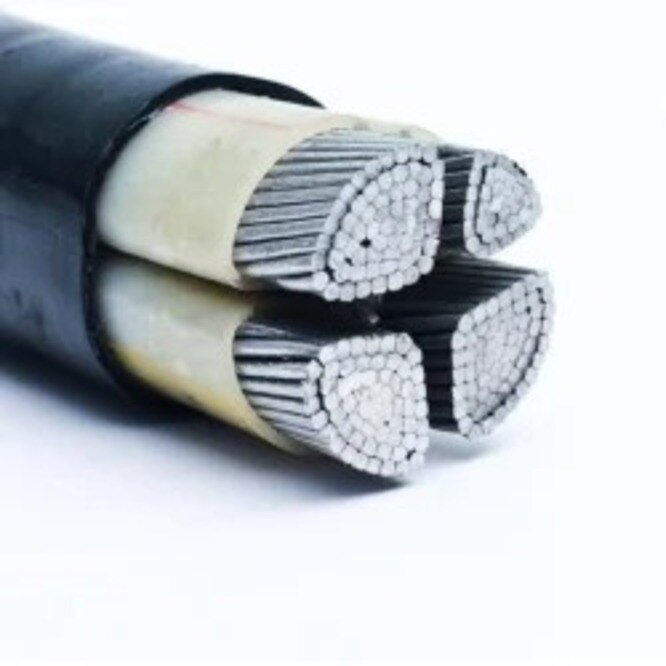
Screened power cable handles noisy motor or VFD energy; shielded instrumentation cable protects low-level measurements; coaxial cable uses a controlled screen around one signal path. Unscreened power cable has no such barrier. Armoured cable adds mechanical protection, and steel-wire armour may carry fault current, but it is not automatically an EMI screen.
An overall screen cannot replace individually screened pairs for thermocouples, analogue instrumentation, or multi-channel control, where pair-to-pair crosstalk matters. A drain wire helps terminate foil; it is neither protective earth nor signal return.
| Option | Coverage/flexibility | Screen impedance/fault current | Termination difficulty/cost |
|---|---|---|---|
| Copper tape | Near-continuous; moderate flexibility | Low; capacity depends on area | Straightforward; moderate |
| Copper wire braid | Partial; flexible | Low; limited fault capacity | Easy; moderate |
| Concentric copper wires | High; flexible | Low; good fault capacity | Moderate; higher |
| Aluminium-polyester tape | Near-continuous; flexible | Good high-frequency coverage; low fault capacity | Drain required; low |
| Copper wire screen | High; flexible | Low; good fault capacity | Moderate; higher |
| Foil-and-braid | Near-continuous; flexible | Very low; design-dependent fault capacity | Harder; highest |
For a Polycab screened cable in Bengaluru, match the construction to current, voltage, bending radius, and termination method—not the word screened alone.
How to decide whether you need a screened cable
Decide from the circuit, the noise environment, the route, and the consequence of failure—not from the word “screened” in a catalogue. Classify the circuit as VFD or motor power, instrumentation, control, data or communication, audio, or another signal type.
Record these facts before searching “polycab cable dealer near me”:
- List nearby motors, VFDs, transformers, contactors, switching power supplies, and parallel power circuits.
- Map the route, including parallel-run distance and total cable length.
- State the consequence of interference: false trips, unstable readings, communication errors, or unsafe control action.
- Specify conductor material and class, conductor size, core or pair count, insulation, sheath, voltage rating, current capacity, ambient temperature, installation method, flame or smoke performance, and minimum bending radius.
- State whether you need individually screened pairs or one overall screen. Add capacitance per metre, characteristic impedance where relevant, and drain-wire material and cross-sectional area.
Screening is justified when noise exposure and failure consequences are high. It is not always the best first remedy.
| Option | Prefer it when | Limitation |
|---|---|---|
| Screened cable | Noise couples into a sensitive circuit | Poor routing can defeat it |
| Segregation or right-angle crossing | Power and signal routes can be separated | Needs tray or panel space |
| Twisted pairs | Balanced low-level signals need noise rejection | Not a replacement for every screen |
| Conduit or a different cable category | The environment or signal protocol demands containment or controlled impedance | Adds installation or specification constraints |
Never approve a replacement because its core count matches. Different capacitance or impedance can alter attenuation, rise time, readings, or communication reliability.
How routing, earthing, and terminations preserve screen performance
Connect the screen according to the equipment manual and site earthing design: one-end bonding suits selected low-frequency ground-loop conditions, while both-end bonding usually provides stronger high-frequency EMC performance. A floating, broken, or poorly bonded screen can act as an antenna and increase interference instead of reducing it.
- Separate screened signal cables from VFD output, motor, contactor, and transformer cables; avoid long parallel runs.
- Cross noisy circuits at right angles where possible, and maintain separation through panels, trays, and cable entries.
- Use cable glands, EMC glands, or 360-degree screen clamps that make a wide, low-impedance contact. Terminate foil screens with the specified drain wire; it is not a protective-earth conductor or signal return.
- Use termination kits and jointing kits that preserve screen overlap and conductive continuity. Reconnecting only the copper cores leaves the shield open.
- Keep pigtails short. A long pigtail adds inductance and can defeat high-frequency shielding even when a continuity tester shows a connection.
- Ask a polycab distributor to confirm the screen construction, drain-wire material and area, gland compatibility, and jointing method before ordering.
Bonding choice depends on the circuit and earthing arrangement:
| Bonding arrangement | Main benefit | Main risk or condition |
|---|---|---|
| One end only | Limits low-frequency circulating current | The unbonded end can reduce high-frequency EMC performance |
| Both ends | Provides a lower-impedance high-frequency return path | Requires suitable equipment bonding and site earthing design |
| Unintended floating end | None | Noise couples onto the cable and interference can worsen |
Checking compatibility with drives, motors, instrumentation, and data systems
Every screened cable is not suitable for every screened application. A VFD or servo-motor cable carries high dv/dt and screen current; an analogue, thermocouple, encoder, control-panel, or data cable carries signal information that different electrical properties can corrupt.
| Application | Check before approval | Failure if mismatched |
|---|---|---|
| VFD or servo motor | Phase arrangement, protective-earth conductors, voltage grade, symmetrical construction, screen current capability, motor length | Reflected-wave stress, overheating, EMC faults |
| Analogue or thermocouple | Individually screened pairs, capacitance per metre, drain-wire material and area | Drift, noise, false readings |
| Encoder or control panel | Pair layout, capacitance, separation from drive wiring | Pulse errors or unstable inputs |
| Data system | Characteristic impedance, attenuation, pair screening and capacitance | Retransmissions, slow edges, lost communication |
For drive circuits, follow the drive manufacturer’s installation manual. Confirm permitted motor length and bond the screen with a low-inductance connection at both drive and motor ends; a screened instrumentation cable is not an automatic substitute for a screened VFD cable.
For instrumentation and communication, specify the exact pair construction, characteristic impedance and attenuation where the protocol requires them. Keep these cables away from VFD output wiring, including through panels and trays.
For a polycab screened cable in bengaluru, complete this inspection before energising:
- Confirm sheath marking and part number.
- Inspect glands, clamps and screen terminations.
- Test screen continuity across panels and joints.
- Verify both intended bonds.
- Check for damage from pulling tension, moisture, crushing or a bend radius below the manufacturer’s limit.
What to ask a Polycab dealer before buying in Bengaluru
A search for “polycab cable dealer near me screened cable in bengaluru” is only useful after you define the application: VFD or motor power, instrumentation, control, data, communication, or audio. “Screened cable” is not one universal construction, and matching only the core count can produce an unsafe replacement.
Send this quotation brief to any polycab cable dealer near me:
- Quote the exact Polycab part number, application, voltage grade, conductor material and class, conductor size, core or pair arrangement, screen material and coverage, drain-wire size and material, insulation, sheath, operating temperature, minimum bending radius, flame or smoke performance, and drum or coil length.
- Attach the current technical datasheet, manufacturing batch identification, drum-label photographs, sequential length markings, applicable routine or type-test documents, and written confirmation that the stock is new, intact, and correctly stored.
- State whether the quotation comes from an authorised channel partner or polycab distributor. Check current manufacturer or channel documentation; a seller calling itself a polycab dealer or merely listing the brand has not proved authorisation.
- Confirm the quoted construction is suitable for your drive, motor, instrumentation, or communication equipment, including termination requirements and screen-current capability.
Prabhat Cables Pvt. Ltd, a Bengaluru-based Polycab supplier, can help discuss the application, check the exact construction, and confirm availability before purchase.
At delivery, inspect for crushed drums, damaged or open cable ends, moisture exposure, inconsistent sheath printing, missing markings, and a cable length that matches the order. Reject cable with a bend radius already forced below the manufacturer’s limit.
Related product
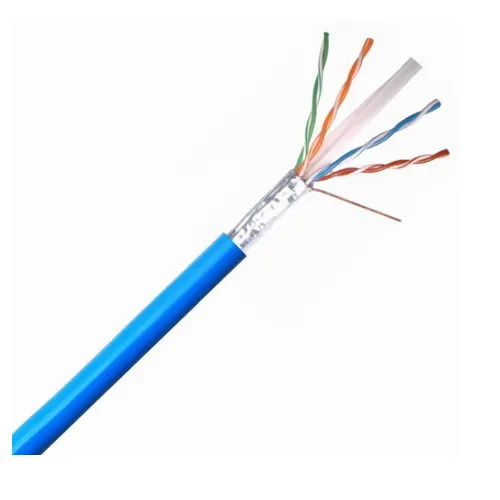 | Polycab Screened Cables Polycab screened cables are power cables designed with a metallic shield (screen) to minimize electromagnetic interference (EMI) and ensure signal... View product → |
Frequently asked questions
What does a screened cable screen do?
A metallic screen provides a conductive path around the cores, reducing interference coupled from VFDs, motors, transformers, contactors and nearby power circuits. It does not replace correct routing or grounding.
When do you need a screened cable?
Choose screened cable when changing magnetic or electric fields could disrupt signal integrity, control commands, instrumentation readings or data communication. Compare the installation environment, cable length, switching equipment and required signal performance.
How should a screened cable be routed and earthed?
Keep screened cables separated from power cables, avoid unnecessary parallel runs, maintain screen continuity, and bond the screen as specified for the equipment and system. Use suitable glands, clamps and terminations rather than leaving the screen loose.
What should you ask a Polycab dealer in Bengaluru before buying?
Ask for the cable construction, screen material and coverage, conductor size, voltage rating, temperature range, bending limits, applicable test documents, available drum length and compatibility with your drive, motor, instrumentation or data system.