An HT cable order cannot be specified accurately with the words “11 kV cable” or “Polycab HT cable” alone. You need to match voltage designation, conductor and screen design, installation conditions, Indian standards, test documents and drum traceability before selecting a dealer or approving delivery.
Key takeaways
- Match the cable to your system’s 3.3 kV to 66 kV voltage designation.
- Give route length, fault duty and voltage-drop limits before requesting quotes.
- Verify manufacturer-channel status, drum number, batch details and cable markings.
- Schedule insulation, sheath and high-voltage tests before statutory energisation approval.
Start with the voltage designation and cable construction
Ask a polycab ht cable dealer in hyderabad to quote the voltage class named by your distribution system and utility connection: 3.3 kV, 6.6 kV, 11 kV, 22 kV, 33 kV or 66 kV. Do not select a grade from a catalogue label.
For an 11 kV system, state the required U0/U/Um designation, such as 6.35/11 kV; system earthing and fault-clearing time determine the insulation level.
| Voltage class | Applicable standard | Use it when |
|---|---|---|
| 3.3–33 kV | IS 7098 Part 2 | The utility connection and distribution system specify this class |
| Above 33–66 kV | IS 7098 Part 3 | The utility connection specifies 66 kV or another class above 33 kV |
| Up to 1.1 kV | IS 7098 Part 1 | Low-voltage circuits only, not an HT order |
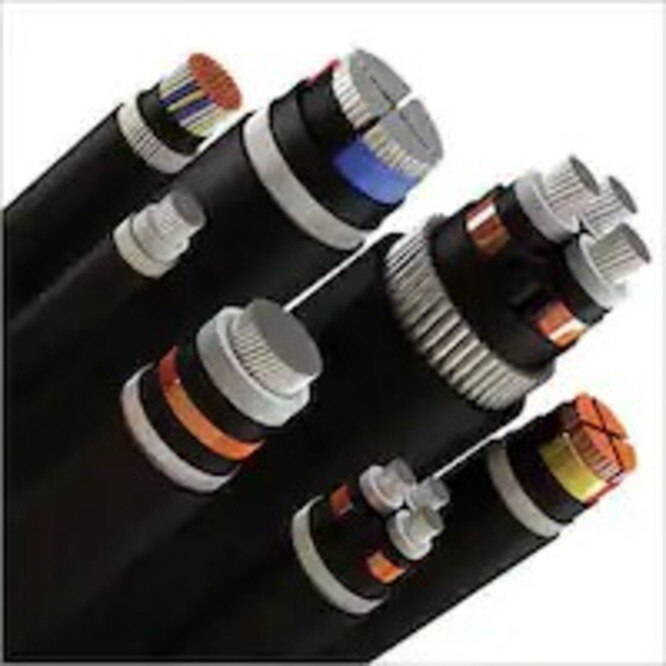
State the construction: single-core or three-core; copper or aluminium conductor; XLPE insulation; metallic screen cross-section; armoured or unarmoured design; and sheath material. For single-core cables, include non-magnetic accessories and the required trefoil or flat formation.
Attach the approved utility specification, single-line diagram, cable schedule and approved drawing to the enquiry. “HT cable” or “polycab ht cable supplier” is not enough: the quotation must identify the voltage designation, conductor, cores, screen size, sheath, standard and test documentation.
Calculate size from the route, fault duty and voltage drop
Size the conductor for the worst operating condition, not for the catalogue alone. Check continuous current, permissible voltage drop, prospective short-circuit current and permitted fault duration, then calculate ampacity for the actual Hyderabad route.
Include these inputs in the calculation:
- Burial depth, soil thermal resistivity, seasonal soil moisture and ground temperature for buried cable; dry soil retains more heat than moist soil and can reduce the safe rating.
- Ambient temperature, grouping, route length, trefoil or flat formation, duct use, and trench or tray arrangement.
- Sheath-bonding method, because circulating sheath currents change cable losses and ampacity.
- Voltage-drop and thermal results for copper and aluminium. Copper permits a smaller conductor and simpler termination; aluminium reduces weight and material cost but needs compatible lugs, oxide-control practice and controlled tightening torque.
- For single-core cables, non-magnetic glands, cleats, trays and conduits, with the specified trefoil or flat spacing. Ferromagnetic accessories can heat under alternating magnetic fields.
Check the metallic screen or sheath separately against the calculated single-line-to-earth fault current and earth-fault duration; the conductor short-circuit rating does not prove screen adequacy. For long runs, add maximum pulling tension, minimum bending radius, drum payout method and planned joint locations to the design package.
A search for “polycab cable dealer ht cable in hyderabad” does not replace route-specific engineering. Ask for the calculation sheet and assumptions before accepting a quotation.
Give the supplier a complete enquiry before comparing quotations
Give a polycab ht cable supplier a complete technical enquiry before you compare prices. Include these fields in the request:
| Quotation item | State in the enquiry | Why it matters |
|---|---|---|
| Project cable | Voltage designation, conductor material, conductor cross-sectional area and number of cores | Prevents quotations for the wrong electrical duty |
| Construction | Screen or sheath cross-section, armour requirement and sheath material | Defines fault-current capacity, protection and installation compatibility |
| Compliance | Cable standard, such as IS 7098 Part 2 or Part 3 | Establishes the required design and test basis |
| Quantity | Total route length, required drum length and number of drums | Allows realistic joint planning and handling |
| Installation | Direct burial, duct, trench, tray or riser; maximum pulling tension and minimum bending radius | Prevents cable damage during payout and installation |
| Completion | Termination type, jointing requirements, delivery location in Hyderabad and required delivery date | Exposes accessory, labour and scheduling needs |
Ask the supplier to identify every drum length, not only the total metre figure. Joint locations, transport planning and installation handling depend on individual drums.
Request the manufacturer’s datasheet, a routine-test certificate for each manufactured drum, drum schedule, packing list, warranty terms and applicable type-test evidence when the project specification requires it. A generic brochure or cable-family type-test report does not replace a routine certificate tied to the supplied drum.
Make the quotation state whether it includes:
- Accessories and transportation
- Unloading and taxes
- Termination kits and testing
A technical response matters more than a “polycab dealer near me” search result.
Check manufacturer-channel status and delivered-drum identity
Verify the dealer’s HT authorisation and each delivered drum independently; a search for polycab dealer near me is not proof of manufacturer-channel status.
1. Request current manufacturer-channel confirmation for the Polycab HT cable category and the order period. A reseller’s stock of Polycab wires or low-voltage products does not establish authority to supply HT cable. Record the GST tax invoice, manufacturer markings, sealed original packing, batch details and drum numbers.
2. Before dispatch, obtain the approved datasheet, drum schedule, packing list, warranty terms, a routine-test certificate for every manufactured drum and any required type-test evidence. Prabhat Cables Pvt. Ltd can help a Hyderabad project obtain channel and traceability documents, but the project team must verify them against its own purchase records.
3. On arrival, photograph every drum label before opening it. Compare the voltage grade, conductor material, number of cores, conductor size, armour, sheath, cable length, metre marks, manufacturing or batch details and seal condition with the purchase order and approved cable schedule.
4. Match each routine-test certificate to the same drum number, manufacturing batch, cable length, requested standard and cable markings. A certificate naming only a product family, or a type-test report without drum-level evidence, is not sufficient.
5. Quarantine the drum if its seal is damaged, metre marks are missing, markings conflict, the length is unexplainedly short or the certificate cannot be traced to that drum. Do not release it for installation until the manufacturer resolves the discrepancy in writing.
Related product
 | Polycab HT Cables Polycab HT (High Tension) cables are designed for the transmission and distribution of electrical power at medium to high voltage levels, typically... View product → |
Plan installation tests and statutory approval before energisation
Delivery proves that the cable arrived; it does not prove that the installed circuit is safe to energise. Treat acceptance as a controlled procedure:
1. Reconcile the installed route with the approved drawing, cable schedule, utility specification and termination details. Record route length, joint locations, drum numbers and any approved deviation before payout.
2. Inspect each drum, seal and cable end for damage, moisture or deformation. During installation, control pulling tension, minimum bend radius and drum payout; use the specified rollers and cleats. Maintain the designed trefoil or flat spacing for single-core circuits.
3. Check armour continuity, screen bonding and earthing at every designed point. Confirm that the metallic screen or sheath cross-section and bonding arrangement withstand the calculated single-line-to-earth fault current for the earth-fault duration in the protection study.
4. Have the responsible electrical testing team complete the project test schedule. Include termination checks, insulation-resistance and sheath checks, phase identification, cable tests, protection-operation checks and earthing verification. Investigate every failed or abnormal result before retesting.
5. Allow programme time for the applicable Central Electricity Authority safety requirements and Telangana electrical-inspector or CEIG procedures. Assemble the approved datasheet, drum-level routine certificates, drum records, test results, as-built route drawings and warranty documents.
Energise only after the utility, consultant or statutory authority has accepted the required records and the project team has closed every installation defect.
Frequently asked questions
Which HT cable voltage designation should you request?
Request the class matching your distribution system and utility connection: 3.3 kV, 6.6 kV, 11 kV, 22 kV, 33 kV or 66 kV. Do not choose from a catalogue label alone.
What information does a supplier need to size an HT cable?
Provide the route length and layout, operating voltage, load current, installation method, ambient and soil conditions, fault level and duration, voltage-drop limit, number of circuits and termination requirements.
How can you verify an HT cable quotation and delivered drum?
Ask for manufacturer-channel evidence, then match the delivered drum’s manufacturer name, cable type, voltage class, conductor size, drum number, batch or lot details, length, manufacturing date and test documentation against the quotation.
Which checks must happen before energising an HT cable?
Plan route and installation inspections plus insulation-resistance, sheath-integrity, continuity, phasing and approved high-voltage or withstand tests. Obtain the required utility and statutory approval before energisation.