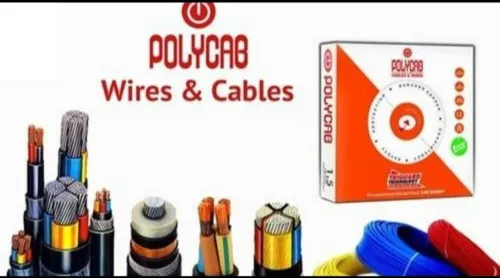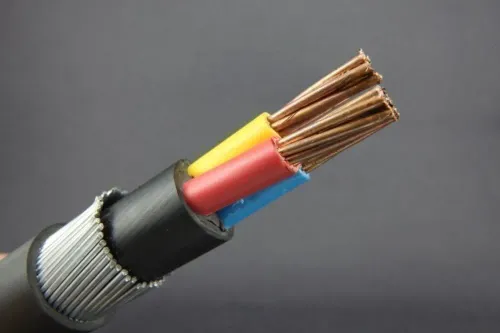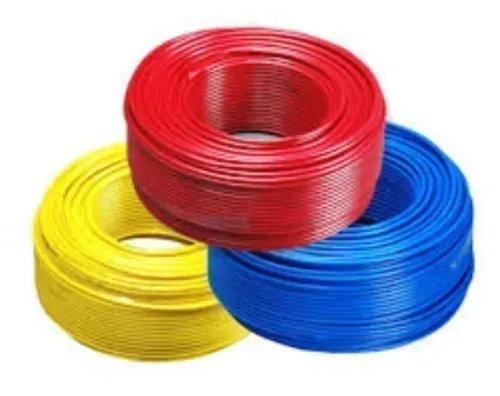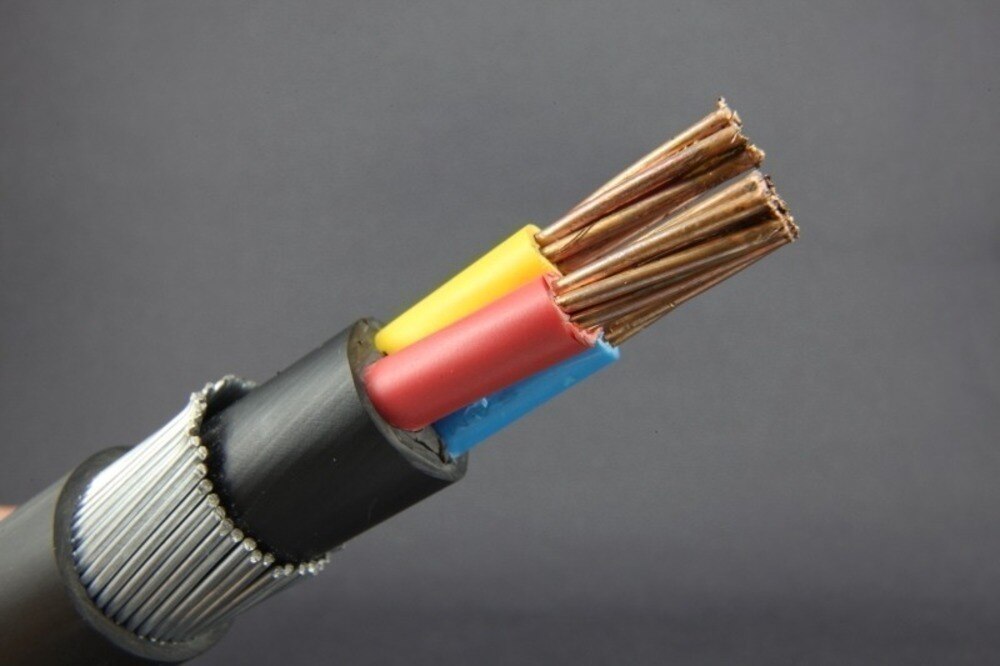
A flame-retardant cable can limit ignition and flame spread, but it does not promise that a circuit will keep operating through a fire. By the end, you will be able to match the cable’s fire behaviour, electrical construction, installation environment and documentation to the actual infrastructure requirement.
Key takeaways
- FR cable limits flame spread but does not preserve circuit operation during fire.
- Match voltage, conductor size, insulation, installation method and route conditions.
- Choose fire-resistant cable when the circuit must operate during a fire.
- Approve every batch against markings, standards, test reports and purchase specifications.
What does flame retardant mean on a Polycab cable?
A flame-retardant cable resists ignition and limits flame propagation; it does not make an installation fireproof or guarantee circuit operation during a fire. A conventional FR or FRLS cable can stop working once fire damages its insulation and conductor.
| Option | Meaning | What it addresses |
|---|---|---|
| FR | Flame-retardant construction | Ignition resistance and limited flame spread |
| FRLS | Generally PVC-based, with reduced flame spread and smoke | Flame and smoke control |
| LSZH | Low smoke with reduced halogen-acid-gas emission | Smoke and corrosive-gas control |
| Fire-resistant | Built to withstand fire for a stated period | Continued operation under fire exposure |
| Circuit-integrity cable | Tested system construction, including cable and support method | Maintaining a specified circuit function |
A polycab flame retardant cable for infrastructure contractors in mumbai is therefore not one universal choice. The circuit function determines the specification: ordinary distribution may need FR, while fire pumps, alarms, smoke extraction and emergency lighting can require fire-resistant or circuit-integrity cable.
Check the declared tests rather than treating “FR” or “low smoke” as a complete fire rating. Ask for:
- Flame-propagation test and category under the specified IEC 60332 requirement
- Smoke-emission test result
- Halogen-acid-gas emission result where LSZH performance is required
- Group-flame test evidence for bundled vertical runs or large tray installations
A product labelled only polycab flame retardant cable may pass a single-cable test yet fail the project’s bundled-installation requirement. Choose the cable for tested behaviour and required circuit survival, not its label alone.
How do you check whether the cable fits the electrical route?
Check route fit in sequence: system voltage, circuit load, conductor size, installation method and actual route length must all agree.
1. Confirm the voltage grade and design current, then size the conductor for ampacity. Derate the catalogue rating for ambient temperature, grouping, conduit or tray arrangement, soil or duct thermal conditions, and restricted heat dissipation in congested vertical routes.
2. Calculate voltage drop over the actual one-way length using conductor material, load power factor and, for pumps, lifts or motors, starting current. A cable can pass the thermal check yet deliver inadequate starting voltage.
3. Check short-circuit withstand against prospective fault current and protective-device clearing time, including the adiabatic withstand calculation and earthing arrangement. FR, FRLS and LSZH labels do not prove fault withstand.
4. Check the physical route before approval: minimum bending radius, pulling tension and space for installation and termination.
5. Select the sheath separately from the conductor. Confirm protection against moisture, wet ducts, UV, oil, construction chemicals and mechanical impact.
| Hazard | Route condition | Verify |
|---|---|---|
| Water | Wet duct or basement | Moisture-resistant sheath and sealing |
| Sun or chemicals | Outdoor, oily or treated areas | UV, oil and chemical compatibility |
| Heat | Congested riser or duct | Heat dissipation and temperature rating |
Choose copper or aluminium after the calculations. Aluminium requires compatible lugs or bi-metal connectors, prepared contact surfaces and the specified tightening torque; copper-only lugs or guesswork at the terminal can create high-resistance joints and overheating.
When is flame retardancy the wrong performance requirement?
Ordinary flame-retardant LT cable suits standard distribution only when the project specification, voltage, load and route support it.
Do not use it for fire pumps, smoke extraction, fire alarms, emergency lighting, evacuation systems or other life-safety circuits unless the design accepts its performance; these circuits can require fire-resistant or circuit-integrity cable with a stated survival duration.
| Option | Flame behaviour | Smoke and gas | Electrical and physical role | Termination, availability and cost |
|---|---|---|---|---|
| Standard PVC | Basic insulation; flame spread depends on construction | More smoke and corrosive gas in fire | LT distribution where specified | Simple, widely available and lowest installed cost |
| FRLS | Limits flame spread and smoke; not fire survival | Reduced smoke; PVC can emit halogen acid gas | LT power rating remains the datasheet value | Familiar terminations, common supply and moderate cost |
| LSZH | Limits flame spread by the specified construction | Low smoke and low halogen-acid gas | Chosen for occupied or sensitive spaces | Requires compatible glands and accessories; higher cost |
| XLPE | Insulation choice, not a flame-survival claim | Sheath determines smoke and gas behaviour | Higher insulation temperature and power-cable applications | Requires correct joints and terminations; cost varies |
| Armoured | Armour does not make insulation fire-resistant | Depends on insulation and sheath | Mechanical protection against impact and burial damage | Larger glands, harder installation and higher labour |
| Fire-survival | Maintains circuit integrity for the declared duration | Test construction controls fire performance | Fire pumps and life-safety circuits | Specialist accessories, limited availability and highest installed cost |
LSZH addresses smoke and halogen gas; XLPE addresses insulation and temperature rating; armour addresses mechanical protection. None substitutes for another property. Reject a polycab flame retardant cable for HT transmission, hazardous areas, high-temperature routes, direct burial without the specified construction, continuously wet locations, low-smoke-zero-halogen zones, or any circuit with a required fire-survival time.
Which standards, markings and data must you verify?
Start with the standard, not the word “flame-retardant.” For PVC-insulated low-voltage building cables, verify the applicable IS 694 construction and rating up to and including 1,100 V. For 1.1 kV XLPE power cable, verify the relevant IS 7098 Part 1 designation; do not substitute an IS 694 building wire.
Match the quotation, datasheet, certificate and drum label for:
- Applicable IS or IEC standard, voltage designation, conductor material and class, and nominal cross-sectional area.
- Insulation and sheath material, metre marking, batch number, manufacturing date and other traceability details.
- Declared flame-spread test, smoke test and halogen-acid-gas result where the project specification requires them.
| Marking or document | What it establishes | What it does not establish |
|---|---|---|
| FR or FRLS test declaration | Flame spread and, for FRLS, reduced smoke performance | Fire survival or circuit continuity |
| LSZH declaration | Reduced smoke and halogen-acid-gas emission | Correct voltage, ampacity or data performance |
| CPR marking and Euroclass file | European Construction Products Regulation classification | Compliance without the exact accompanying documentation |
CPR marking matters only where a European project requires Construction Products Regulation classification. Demand the exact Euroclass documentation, not a logo alone.
Treat communications cable separately. A Polycab coaxial cable is not assessed like a power cable. For a 75-ohm RG6 or RG11 system, ask a Polycab coaxial cable dealer in Mumbai for attenuation at the operating frequency, shielding effectiveness, return loss, connector compatibility and bend radius.
Fire rating does not replace impedance, pair geometry, bandwidth, shielding or EMC requirements for alarm, CCTV, data and access-control links.
How should an infrastructure contractor buy and approve the cable?
Do not order “flame retardant cable” as a complete specification. Put the following details in the purchase request:
- Exact Polycab product code and construction; voltage grade; conductor metal and class; nominal cross-sectional area; insulation and sheath type; and the required flame-spread, smoke or halogen-acid-gas test.
- Drum length, metre marking, batch number and manufacturing date.
- Datasheet, routine or batch test certificate, applicable IS/IEC standard and project approval documents.
At delivery, reconcile the quotation, drum label and documents line by line:
| Requested | Drum and documents | Reject or investigate |
|---|---|---|
| Product code and construction | Same code and construction | Reject FR substituted by FRLS, LSZH or another construction |
| Voltage, metal, class and size | Matching markings | Hold for engineering approval |
| Drum length and metre marking | Packing length and continuous marking agree | Investigate short or partial drums |
| Batch, date and certificates | Traceable to the invoice | Hold untraceable stock |
Check the seal, label quality and batch traceability. Independently confirm the seller’s current channel status with the manufacturer, retain the tax invoice and investigate relabelled stock or an unusually low quotation. A partial drum needs a verified remaining length and traceable label before installation.
For contractors comparing a Polycab dealer in Mumbai or Polycab cable supplier in Mumbai, Prabhat Cables Pvt. Ltd can help identify genuine product documentation and a construction matched to the approved specification.
Polycab flame-retardant cable is right only when tested fire behaviour, electrical rating, route protection and circuit function match the design; the brand or FR label alone is not approval.
Frequently asked questions
What does flame retardant mean on a Polycab cable?
It means the cable resists ignition and limits flame propagation. It does not make the installation fireproof or guarantee circuit operation during a fire.
How do you check whether the cable fits the electrical route?
Compare the cable’s rated voltage, conductor size, insulation, current capacity, installation method, ambient temperature, grouping and route conditions with the project design.
When is flame retardancy the wrong performance requirement?
Use a fire-resistant or circuit-integrity cable when an emergency circuit must continue operating during fire exposure, such as fire pumps, alarms or emergency lighting.
Which standards, markings and data must you verify?
Check the cable designation, voltage rating, conductor material and size, insulation type, manufacturer markings, applicable IS or IEC standard, batch details and test documentation.
How should an infrastructure contractor buy and approve the cable?
Issue a detailed cable schedule, buy through an authorised Polycab dealer or supplier, inspect drum markings and seals, match batch documents, and record approval before installation.