An HT cable purchase can fail before installation if the voltage grade, conductor construction, test records, drum length or accessories do not match the project. You will learn how to define the cable correctly, verify an authorised supply channel and compare the technical and logistical details that determine whether the order is fit for service.
Key takeaways
- State voltage grade, conductor size, core count and installation conditions.
- Request the datasheet, routine test report and drum-specific traceability records.
- Confirm the dealer’s authorisation and inspect seals, labels and batch details.
- Plan drum lengths, joints, terminations and storage before delivery.
Define the HT Cable Before You Request a Quote
“HT cable,” “11 kV cable” and “Polycab high tension cable” are not complete specifications. In India, HT usually means XLPE-insulated power cable from 3.3 kV to 33 kV, but the exact voltage grade and construction determine suitability.
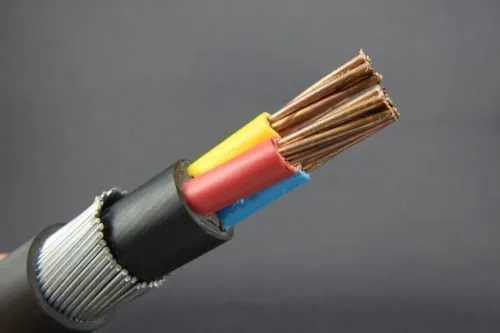
1. Give the supplier the system voltage and voltage grade; conductor material, class and cross-section; number of cores; XLPE insulation; metallic screen construction; armoured or unarmoured construction; inner sheath or bedding; outer sheath material; applicable standard, such as IS 7098 (Part 2); and total route length.
2. Add the installation method, soil thermal resistivity, ambient or ground temperature, grouping, permissible voltage drop, short-circuit duration and required drum lengths. For single-core AC cable, state whether the screen is single-point bonded, bonded at both ends or cross-bonded. This affects induced sheath voltage, circulating-current losses and touch voltage.
3. State the duty: feeder, transformer connection, industrial plant or utility route. Require the quotation to identify conductor material explicitly. Aluminium cable needs compatible lugs, terminals, jointing compounds and controlled tightening torque; copper and aluminium are not interchangeable at termination.
| Option | Deciding factors | Typical boundary |
|---|---|---|
| Polycab HT cable | HT voltage, XLPE, screen and power-cable construction | Feeders and utility or industrial routes |
| LT cable | Lower voltage insulation system | Low-voltage distribution |
| High-rise cable | Building installation duty and fire-performance requirements | Vertical building risers |
| Switchyard wire | Exposed equipment interconnection construction | Switchyard wiring |
Choose by voltage rating, insulation system, construction and installation duty—not by the product name alone.
Use the Datasheet and Test Records to Compare Cable Options
A suitable quote matches the cable’s actual construction and duty, not just the Polycab name. Read the exact datasheet and compare these entries against your project specification:
| Cable detail | What to compare | Why it matters |
|---|---|---|
| Rated voltage | Exact voltage grade | A mismatched grade can invalidate the design |
| Conductor | DC resistance and cross-section | Shows conductor performance and losses |
| Insulation | Thickness and continuous operating temperature | Affects electrical and thermal limits |
| Screen | Cross-section and short-circuit withstand rating | Controls fault-current and earthing performance |
| Dimensions | Outer diameter and minimum bending radius | Determines accessories, trays and installation space |
| Installation limits | Permissible pulling tension | Excess tension can damage insulation or sheath |
Check ampacity for the actual installation method, soil thermal resistivity, ambient or ground temperature, grouping, voltage drop, screen losses and bonding arrangement. Continuous current alone is not enough.
Ask a Polycab dealer for the applicable Indian or international designation, including IS 7098 (Part 2) when the cable falls within its scope. Require the exact voltage grade and construction on every document.
Request the manufacturer’s routine-test report for the supplied drum or batch. It should include conductor-resistance results, insulation or sheath checks and AC voltage withstand results; request partial-discharge results when the project specification calls for them.
Do not accept a type-test certificate as batch evidence. A type test proves design performance, while a routine report relates to manufactured cable lengths or batches. A Polycab authorized dealer should connect those records to the specific cable supplied.
Verify Authorisation, Authenticity and Traceability Before Payment
Authorised-dealer status proves a documented supply connection, not automatic product acceptance. Verify the seller through Polycab’s official dealer locator, current manufacturer documentation or confirmation from the manufacturer’s sales channel. A low price, local stock or the Polycab name on a quotation proves nothing by itself.
1. Before payment, ask the polycab dealer polycab authorized dealer for ht cable for a manufacturer-linked quotation, GST tax invoice, drum number, batch or lot identification, manufacturing date, supplied length and the applicable manufacturer test certificate. A type-test certificate shows design performance; the routine-test certificate must relate to the supplied drum, manufactured length or batch.
2. Reconcile those records with the purchase order. Confirm the exact voltage grade, conductor size and material, cable construction, drum length and document numbers.
Keep the quotation, invoice, drum schedule, test records, inspection notes and installation records together; this is what the phrase polycab dealer polycab authorized dealer means in practice: a traceable chain from manufacturer to project.
3. Inspect every drum before unloading. Match the drum markings, cable print, seals, labels and certificates, then photograph the drum numbers and sealed ends. Reject or quarantine drums with broken seals, missing identification, damaged flanges, displaced or broken battens, water ingress or signs that cable has been pulled off the drum.
Moisture entering an XLPE cable can create commissioning problems hidden from an external visual check. A polycab dealer polycab authorized dealer reduces authenticity and traceability risk, but incoming inspection, document reconciliation and acceptance decisions remain your responsibility.
Match Accessories, Drum Planning and Site Conditions
A technically correct cable order can still fail if its accessories, drum lengths or delivery conditions do not fit the installation. Confirm that joints, terminations, stress-control components, glands, lugs and earthing arrangements match the voltage grade, conductor material, screen, armour, cable diameter and bonding design.
For single-core AC cables, state the metallic-screen arrangement before ordering. The termination and earthing design must support the selected option.
| Arrangement | Main concern | Required design match |
|---|---|---|
| Single-point bonded | Limits circulating-current losses but creates sheath-voltage considerations | Insulated screen ends and controlled earthing |
| Bonded at both ends | Permits circulating currents and screen losses | Both-end earth connections and rated bonding hardware |
| Cross-bonded | Controls induced voltage over transposed sections | Cross-bonding link boxes, sheath insulation and joint design |
Ask the accessory manufacturer for written compatibility information; do not assume one kit suits every cable. Match the cable’s construction, diameter and voltage grade to the kit schedule.
Plan drum lengths against the route drawing, joint bays, termination points and pulling direction. Compare delivered drum schedules, not only the metre rate: extra joints, short off-cuts and nonstandard lengths add labour and failure points.
Before dispatch, check vehicle access, unloading equipment, drum orientation, storage surface and protection from standing water. During installation, follow the declared bending radius, pulling tension and sidewall-pressure limits; exceeding them can damage insulation, screen or sheath.
An HT cable supplier in Vadodara can coordinate locally, but local stock matters only when drum numbers, manufacturing dates, lengths, storage condition and test documents remain traceable. Prabhat Cables Pvt. Ltd can be considered when those records accompany the quotation and delivery.
Related product
 | Polycab HT Cables Polycab HT (High Tension) cables are designed for the transmission and distribution of electrical power at medium to high voltage levels, typically... View product → |
Make the Authorised-Channel Decision With a Documented Checklist
Choose an authorised dealer when the seller can connect the manufacturer’s records to the exact cable delivered and answer technical questions in writing. Authorisation reduces counterfeit and traceability risk; it does not replace cable sizing, accessory engineering or site inspection.
Reconcile the quotation against the approved datasheet and project specification:
- Voltage grade, conductor material, cross-section, number of cores and XLPE insulation
- Metallic screen size and construction, armour, inner sheath, outer sheath and applicable standard
- Approved drum lengths, joints, terminations, glands, lugs and earthing accessories
- Inspection requirements, testing documents, transport, unloading and delivery conditions
Confirm the proposed product is not a similar-sounding substitute.
| Product | Selection boundary | Risk if chosen incorrectly |
|---|---|---|
| HT cable | Rated voltage, insulation system, screen and construction match the feeder duty | Insufficient insulation or fault withstand |
| LT cable | Low-voltage rating and construction for LT distribution | Failure on an HT system |
| High-rise cable | Building installation duty and specified fire or smoke performance | Wrong electrical and installation design |
| Switchyard wire | Exposed or yard connection duty, not an insulated feeder route | Inadequate protection for buried or ducted cable |
Compare installed cost, including transport, unloading, extra joints, termination work, testing, off-cuts and storage—not only metres. Before dispatch, approve the drum schedule and request routine-test records for each supplied drum or batch, including resistance, insulation or sheath checks, partial discharge where specified and AC withstand results.
At receipt, inspect seals and drum condition, record drum numbers and lengths, then preserve invoices, photographs, test records and installation notes for commissioning or utility review.
Frequently asked questions
What details should you provide when requesting an HT cable quote?
Specify the system voltage, conductor material and cross-section, number of cores, insulation, sheath, screen, installation method, route length and site conditions.
Which documents should you compare between Polycab HT cable options?
Compare the product datasheet, applicable test standards, routine test report, type-test evidence, drum schedule and cable-specific traceability details.
How can you verify a Polycab authorized dealer and cable authenticity?
Ask for current authorisation evidence, the tax invoice, manufacturer documentation, drum labels, batch numbers, seals and records linking the cable to its test results.
Why do drum planning and accessories matter for HT cable supply?
Correct drum lengths reduce joints and waste, while compatible terminations, joints, glands, cleats and earthing arrangements support reliable installation.