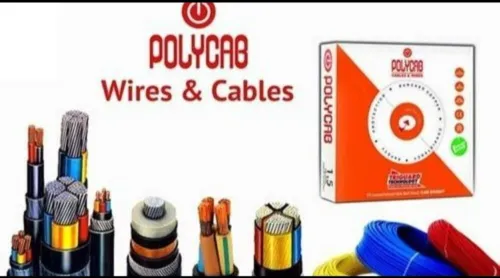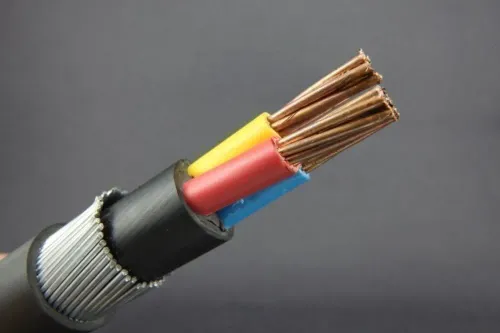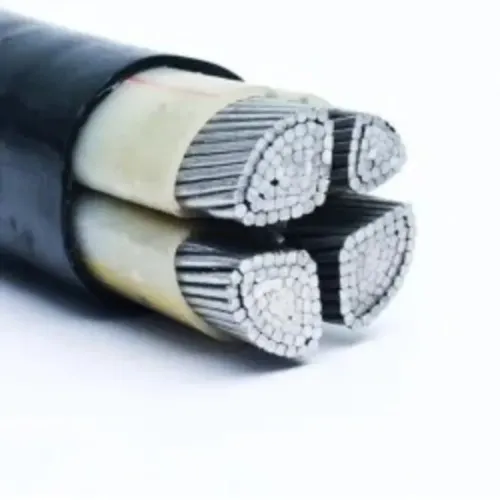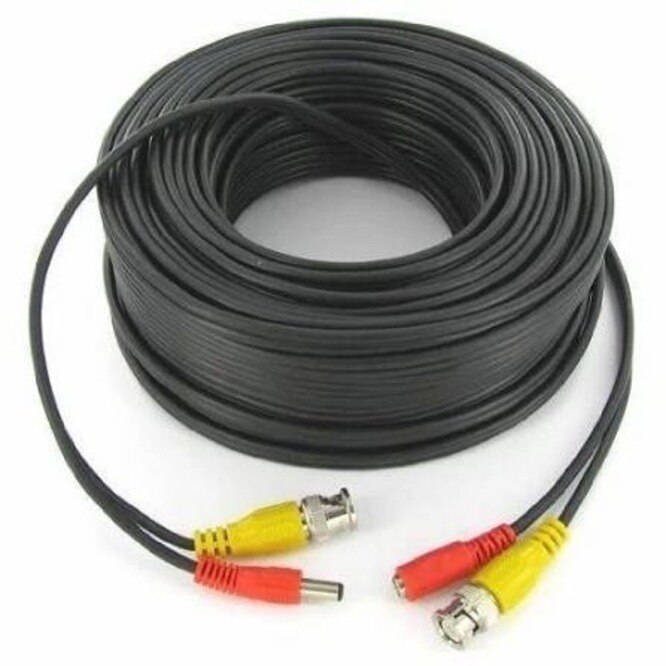
A rubber-sheathed cable is not automatically a CCTV video cable: it may suit camera power while being unsuitable for coaxial video, Ethernet, PoE or RS-485. By checking the camera type, cable construction, voltage drop, installation environment and drum documentation, you can compare quotations without relying on sheath thickness or a generic product name.
Key takeaways
- Confirm whether your system is analogue HD or IP before choosing cable.
- Calculate voltage drop for the full run, including power conductors.
- Check sheath markings, cable size, route rating and installation standard.
- Match the drum label, quotation and distributor documents before accepting delivery.
First identify the camera system and the cable’s job
A cable described as polycab rubber cable cctv is not automatically a video cable. First identify whether your system is analogue HD or IP, then state whether the cable will carry video, power or both.
1. Identify the camera system. HD-TVI, HDCVI and AHD cameras transmit analogue video through 75-ohm coaxial cable. Check the route length and termination before choosing RG59, RG6 or purpose-built CCTV coaxial cable; conductor size, dielectric and shield construction affect performance. A two-core rubber power cable cannot replace coaxial video cable.
2. Specify the cable’s job. A Siamese CCTV cable places coaxial video and a separate power pair under one outer jacket. An IP camera requires compliant Cat5e or Cat6 twisted-pair Ethernet cable, with PoE compatibility when power travels through the network cable.
A rubber-sheathed power cable cannot carry Ethernet data or PoE simply because it has a thick jacket.
3. Define the power circuit separately. A rubber-sheathed Polycab cable may suit a 12 V or 24 V camera supply after you check conductor area, resistance, route length and environmental rating. The word rubber proves none of its video, Ethernet, PoE or signal characteristics.
4. Write the requirement before requesting a quotation: power-only, coaxial video, twisted-pair data or combined CCTV cable. Searching for a polycab cctv cable without this description can produce quotations for fundamentally different products.
Read the construction and markings instead of judging the outer sheath
Ask for the actual conductor area in mm², core count, conductor construction, insulation and sheath material; a thick rubber jacket can conceal undersized copper. Confirm whether the conductor is annealed stranded copper, tinned copper or copper-clad aluminium (CCA).
CCA has higher resistance than equivalent-size copper, increasing power loss, weakening crimp reliability and shortening service life on long CCTV runs.
| Option | Construction to verify | Suitable use |
|---|---|---|
| Analogue video | 75-ohm impedance, central-conductor size, dielectric type, shield construction and shield coverage | HD-TVI, HDCVI or AHD video |
| IP camera | Cat5e or Cat6 category, four twisted pairs, pair geometry, conductor type and PoE suitability | Ethernet data and PoE |
| Power | Actual conductor area in mm², core count, voltage rating and resistance | 12 V or 24 V camera supply |
For power, reject “heavy duty” or “flexible” as substitutes for conductor area. A two-core rubber cable does not become video cable because its sheath resembles coaxial cable.
- Compare the manufacturer name, exact product type, size, core count, declared length, voltage or impedance marking, manufacturing date or batch code, and cable identification printed repeatedly along the cable.
- Check metre markings and compare the sample drum label and datasheet with the quotation.
- Treat missing, inconsistent or non-traceable markings as a reason to quarantine the lot before installation.
This cctv cable buying guide principle prevents a generic Polycab rubber cable description from hiding the wrong signal construction.
Calculate the run length and voltage drop before choosing the size
Stable camera power requires the loaded voltage at the camera to remain within its operating range, not merely a cable ampacity that exceeds the current. Record the camera’s current in amperes, nominal supply voltage, one-way cable length and conductor resistance per metre.
Calculate the complete positive-and-negative loop: Vdrop = I × 2L × R, where L is the one-way length. Subtract that result from the 12 V or 24 V supply.
Include infrared illumination, heaters, microphones and moving-camera motors in the current figure; a cable that passes ampacity checks can still cause resets, IR failure or image noise when voltage falls under load.
| System | Check before buying | Do not substitute |
|---|---|---|
| Analogue HD: HD-TVI, HDCVI, AHD | Confirm the recorder, balun or camera manufacturer’s maximum distance for the selected format, cable construction and connectors | Do not use a two-core polycab rubber cable cctv power cable for video |
| IP camera | Check the Ethernet channel limit, PoE power budget, cable category and connector performance | Do not apply a coaxial distance rule |
| Power-only circuit | Compare conductor resistance and route length | Do not compare cables by rubber thickness |
For a polycab cctv quotation, use the conductor resistance and installed route length as comparison fields. A 12 V camera drawing 0.5 A over 40 metres with 0.018 ohms per metre loses 0.72 V: 11.28 V reaches the camera before connector losses. Recheck the calculation at maximum load.
Match the cable to the route, sheath and installation standard
A polycab rubber cable is suitable only when its datasheet matches the route and environment, not merely because its sheath feels flexible.
1. State the installation on the purchase order: indoor or outdoor, conduit or open tray, sunlight exposure, proximity to mains cables, wet area, maximum route length and repeated movement through a moving assembly.
2. Check the insulation and sheath compounds, continuous operating temperature, short-circuit rating, minimum bending radius, and resistance to UV, ozone, water and oil. Confirm the permitted installation location. Do not assume flexibility permits direct burial, immersion, outdoor sunlight or repeated flexing; a weather-resistant cable can still be unsuitable underground.
3. Match the rated voltage to the 12 V or 24 V camera circuit and the installation method. A higher voltage rating does not make a power cable suitable for video, Ethernet or PoE. Confirm the conductor class and actual cable construction before ordering.
4. Ask for the applicable standard number, conductor class, insulation material, sheath material and test documentation. Treat an isolated ISI, CE or RoHS logo as insufficient when it has no standard number or traceable cable marking.
5. Require batch or drum identification and compare the printed cable marking with the datasheet. Stop the order if it omits the environmental rating, installation location or manufacturer’s declared construction.
Verify the drum, quotation and distributor before accepting delivery
Before paying for a bulk Polycab rubber cable order, request the product datasheet and a sample drum or carton label. Confirm the manufacturer name, exact part number, cable type, core count, conductor material and area, declared length, voltage or 75-ohm impedance marking, manufacturing date or batch code, metre markings and intact factory seal.
Put these details in the purchase order:
- Camera load in watts or amps, nominal voltage and one-way route length
- Acceptable voltage drop, environmental conditions and termination method
- Required standard, conductor class, insulation or sheath material and test documentation
Check each delivered drum against the paperwork:
| Check | What to compare | What failure means |
|---|---|---|
| Manufacturer identification | Cable print, label and quotation | Quarantine mismatched goods |
| Length | Metre markings or an agreed measurement method | A short drum can erase a low-price saving |
| Traceability | Drum number, batch code, date and factory seal | Authenticity and warranty become difficult to establish |
| Construction | Core count, conductor material, area and voltage or impedance | The cable may not suit the installed circuit |
Record the drum number and batch at receipt. Compare the print on the cable with the quotation before unloading the full order.
When choosing a Polycab cable dealer, ask for the manufacturer part number, GST invoice, traceable supply document, batch details, warranty terms and a return process for non-conforming goods. Prabhat Cables Pvt. Ltd is one business contact for a quotation, but its documents must match your installation.
A complete CCTV cable buying guide compares the installed circuit, not merely the lowest price per drum.
Related products
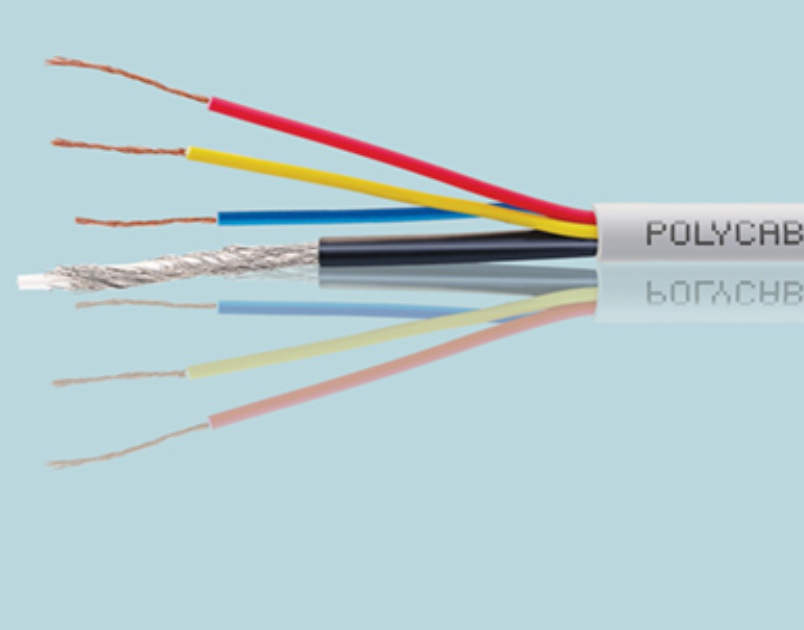 | Polycab CCTV Cables Polycab CCTV cables are specifically designed for use in closed-circuit television (CCTV) systems, offering reliable video signal transmission and... View product → |
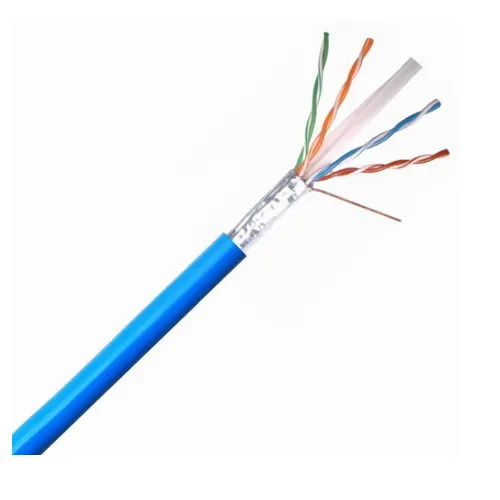 | Polycab Screened Cables Polycab screened cables are power cables designed with a metallic shield (screen) to minimize electromagnetic interference (EMI) and ensure signal... View product → |
Frequently asked questions
Is every Polycab rubber cable suitable for CCTV?
No. Identify whether the system is analogue HD or IP, then confirm whether the cable carries video, power or both. Check the construction and printed markings rather than relying on the outer sheath.
How do you choose the right cable size for a CCTV run?
Measure the complete cable route and calculate voltage drop before selecting the conductor size. Include the camera’s power demand, supply voltage and the length of both conductors in the calculation.
What should you check when routing a Polycab CCTV cable?
Match the sheath and cable construction to the route, including outdoor exposure, moisture, heat, abrasion and contact with other services. Confirm the installation standard required for that location.
What should you verify before accepting a CCTV cable delivery?
Compare the drum label with the quotation, including cable type, size, length and batch details. Inspect the seal and sheath, and ask the Polycab cable dealer for distributor and product documentation.