A coaxial cable that looks suitable on a reel can still produce reflections, excessive signal loss, or interference after installation. By checking the application, impedance, frequency-specific performance, shielding, environmental ratings, terminations, and supplier documentation, you can specify a Polycab cable against measurable project requirements rather than its brand name or outer appearance.
Key takeaways
- Match cable impedance to every connected device and termination.
- Check attenuation, frequency range, shielding construction and conductor size on the datasheet.
- Confirm bend radius, temperature rating and jacket material before installation.
- Compare the delivered batch, markings, seals and test documents with your purchase order.
Which industrial signals call for coaxial cable?
Use industrial coaxial cable where a controlled-impedance path carries high-frequency or broadband signals. Typical applications include CCTV video between cameras and monitors, RF test benches, antenna feeders for radios and wireless systems, telemetry links, signal generators, spectrum analysers, machine-vision equipment and selected industrial communication links.
Before choosing a Polycab coaxial cable, identify:
- The equipment at both ends
- The highest operating frequency and cable-run length
- The connector system and cable outside diameter
- Whether the system requires 50 ohms or 75 ohms
CCTV, CATV and video distribution commonly use 75 ohms; many RF, radio and wireless systems use 50 ohms. Do not interchange them. A connector can fit mechanically while the wrong impedance creates reflections and signal degradation.
| Cable option | What it suits | Check before ordering |
|---|---|---|
| Coaxial cable | High-frequency, broadband and RF signals | Impedance, attenuation, shielding and connectors |
| Screened instrumentation cable | Low-energy analogue or control circuits | Paired conductors and screen form part of the circuit |
| Twisted-pair instrumentation cable | Balanced signalling and noise rejection | Pair construction and compatible receiving equipment |
| Ethernet cable | Network data links | Category, balanced impedance and network hardware |
| Ordinary CCTV cable | A specified video system | It may not meet factory RF or telemetry demands |
A Polycab cable for industrial use is appropriate only when its electrical construction matches the connected equipment. Check the alternatives before ordering; “coaxial cable” alone is not a sufficient specification.
Which Polycab cable specifications determine signal performance?
Request the exact Polycab part number and current datasheet before approving a Polycab coaxial cable. Compare its figures with the project’s operating frequency and run length; “high-frequency” alone does not establish an acceptable signal budget.
| Specification | What to request | Why it matters |
|---|---|---|
| Nominal impedance | 50 ohms or 75 ohms | Match the equipment and connectors; these values are not interchangeable |
| Construction | Centre-conductor material and diameter, dielectric type, shield construction, jacket material | These affect loss, reflections, durability and interference rejection |
| Dimensions and ratings | Cable diameter, operating temperature and voltage rating | Confirm routing, environment and insulation limits |
| Performance | Attenuation in dB/m or dB/100 m at actual frequencies, plus return loss or VSWR | Quantify cable loss and impedance uniformity |
- For a long CCTV or RF run, multiply attenuation at the system’s highest frequency by the cable length, then add connector, splitter, patch-panel and temperature allowances. A lower-frequency catalogue figure can understate total loss.
- A larger centre conductor often lowers attenuation, but conductor size alone does not prove suitability. Dielectric design, frequency and shielding also affect loss.
- Request return-loss or VSWR data because two cables labelled 75 ohms can differ in impedance uniformity. Reflections arise from discontinuities, joints, damaged sections, poorly formed connectors and changes in dielectric geometry.
- Do not specify only “RG cable” or “coaxial cable.” RG terminology does not guarantee the same impedance, dielectric, shield, attenuation or jacket across variants. Put the exact Polycab designation, size and datasheet revision on the purchase order.
How should you specify shielding and factory environmental protection?
A factory route is part of the cable specification, not an installation detail added later. Motors, variable-frequency drives, welding equipment and nearby power cables can inject electromagnetic interference, so ask whether a Polycab cable for industrial use has foil, braid, or foil plus braid.
Foil gives continuous high-frequency coverage when terminated correctly; braid adds mechanical strength and low-resistance coverage. Request braid coverage, shield resistance or transfer impedance, and the manufacturer’s termination method. “Shielded” alone proves little.
Before ordering, ask the industrial coaxial cable supplier to document:
- Jacket temperature range, UV resistance, oil and chemical resistance, moisture or water-blocking provision, flame behaviour and halogen status
- The fire-test standard: IEC 60332 for vertical flame, IEC 61034 for smoke density where specified, and IEC 60754 for halogen-acid-gas testing
- Suitability for outdoor, oily, wet or high-temperature routes; indoor PVC coax is not an automatic substitute
- Manufacturer-approved flex rating, flex-life basis and dynamic bend radius for drag chains, robots, vibrating machines or repeated movement
Bond the shield at termination points according to the system’s EMC design. An unbonded or poorly bonded shield can defeat good cable construction, while a foil-plus-braid design generally provides broader protection than braid alone. Confirm these details before purchase, because a fixed-installation cable is not automatically suitable for flexing service.
How do connectors, bend limits and installation practices affect the result?
The result depends on treating the cable, connector and installation route as one system, not as separate purchasing decisions.
1. Match the cable to the complete termination system before ordering. Confirm connector type, impedance, cable outside diameter, centre-conductor size, dielectric dimensions and stripping or crimping tooling. BNC, F-type and N-type connectors are not automatically compatible with every coaxial construction.
Ask for recommended connector part numbers and preparation dimensions; a connector that fits the equipment still needs a datasheet-confirmed match.
2. Request the Polycab cable specifications for minimum static and dynamic bend radius, maximum pulling tension, crush resistance and routing restrictions. Tight bends, excessive pulling force and crushed sections can alter circular geometry and impedance without visible jacket damage.
3. Calculate the signal budget from attenuation at the highest operating frequency. Add connector, splitter and patch-panel losses, then allow for temperature-related attenuation changes. Do not use a lower-frequency catalogue figure for a broadband run.
4. Apply segregation, crossing and bonding rules near variable-frequency-drive outputs, welding circuits and high-current conductors. Polycab cable for industrial use remains a signal cable, not an industrial power cable; confirm voltage, current, insulation and earthing separately.
For drag chains, robots or repeated movement, require documented approval for the movement profile, flex rating, flex-life basis and dynamic bend radius. Do not replace a fixed-routing coax with a moving cable merely because its electrical ratings appear adequate.
What should you verify before accepting a Polycab cable shipment?
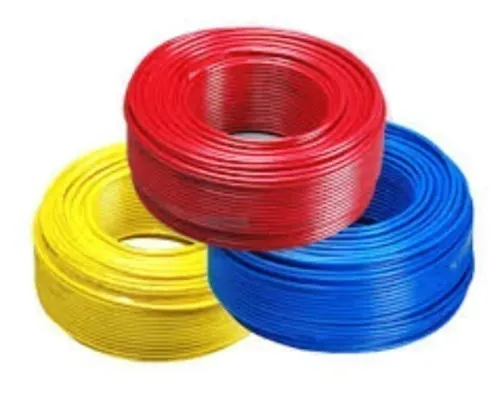
Accept the reel only against the exact Polycab part number and size, not a distributor listing or a general reel description. Treat Polycab cable specifications as procurement evidence, not marketing language.
1. Request a current manufacturer datasheet, certificate of conformity, or routine-test documentation for the exact part and size supplied. Reject “RG cable” or “coaxial cable” as the complete order description.
2. Compare the purchase order with the datasheet revision. Verify nominal impedance, attenuation at operating frequencies, return loss or VSWR, centre-conductor construction, shield type, jacket, temperature range, voltage rating, outside diameter, and static or dynamic bend limits.
3. Inspect the reel label and cable markings on arrival. Confirm the manufacturer name, product designation, size, impedance where applicable, stated length, batch or lot number, and manufacturing date. Missing traceability is a reason to quarantine the reel.
4. Check the delivered diameter and connector-preparation dimensions against the selected termination hardware. A connector can fit the equipment while failing to match the cable’s dielectric or conductor dimensions, causing reflections or an unreliable termination.
An industrial coaxial cable supplier should provide the datasheet, confirm connector compatibility, trace the batch, and clarify approval for fixed, outdoor, wet, high-temperature, or flexing service. Prabhat Cables Pvt. Ltd can support this documentation check as an authorised Polycab distributor.
Record the frequency, impedance, loss budget, environment, installation method, and acceptance results so a replacement reel is not approved by appearance alone.
Related product
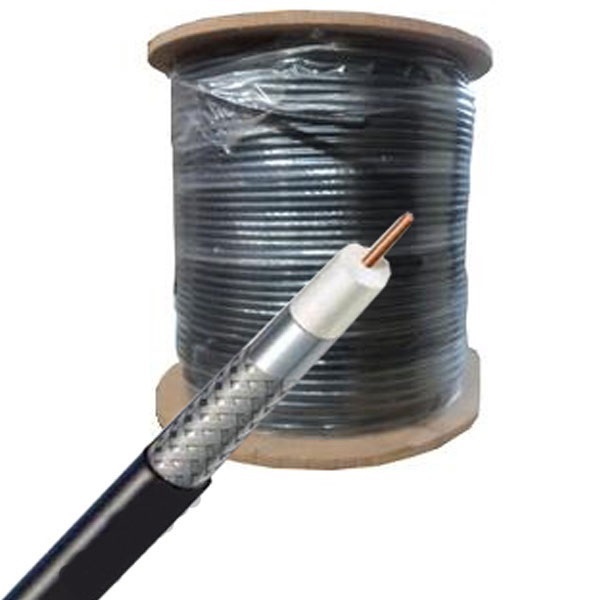 | Polycab Co-Axial Cables Polycab coaxial cable is a type of cable designed for transmitting high-frequency electrical signals, commonly used in cable television (CATV) and... View product → |
Frequently asked questions
Which industrial signals call for coaxial cable?
Use coaxial cable for controlled-impedance, high-frequency or broadband signals such as CCTV video, RF test equipment, antenna feeds, telemetry, machine vision and selected industrial communication links.
Which Polycab cable specifications determine signal performance?
Check nominal impedance, operating frequency range, attenuation, conductor material and size, dielectric construction, velocity of propagation, shielding effectiveness and maximum working voltage in the product datasheet.
How should you specify shielding and factory environmental protection?
Specify the shielding construction, such as braid, foil or a foil-braid combination, along with coverage or transfer-impedance data when provided. State the required jacket material, temperature range, moisture exposure, oil or chemical contact and indoor or outdoor installation condition.
How do connectors, bend limits and installation practices affect the result?
Use connectors rated for the cable impedance and frequency range, follow the manufacturer’s stripping dimensions, keep within the stated minimum bend radius and avoid crushing, sharp kinks, tight cable ties and parallel runs beside high-current power cables.
What should you verify before accepting a Polycab cable shipment?
Compare the delivered part number, cable type, impedance, size, length, jacket marking, batch or lot number and manufacturing date with the purchase order. Inspect the drum or coil, seals, surface damage and supplied test or conformity documents before acceptance.