A high-rise cable requirement in Chennai is incomplete until the project identifies the circuit, fire performance, installation route and documentary proof required. By the end, you will be able to convert a vague cable request into a checkable specification, verify the design for long risers and inspect delivered Polycab material before installation.
Key takeaways
- Define the circuit, voltage grade, fire rating and smoke limits before ordering.
- Match conductor size and cable construction to route length, load and installation method.
- Demand test certificates, batch details, compliance documents and a sealed delivery.
- Control bend radius, pulling tension, terminations and inspection records during installation.
What does “highrise cable” mean on a Chennai project?
“Highrise cable” is a trade description, not a single Indian Standard or universal cable construction. The project must identify the circuit, conductor class, insulation and sheath, voltage grade, fire behaviour, smoke and halogen limits, and whether the cable must keep operating during a fire.
| Project requirement | Cable category or evidence to identify | Why “highrise cable” is insufficient |
|---|---|---|
| Ordinary power or lighting | Flame-retardant building wire or power cable matching the schedule | It does not state conductor size, cores, voltage or insulation |
| Reduced smoke and corrosive gas | Low-smoke, halogen-free cable with IEC 60754 and IEC 61034 evidence | IEC 60332-3-24 flame-spread performance does not prove either property |
| Life-safety circuit operation | Fire-survival cable tested to the specified circuit-integrity standard, such as IEC 60331 | Flame retardance alone does not keep a circuit energised |
| Fire alarm or control system | The exact fire-alarm or control cable named in the fire strategy and approved schedule | A power riser cable is not automatically suitable |
Before accepting a quotation for highrise cable in Chennai, match it to the electrical single-line diagram, cable schedule, consultant’s approved make list, fire strategy and fire-authority requirements. Ask for the exact Polycab catalogue designation, conductor size, voltage rating, insulation type, packing length, batch number, applicable IS or IEC standard, and test-report reference.
A search for a polycab highrise cable dealer in chennai identifies a supply channel, not compliance. Confirm the quoted construction and verify dealer status through Polycab’s current contact channel and the GST invoice; a logo, marketplace listing or old authorisation letter proves neither.
How do you match the cable to its circuit and installation route?
Fix the circuit, route and termination details before you compare cable sizes. A cable suitable for an indoor occupied floor can fail as a basement feeder or rooftop run because voltage drop, heat, moisture and fire-performance requirements change.
1. Read the single-line diagram and cable schedule. Record system voltage, conductor material, required cross-section, number of cores, continuous current, motor starting current, short-circuit withstand, and whether the circuit feeds fire pumps, emergency lighting or smoke-control equipment.
2. Map the route from source to load. Measure the riser length and identify shaft, tray, conduit, basement, parking, plant-room or occupied-floor installation. Note grouping with loaded cables, shaft ventilation, ambient temperature, support arrangement, floor penetrations and access for future testing.
3. Confirm the cable construction and termination interface. Match conductor class, insulation and sheath material, outside diameter, bending radius, gland, lug, cleat and termination-temperature rating to the switchgear. Changing construction can make the specified accessories and fire-stopping details unusable.
4. Record exposure conditions. For Chennai’s semi-exposed or coastal routes, check moisture ingress, ultraviolet exposure, heat and salt-laden air; do not apply dry-shaft data to rooftop or plant-room sections.
5. Demand the applicable IS or IEC marking and fire classification. IS 694 alone does not prove fire survival. IEC 60332-3-24 addresses vertical flame spread in bunched cables, not low smoke, low halogen or continued operation during fire.
Give these inputs to a Polycab dealer in Chennai. A Polycab authorized dealer highrise cable in Chennai should provide a calculation and exact construction, not substitute a larger-looking or cheaper cable without design approval.
How should you verify a long riser’s electrical and fire performance?
Verify the riser with four separate calculations; a larger-looking cable is not automatically a suitable substitute. The result must cover the installed route, not only the conductor’s cross-sectional area.
- Voltage drop: calculate the one-way length, continuous load and motor starting current. Excessive drop can prevent pumps from starting or dim emergency lighting.
- Current-carrying capacity: apply derating for ambient temperature, grouped loaded cables, shaft or tray ventilation and the installation method. Compare the corrected ampacity with both continuous and starting demand.
- Short-circuit withstand: check the conductor’s prospective fault current, clearing time and conductor material. The cable must survive until the protective device disconnects the fault.
- Emergency circuits: identify whether the fire pump, smoke-control fan, fire alarm or emergency-lighting circuit must operate during a fire, and for how long. That requirement can change the cable construction entirely.
FR, FRLS and fire-resistant are different claims. IEC 60332-3-24 addresses vertical flame spread on bunched cables; it does not prove low smoke, low halogen or circuit survival. IS 694 compliance alone does not qualify a cable for fire-survival feeders.
For a highrise cable in Chennai, match conductor class, outside diameter, bending radius, glands, lugs, cleats and termination temperature rating. Changing construction can invalidate those details. Ask a Polycab authorized cable supplier for the calculation, test classification and approved fire-system specification, not merely the phrase “fire rated.”
What documents and delivery checks should a buyer demand?
Do not release a drum for installation until its markings, paperwork and seller credentials agree. A listing calling the seller a Polycab authorized dealer highrise cable in Chennai is not a technical specification or proof of authorisation.
1. Match the quotation with the consultant’s approved make list, cable schedule and single-line diagram. Require the exact Polycab catalogue designation, conductor size and class, number of cores, voltage grade, insulation and sheath, packing length, applicable IS or IEC standard, manufacturing batch and test-report reference.
“Fire rated” is not enough: ask whether the claim concerns IEC 60332-3-24 vertical flame spread, low smoke, low halogen or fire survival.
2. Verify the seller independently through Polycab’s current dealer or contact channel. Check that the authorisation covers the product category, territory and validity period, then reconcile the seller’s legal name and GSTIN with the GST tax invoice.
A Polycab authorized cable supplier must provide documents that identify the actual supplying entity, not just a logo or old letter.
3. Inspect every drum before unloading it into installation stock. Compare the printed cable marking, drum number, batch number, length and standard marking with the invoice, delivery challan and certificate. Photograph each drum; quarantine re-taped drums, broken seals, damaged flanges, unusually short lengths or missing markings.
4. Record the inspection and retain the certificate with the project file. A supplier such as Prabhat Cables Pvt. Ltd should be assessed against this evidence, not merely described as a Polycab dealer in Chennai. Cable test documents also do not approve the tray, gland or fire-stopping assembly.
Related product
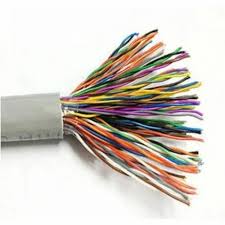 | Polycab Highrise Cables Polycab Highrise Cables are a range of wires and cables specifically designed for use in high-rise buildings, prioritizing safety and performance in... View product → |
What installation controls matter after the cable reaches the site?
Control the cable as an installed system, not as a delivered drum. Terminations must match the conductor class, outside diameter, bending radius, gland, lug and switchgear termination temperature. Record lug-crimping results and tightening torque; an unsuitable gland or poorly crimped lug can overheat a long riser.
Before energisation, retain an installation checklist covering:
- Supports: use the approved cleats, trays and vertical supports at the specified spacing, with no sharp edges, unsupported loops or excessive pulling tension.
- Terminations: confirm phase identification, gland sealing, lug size, bending radius and torque against the cable and switchgear instructions.
- Fire stopping: seal every cable penetration through a fire-rated floor, wall or shaft with the approved penetration system. Keep its approval, product batch details, installer record and photographs; IEC 60332-3-24 for vertical flame spread does not prove low smoke, low halogen or fire survival.
- Testing: document conductor continuity, insulation resistance, phase sequence, sheath integrity where specified, and protective-conductor continuity before connection. Perform additional tests only at the voltage and method authorised by the cable manufacturer and project engineer.
- Exposure checks: inspect outdoor and semi-exposed routes for water entry, ultraviolet exposure, heat and salt-laden air.
Do not substitute indoor dry-shaft installation data for a rooftop or plant-room route. A Polycab dealer in Chennai or a Polycab highrise cable dealer in Chennai should help reconcile any construction change with the approved glands, cleats, termination details and fire-stopping design before installation proceeds.
Frequently asked questions
What does “highrise cable” mean on a Chennai project?
“Highrise cable” is a trade description, not one Indian Standard or universal construction. Specify the circuit, conductor class, insulation and sheath, voltage grade, fire behaviour, smoke and halogen limits, and whether the cable must operate during a fire.
How do you match the cable to its circuit and installation route?
Match the conductor size and cable construction to the load, voltage, route length, voltage-drop limit, installation method, ambient temperature, grouping and available space. Check the manufacturer’s current-carrying tables instead of selecting by building height alone.
How should you verify a long riser’s electrical and fire performance?
Review the cable datasheet, routine and type-test records, voltage grade, conductor resistance, insulation results, fire-test standard, smoke and halogen limits, and circuit-integrity rating when the circuit must keep operating during a fire.
What documents and delivery checks should a buyer demand?
Request the purchase specification, datasheet, test certificates, batch or drum number, invoice, warranty terms and applicable compliance documents. On delivery, inspect the seal, drum condition, cable markings, size, length and visible damage.
What installation controls matter after the cable reaches the site?
Use the specified bend radius, pulling tension, rollers and approved glands or terminations. Protect the cable from water and impact, separate incompatible services, label both ends, test before energising and record inspection results.