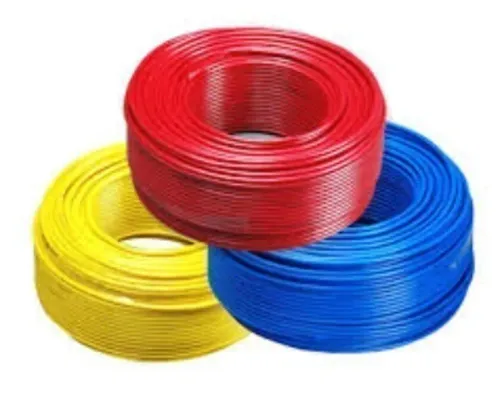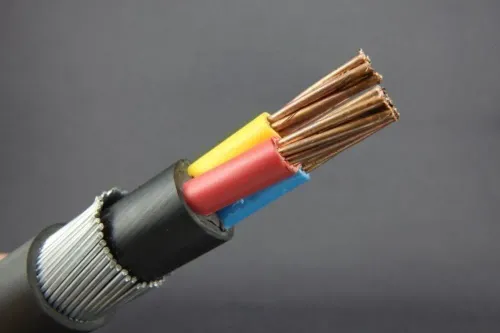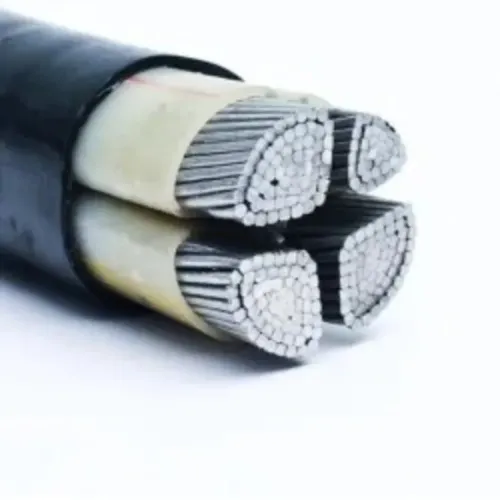
A CCTV cable needs replacement when its physical damage or test results show that it cannot deliver a stable signal, not simply because it has reached a certain age. You will learn how to inspect the route, isolate cable faults from camera and recorder faults, and specify a replacement that suits the system and Raipur’s heat and monsoon exposure.
Key takeaways
- Replace cables with damaged jackets, moisture entry, or persistent unstable video.
- Test the cable before blaming it for camera or recorder faults.
- Choose replacement cable for the CCTV system, distance, and installation route.
- Inspect the complete Raipur cable route before approving a new run.
Read the cable’s physical and video warning signs
A CCTV cable is approaching replacement when its jacket shows damage or the picture becomes unstable under normal camera and recorder settings. A clean image does not prove the Polycab CCTV cable condition is safe: crushing, moisture and high-resistance joints can remain hidden until the cable moves or rain enters the route.
Look for these warning signs:
- Hardened, cracked, cut, swollen or flattened insulation
- Exposed braid, shield or inner conductor
- Green corrosion on copper, BNC plugs, baluns or junction-box terminals
- Water marks, mud or condensation inside a connector or box
- A loose plug that changes the picture when touched
- Intermittent image, repeated dropouts or complete video loss
- Snow, rolling lines, ghosting, colour loss or a washed-out picture
- Faults that appear after rain, during camera movement or when the cable is flexed
- A picture that returns briefly after reconnecting the cable
Do not condemn the cable from one image fault. Swap the camera to a known-good DVR or NVR input, connect it with a short known-good cable, verify camera power, and remake the connectors.
Then test the installed run for continuity, shorts between centre conductor and shield, conductor resistance and insulation resistance; difficult faults require a cable certifier or TDR because continuity alone can miss attenuation, impedance discontinuity and leakage. A cable that passes continuity but fails high-definition video or PoE qualification needs replacement.
Test the cable before blaming it for the fault
A cable is the suspect only after a known-good camera, power source and recorder input work on the same test path. A live image that looks normal but fails during playback points to storage or recording settings, not the cable.
1. Connect the faulty camera to a short, known-good CCTV cable and a recorder input that is already working. If the picture returns, test the installed run; if it does not, check the camera, its output standard and the DVR or NVR input.
2. Swap camera inputs at the recorder. If the fault follows the camera, inspect the camera or its power supply; if it stays on one input, test that DVR channel, BNC socket or NVR port.
3. Measure camera voltage at the camera while infrared LEDs operate. A PoE camera also needs a complete-link load test: check voltage drop, pair order, pair splitting and available power. A continuity pass does not prove that the cable can start the camera.
4. Remake or substitute the BNC connector, balun and junction connection. Snow, ghosting, rolling bars and colour loss can come from impedance mismatch, water ingress or a bad termination.
5. Test the disconnected cable for centre-to-shield shorts, open circuits, conductor resistance and insulation resistance. A continuity tester can miss a high-resistance joint or insulation leakage.
6. For IP CCTV, a short test lead passing while the installed link fails points to length, termination or route design. Keep permanent horizontal cable within 90 metres and the complete channel within 100 metres.
Approve polycab cctv cable replacement only when these readings identify the run as defective, not merely because the image is poor. Record the failed test and the component ruled out.
Decide when repair is weaker than a new run
Repair the run when the fault is localised to one accessible termination and the cable itself passes testing. Re-terminate a loose, oxidised or poorly crimped BNC, RJ45, balun lead or power connection after cutting back to clean copper.
Add a connector only when the joint sits inside a sealed junction box with strain relief; an exposed inline joint invites water entry and creates another failure point.
Use a repair when all of these conditions apply:
- The cable sheath, shield and conductors are undamaged.
- Continuity is stable while the cable is flexed.
- Conductor resistance and insulation resistance remain within the system’s limits.
- The repaired termination restores a stable picture on a known-good camera and recorder port.
Replace the complete run when testing identifies a fault along the cable or when the route itself caused repeated damage. Reject repair for:
- An intermittent or permanent open circuit
- A centre-conductor-to-shield short
- High loop resistance or insulation leakage
- UV-cracked, hardened, crushed or water-tracked sheath
- Green corrosion at several terminations
- Repeated rain-related failures after connector replacement
Record the failed route, cable construction and size, length, termination type, test readings and rejection reason before ordering. If moisture enters through a roof, parapet, bend or junction box, replacing only the indoor section leaves the original failure in place. A new run with sealed entries and a suitable outdoor-rated jacket is the stronger fix.
Match the replacement to the CCTV system and route
Order against the route, not the old label. Record the failed run’s length, conductor size, shielding, jacket condition, termination type, measured conductor resistance and insulation-test result. A thicker replacement is not automatically better: it can exceed a connector’s size, require a larger bend radius and still have unsuitable attenuation.
| System | Compare before ordering | Route limit or installation check |
|---|---|---|
| Analogue coax | RG59 or RG6, centre-conductor material and diameter, dielectric, braid or foil coverage, attenuation, jacket and BNC compatibility | Keep the cable’s bend radius; confirm the camera format and bandwidth |
| Balun-based analogue | 75-ohm coax or twisted-pair cable, pair category, conductor gauge, pair balance, balun compatibility and power-sharing arrangement | Do not mix an unsuitable pair with a balun rated for another cable type |
| IP camera | Cat5e, Cat6 or Cat6A, solid copper conductors, pair separator, jacket rating, RJ45 or field-plug compatibility and PoE support | Limit permanent horizontal cable to 90 m and the complete channel to 100 m, including patch cords |
- For roof, parapet or exposed wall routes, specify an outdoor-rated jacket and protect entry points from standing water; indoor PVC cable will harden, crack or admit moisture.
- Check conduit fill, pulling damage, junction-box space and the largest bend before choosing a low-flex, larger-diameter cable.
- Ask cable dealers polycab in raipur or a polycab cctv cable dealer to state the exact construction and test data on the quotation, not only “CCTV cable”.
Prabhat Cables Pvt. Ltd can help compare the requested Polycab construction with the route record, so a like-for-like order does not preserve the original design mistake.
Related products
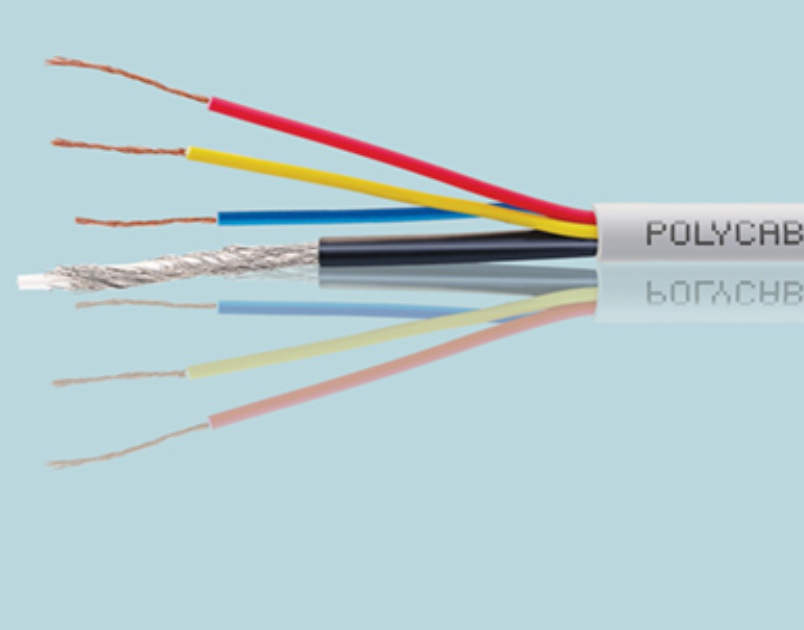 | Polycab CCTV Cables Polycab CCTV cables are specifically designed for use in closed-circuit television (CCTV) systems, offering reliable video signal transmission and... View product → |
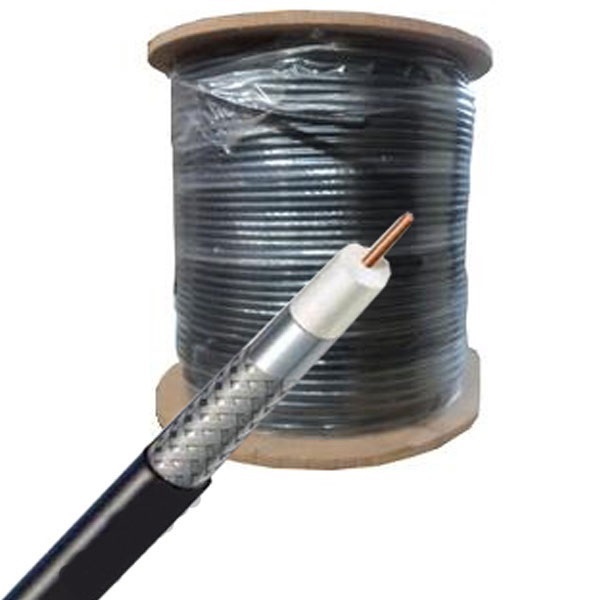 | Polycab Co-Axial Cables Polycab coaxial cable is a type of cable designed for transmitting high-frequency electrical signals, commonly used in cable television (CATV) and... View product → |
Approve replacement only after the entire Raipur route is checked
Before accepting a replacement, require a route inspection from the camera to the DVR or NVR, not just a check of the visible indoor section. Moisture at a roof bend, crushed conduit behind a parapet, or corrosion inside a junction box will damage the new cable too.
- Record the failed run’s route length, cable construction, conductor material, size or gauge, shielding, jacket condition, termination type, and installation date if known.
- Photograph roof and parapet sections, conduit entries, bends, junction boxes, cable clips, exposed shielding, cracked insulation, water marks, dust-packed enclosures, and both termination points.
- Verify the isolation tests: a known-good camera or recorder port, a short known-good cable, remade connectors, confirmed camera power, and an independent test of the installed cable.
- Record continuity, centre-to-shield shorts, conductor resistance, loop resistance, and insulation-resistance results. For IP links, request cable-certifier or TDR results when attenuation, return loss, crosstalk, or impedance faults are suspected.
- Confirm the proposed cable matches the system and route. Check copper against CCA, conductor size, outdoor jacket, shielding, pair count, connector system, and PoE requirements.
The rejection note must state the measured fault and its location. That evidence prevents a “cable dealers polycab cctv cable for replacement in raipur” request from becoming an unsuitable like-for-like purchase.
Frequently asked questions
What signs show that a CCTV cable needs replacement?
Inspect the jacket for crushing, cuts, and moisture entry. Persistent unstable video under normal camera and recorder settings also indicates that replacement needs consideration.
How should you test a CCTV cable before replacing it?
Test the cable before blaming it for the fault. Check whether the video remains stable with the camera and recorder operating under their normal settings, then inspect joints and the route for damage.
When is a new CCTV cable run better than repairing the existing cable?
A new run is stronger when the cable has concealed crushing, moisture damage, or high-resistance joints that can cause recurring faults after repair.
What should you check before approving Polycab CCTV cable replacement in Raipur?
Check the entire route, including joints, bends, exposed sections, and moisture-prone areas. Match the replacement to the CCTV system and the route before approving the work.