A screened cable earns its place when drives, motors, welders, busbars or switching equipment threaten control and signal circuits with electrical noise. By the end, you will know which cable construction to specify, how to terminate its screen, and which electrical, mechanical and documentation checks to complete before placing an order.
Key takeaways
- Use screened cable when interference threatens signal integrity or control performance.
- Separate power, instrumentation and ordinary cables by construction and application.
- Bond the screen correctly at the termination and follow the project earthing design.
- Request datasheets, test certificates, drum details and compliance documents before ordering.
When does an industrial installation need a screened cable?
A screened cable earns its place when a noisy circuit shares a route with a sensitive one—not simply because a catalogue calls it industrial. Trace the path between variable-frequency drives, motors, control panels, PLCs and instrumentation systems before selecting it.
VFD output cables, motor switching, relay transients, nearby busbars and welding equipment can couple interference through capacitive or inductive paths. Long parallel runs between power and signal wiring increase the risk.
A controlled metallic screen gives interference currents a defined path around the cable, reducing what reaches low-level analogue signals, pulse inputs, communication wiring or PLC I/O.
Check these project conditions:
- A VFD-to-motor route carries fast switching edges near control or instrumentation wiring.
- Motor contactors, relays, busbars or welding equipment sit close to a sensitive cable.
- Power and signal cables run in parallel for a long distance, and the project EMC design identifies coupling as a risk.
- You have recorded the noise source, affected circuit and route length before ordering a polycab cable for industrial use.
Screening does not increase conductor ampacity or provide a higher current rating. It cannot correct an undersized conductor, replace cable separation, or remove the need for bonding and filtering.
A motor cable feeding a VFD has a different duty from a screened control cable between a PLC and an instrument, even when both carry an industrial label.
How do screened power, instrumentation and ordinary cables differ?
The word “screened” does not identify the cable’s job or construction. A screened power cable carries energy to a motor or load, while a screened instrumentation cable carries low-energy measurement or control signals.
| Type | Construction and purpose | What to verify |
|---|---|---|
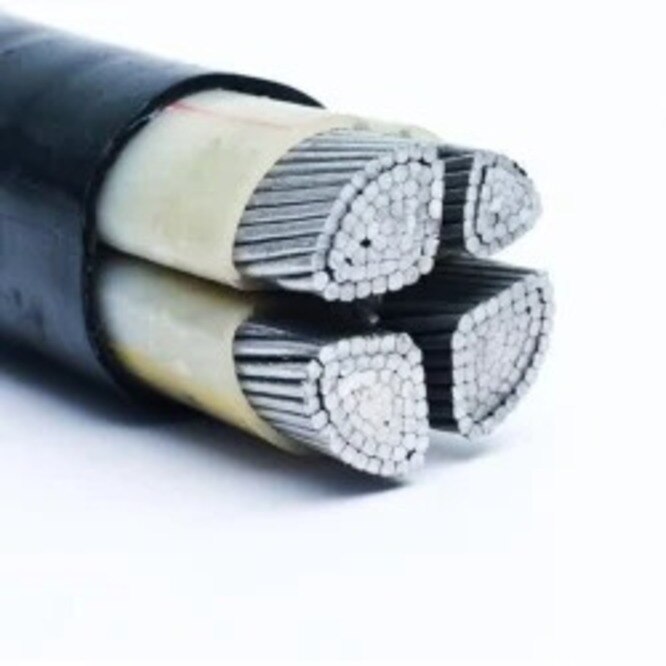
| Screened power | Copper tape, copper-wire braid, concentric copper screen, aluminium-polyester foil, or a combination around power cores | Conductor class, screen continuity, resistance or transfer impedance, and rated current |
| Screened instrumentation | Twisted pairs with an overall shield, individual pair shields, or both | Pair arrangement, signal type, crosstalk control, screen coverage, and circuit frequency |
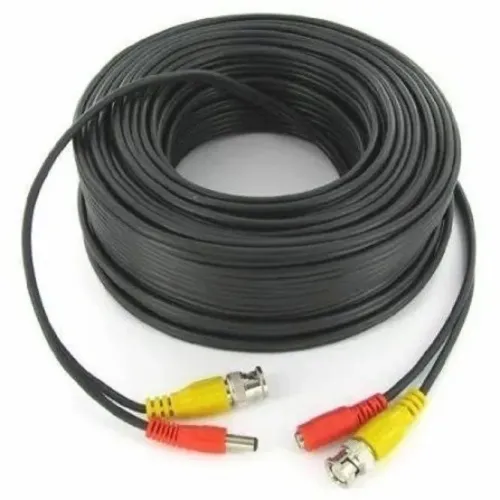
| Coaxial | Central conductor, dielectric, surrounding shield and outer jacket | Characteristic impedance and transmission-line specification; it is not a general motor feeder |
| Ordinary power | Power cores without an intentional metallic barrier for interference currents | Do not assume EMI control because the cable is labelled industrial |
Individual pair shields limit crosstalk between instrumentation pairs; an overall shield protects the group from external noise. A foil screen can deliver high coverage, while a braid offers stronger mechanical handling and lower impedance at certain frequencies. Combined foil-and-braid designs address both requirements.
Reject a quotation that says only “shielded cable.” Ask for the exact screen construction, coverage, transfer impedance or resistance, continuity, conductor class and intended frequency. When comparing Polycab screened cable in Raipur, verify armour separately. Screening controls electrical interference; armour addresses impact, crushing, rodents and direct burial.
How should the screen be bonded, earthed and terminated?
Bond the screen at the gland, panel entry and equipment connection so it forms a continuous, low-impedance path. A screen that stops at a painted panel surface or loose gland cannot divert interference effectively.
For a VFD-to-motor circuit, terminate the screen at both the drive and motor ends using a short, wide connection, preferably with 360-degree contact around the cable. A long drain-wire pigtail adds high-frequency impedance and can weaken EMC performance.
| Connection method | Suitable application | Main risk |
|---|---|---|
| Single-end bond | Some low-frequency analogue circuits | Ground-potential differences can drive shield current and create measurement error |
| Both-end bond | VFD motor cables and high-frequency circuits | Poor bonding hardware can leave a high-impedance path |
| 360-degree bond | Drive and motor entries requiring strong EMC control | An unsuitable gland can damage or fail to contact the screen |
Do not apply “earth one end” or “bond both ends” as a universal rule. Follow the drive manufacturer’s EMC instructions, the project earthing drawing and the specified cable system.
Check these points before energising:
- Match the gland to the screen construction.
- Remove paint, corrosion and dirt from bonding surfaces.
- Tighten hardware so vibration cannot interrupt continuity.
- Do not use a thin foil or small drain wire as protective earth, armour bonding or a fault-current conductor unless its area, continuity and short-circuit withstand are calculated.
Screening alone does not eliminate motor-bearing currents. Cable symmetry, output filters, motor bonding, cable length and the motor’s bearing arrangement still affect the result.
Which technical checks should you complete before ordering?
Before ordering, calculate load or motor current, prospective fault level, route length and permitted voltage drop. Then specify conductor material, conductor class, core count, cross-sectional area in mm², rated voltage, insulation compound and sheath compound. A Polycab cable for industrial use is suitable only when its construction matches the duty.
- Confirm operating temperature, short-circuit rating, minimum bend radius, current capacity, screen type, screen coverage or resistance, fire performance and applicable test standards. IEC 60228 or the relevant Indian standard can cover conductor construction; insulation, flame propagation, smoke, halogen-acid-gas, oil and chemical resistance need separate checks.
- Derate catalogue current for ambient temperature, grouped loaded circuits, tray or conduit arrangement, solar exposure and soil thermal resistivity on buried routes. Map tray, conduit, outdoor sections, hazardous areas, direct burial, continuous flexing and nearby unshielded power or sensitive signal wiring.
| Check | Confirm | Consequence of omission |
|---|---|---|
| Conductor | Material, class, cores and mm² | Excess heating or voltage drop |
| Screen | Type, coverage or resistance and continuity | Poor EMC control |
| Mechanical | Bend radius, sheath compound and armour | Damage during installation or service |
| Standards | Construction, fire, smoke and environmental tests | One certificate may not prove all properties |
Keep the screen and armour continuous across every joint and termination. For VFD routes, verify drive output, motor-cable length, filter requirements and the manufacturer’s permitted cable construction. The screen is not automatically a fault-current conductor.
A nominal ampere table cannot establish site suitability; the installed rating, voltage drop and complete termination system must pass the project design.
What should you request from a screened cable dealer in Raipur?
Ask the screened cable dealer in Raipur for documents and identification before you compare prices. Two cables sold as “shielded” can differ in screen continuity, conductor class, sheath compound and temperature limit.
- Manufacturer’s datasheet and exact part or construction designation
- Drum length, batch number, manufacturing marking and traceability information
- Routine-test details or a test certificate linked to the batch
- Quotation stating conductor material and class, core count, cross-section, voltage rating, insulation and sheath materials
- Screen arrangement, screen coverage or resistance, temperature rating, fire requirements and applicable standards
Screened power, screened instrumentation, coaxial and armoured are not interchangeable.
| Type | What it identifies | Typical purpose |
|---|---|---|
| Screened power | Metallic screen around power cores | VFD, motor or load circuits |
| Screened instrumentation | Twisted pairs with individual or overall shields | Low-level measurement and control |
| Coaxial | Central conductor, dielectric, surrounding shield and jacket | Defined-frequency signal transmission |
| Armoured | Mechanical protective layer | Impact, crushing, rodents or burial |
Ask for IEC 60228 or the applicable Indian conductor standard, plus separate evidence for flame, smoke, halogen-acid-gas, oil or chemical requirements. Give the supplier the route, load, drive or instrument details and environmental conditions; “industrial use” is not a specification.
Prabhat Cables Pvt. Ltd can help check genuine Polycab documentation against your approved cable schedule. Choose Polycab screened cable in Raipur only when construction matches the EMC design, installed ampacity, mechanical exposure and termination method. Missing screen data or test evidence means pause the order.
Related product
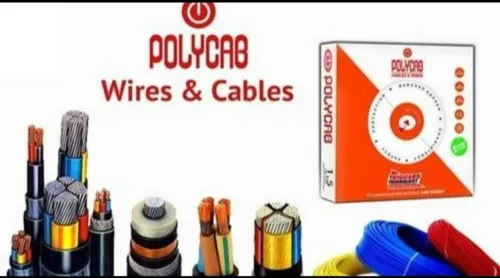
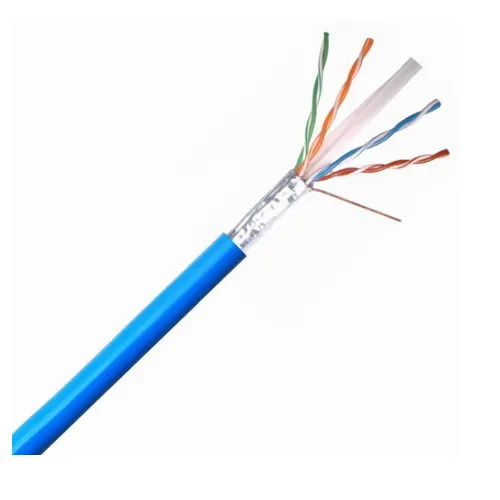 | Polycab Screened Cables Polycab screened cables are power cables designed with a metallic shield (screen) to minimize electromagnetic interference (EMI) and ensure signal... View product → |
Frequently asked questions
When does an industrial installation need a screened cable?
Use screened cable when variable-frequency drives, motors or switching equipment share routes with PLC, control or instrumentation circuits and electromagnetic interference could affect signals.
How do screened power, instrumentation and ordinary cables differ?
Screened power cables control electromagnetic interference around power conductors, instrumentation cables protect low-level signals, and ordinary cables lack a dedicated conductive screen.
How should the screen be bonded, earthed and terminated?
Follow the project earthing design, provide a low-impedance bond at the specified end or both ends, and terminate the screen with the correct gland, clamp or connector.
Which technical checks should you complete before ordering?
Confirm voltage rating, conductor size, insulation, screen type, number of cores or pairs, temperature range, installation route, bending radius, fire performance and required test documents.
What should you request from a screened cable dealer in Raipur?
Request the manufacturer datasheet, exact part number, drum length, batch details, test certificate, delivery condition and confirmation that the cable matches your approved specification.