Flexible cables fail when moisture, heat, dust, rough handling and repeated bending are treated as minor issues. Use a recorded inspection routine, apply clear recovery limits and test the isolated circuit before returning it to service; by the end, you will know when cleaning or termination work is enough and when replacement is the safe decision.
Key takeaways
- Inspect moving or outdoor cables before each shift or use.
- Clean cables dry; never store them wet, kinked, or under load.
- Replace cables with exposed conductors, crushed insulation, or failed tests.
- Verify the supplier, product marking, batch details, and test documents.
How often should you inspect flexible cables in Raipur?
Set the inspection frequency by cable duty and environment: inspect portable, moving or outdoor cables before each shift or use, fixed maintenance runs monthly, and exposed cables quarterly in a documented review. This is the core of effective Polycab flexible cable care in Raipur.
1. During each visual check, look for cuts, crushed insulation, flattened sections, kinks, bird-caging, loose strands, exposed conductor or braid, hardening, swelling, heat discoloration, melted insulation, corrosion, oil ingress and moisture damage.
2. Examine the cable where it enters a plug, gland, junction box or moving machine. Concentrated damage there often shows failed strain relief. Check plugs, glands, ferrules and terminals for cracking, looseness, overheating and water entry; clamping only inner cores transfers movement to terminals.
3. Apply the quarterly review to cables exposed to monsoon water, high humidity, dust, direct sunlight, chemicals or rough concrete. Increase the frequency after flooding, equipment overload, a cable-pull incident or repeated flexing faults.
4. Record the installation date, location, duty, findings and photographs. Add test readings, termination work and replacement reasons when available, so increasing damage can be compared over time instead of judged from appearance alone. A cable kept dry indoors must not be assumed safe after outdoor exposure or immersion.
What is the correct cleaning, drying and storage routine?
Isolate the circuit, lock out the supply and prove it dead with an approved tester before cleaning or handling a flexible cable. Remove loose dust with a dry, soft cloth or brush. Use a cleaner only when the cable and sheath manufacturer permits it.
- Keep solvents, petrol, abrasive tools and high-pressure water away from insulation, plugs, glands, connectors and other terminations.
- If monsoon water or washing has wet the cable, disconnect it, wipe the sheath, open approved enclosures for drainage and dry it in a shaded, ventilated location.
- Do not energise the cable while moisture remains inside a plug, gland, connector or junction box.
- Never use a flame or uncontrolled heater to accelerate drying.
Store drums, coils and cut lengths off the floor, away from standing water, direct sun, welding sparks, oils, chemicals and sharp edges. Raipur’s heat, UV exposure, dust and monsoon humidity demand protected storage plus post-exposure inspection; indoor dryness does not prove that an outdoor or immersed cable remains sound.
Unroll a coil in the winding direction. Do not drag it across concrete or pull cable from a stationary coil. During installation, follow the manufacturer’s minimum bend radius and provide strain relief at every plug or gland; forced bends can damage strands beneath an intact sheath.
Use this polycab flexible cable care routine whether you buy through a polycab dealer in Raipur or another supplier, and retain the manufacturer’s cleaning and storage instructions with the maintenance record.
When does cable recovery become cable replacement?
Recovery ends and replacement begins when damage threatens the cable’s insulation, conductor or mechanical strength. Polycab flexible cable recovery is a decision process, not a promise that every damaged cable can be saved.
1. Clean and dry the cable only when its sheath remains intact and contamination or surface moisture is the sole defect. Isolate it, remove dirt with an approved method, dry it fully and inspect the entry points before testing.
2. Replace a damaged plug, gland or termination only when the cable core and insulation remain sound. The replacement must match the cable’s outside diameter and duty, provide sealing and strain relief, and follow the manufacturer’s termination method. For fine-stranded conductors, fit a ferrule only when the terminal accepts that ferrule geometry.
3. Replace the complete cable immediately for exposed conductor, crushed insulation, tracking, melted or heat-hardened insulation, deep cuts, swelling, corrosion, repeated kinks, bird-caging, broken strands, an oil-softened sheath, water penetration into the cable or intermittent continuity during movement.
Do not repair a portable or moving cable by twisting conductors together and wrapping them with tape. Ordinary electrical tape does not restore dielectric strength, mechanical protection or ingress rating; it cannot correct damage repeatedly flexed behind a plug or gland. Replace that cable even when the outer sheath still looks acceptable.
A cable joint is suitable only when the installation design permits it and the connector or enclosure provides the required electrical rating, sealing and strain relief.
How should you test a flexible cable after maintenance?
Start with safety, not the meter. A competent electrician must isolate the circuit, apply lockout/tagout, prove absence of voltage with an approved tester, discharge stored energy and disconnect drives, surge protectors, control electronics and any other equipment that an insulation-resistance test could damage.
Use this post-maintenance checklist:
- Test continuity of every conductor and verify polarity where polarity applies.
- Check protective-earth continuity when the cable includes an earth conductor or protective bonding path.
- During the de-energised continuity test, flex the cable section by section, especially near plugs, glands and other terminations. Watch for intermittent readings caused by broken strands that a stationary test can miss.
- Use an insulation tester for conductor-to-conductor and conductor-to-earth tests. Record the DC test voltage, conductor pairs, cable length, temperature and connected-equipment status.
- For many low-voltage circuits up to 500 V, 500 V DC and at least 1 MΩ are commonly used reference values. The installation standard, equipment manufacturer and circuit category determine acceptance.
- Record every reading, repair, replacement reason and retest result in the maintenance log.
A continuity pass does not prove insulation safety. Do not return a mains cable to service after an intermittent result; replace it. Treat Polycab flexible cable recovery as complete only after the cable passes the required tests and the records show what was isolated, tested and corrected.
How do you choose a replacement cable and verify the supply?
Choose a replacement by the original circuit’s current-carrying capacity, protective-device rating, installation method, ambient temperature and cable grouping—not by cross-sectional area alone. A larger conductor can exceed the gland size, bend radius or terminal capacity and create an unsafe connection.
| Duty | Specify before ordering | Main mismatch risk |
|---|---|---|
| Fixed route | Size, core count, voltage grade, conductor class, insulation and sheath material, temperature rating | Wrong ampacity or incompatible termination |
| Dragged or repeatedly flexed | Flexing duty, minimum bend radius, conductor class and strain relief | Broken strands and intermittent faults |
| Suspended, coiled or torsion-loaded | Torsion rating, bend radius, support method and ingress protection | Twisting, crushing or water entry |
Record chemical exposure, UV or heat exposure, and whether the cable will enter a wet, dusty or oil-contaminated area. Do not mix aluminium with copper, fine-stranded conductors with solid-conductor terminals, or incompatible insulation materials without approved connectors, ferrules and termination methods.
If you search for a polycab dealer polycab authorized dealer flexible cable for maintenance in raipur, request these details with the quotation:
- Exact manufacturer part number, size, core count, voltage grade, insulation type and temperature rating
- Applicable standard, supplied length, batch or lot details and invoice description
- Warranty or replacement procedure, plus evidence of traceability
A polycab authorized dealer flexible cable in raipur should identify those details before dispatch. A polycab dealer in raipur such as Prabhat Cables Pvt. Ltd can help verify genuine product identification and procurement records.
Related products
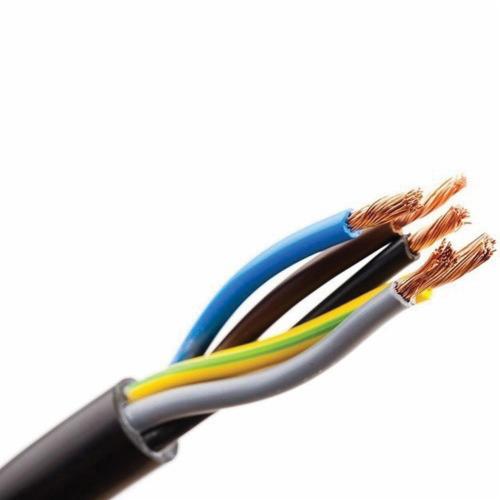 | Polycab Flexible Cables Polycab flexible cables are electrical cables designed with enhanced flexibility for various applications, including those involving movement,... View product → |
 | Polycab Festoon Cables Polycab Festoon Cables are specialized flat, flexible cables designed for use in festoon systems, particularly on cranes, hoists, and lifts. View product → |
Frequently asked questions
How often should you inspect flexible cables in Raipur?
Inspect portable, moving, or outdoor cables before each shift or use, fixed maintenance runs monthly, and exposed cables quarterly in a documented review.
What is the correct cleaning, drying and storage routine?
Isolate the cable, remove dust with a dry cloth, use a manufacturer-approved cleaner when needed, dry it fully, coil it without sharp bends, and store it away from heat, moisture, oil, and sunlight.
When does cable recovery become cable replacement?
Replace the cable when conductors are exposed, insulation is cracked, cut, crushed, swollen, heat-damaged, contaminated, or the plug and termination are unsafe. Do not repair damage that affects insulation integrity or flexibility.
How should you test a flexible cable after maintenance?
After visual inspection, test continuity, protective-conductor continuity, insulation resistance, polarity, and operation of the connected protective device using equipment suitable for the cable and installation.
How do you choose a replacement cable and verify the supply?
Match voltage rating, conductor size, core count, current capacity, temperature and environmental ratings, flexing duty, sheath material, length, and termination. Check the Polycab marking, packaging, batch details, invoice, and supplier authorisation.