A quotation that says only “highrise cable” does not identify whether you are buying power wire, CCTV cable, data cable, alarm cable or a fire-survivable circuit. By separating each security system’s cable requirements from the building route, fire specification and authenticity checks, you can decide whether a distributor can supply an acceptable package in Hyderabad.
Key takeaways
- Record the exact cable family, core count, conductor size and rated voltage.
- Match CCTV, access control and fire circuits to their cable specifications.
- Check bend radius, sheath construction and fire performance before approving routes.
- Request invoices, test reports, batch details and manufacturer documentation.
What does “highrise cable” mean in a security installation?
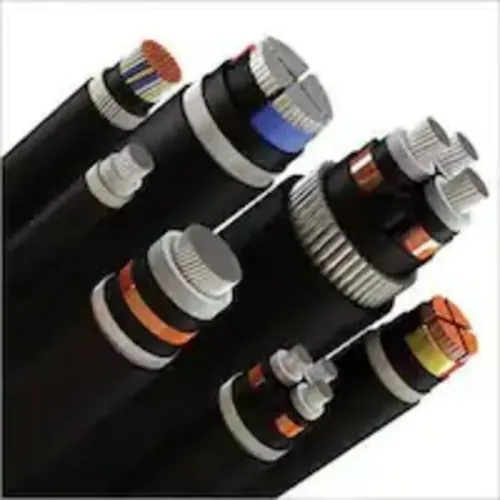
“Highrise cable” is not a sufficient product description for a security installation; it is a trade label, not a universally defined cable class. For Polycab highrise cable buying, record the exact Polycab product family, conductor size, core count, rated voltage, insulation and sheath construction, applicable IS or IEC standard, and intended circuit.
A quotation without these details is not ready for technical approval.
| Cable use | What it carries | Why “highrise cable” is insufficient |
|---|---|---|
| Fixed power or lighting | Building power to luminaires and equipment | It does not specify suitability for low-voltage security loads |
| Security power | 12 V or 24 V supply to cameras, readers, panels and locks | Voltage drop, cores and conductor size must match the equipment |
| Analogue CCTV | Video, often with separate power conductors | Impedance, bandwidth and construction must match the camera system |
| IP security network | Ethernet data and possibly PoE | Category, solid-copper construction, pair configuration and PoE suitability matter |
| Alarm or fire-survivable circuit | Supervised signals or operation during fire | Shielding, circuit integrity and the required fire-survival test control selection |
HRFR or FRLS marking alone does not prove low-smoke or halogen performance, and neither marking proves that a circuit will operate during a fire. Fire alarm, voice evacuation and emergency-security circuits require the specified fire test and installation method.
Reject a quotation that lacks the exact SKU or technical construction. Ask which security circuit the cable serves, and verify the manufacturer identification, marking and sealed packaging before accepting genuine Polycab highrise cables.
Which cable does each security system require?
Choose the cable by security system, not by the building’s “highrise” label. A highrise cable supplier for security installers must match each circuit’s signal, voltage, construction and fire requirement.
| System | Cable selection | Check before approval |
|---|---|---|
| Analogue CCTV | Coaxial cable with the specified impedance, video bandwidth and shielding; add separate power conductors where required. | Confirm the camera, recorder and distance specification. |
| IP CCTV | Required Ethernet category, solid copper, correct pair configuration, 100-ohm impedance and PoE suitability. | Reject copper-clad aluminium where compliant PoE or structured-cabling performance is required. |
| Access control | Power and signal cores sized for lock voltage drop, reader communication and exit devices. | Calculate the far-end voltage at 12 V or 24 V, not just cable ampacity. |
| Intercom | Cable specified by the manufacturer for audio, video or network operation. | Match the approved cable to the intercom model and topology. |
| Intrusion alarm | Multi-core cable, with shielding or supervised-circuit characteristics where the panel requires them. | Check core count, loop arrangement and panel termination. |
| Public address | Specified speaker-loop cable with the project’s required fire-performance rating. | Verify conductor size, loop loading and fire test. |
| Fire alarm | Fire-survivable cable tested to the project requirement. | Record the required test and circuit-integrity period. |
One HRFR building wire cannot replace coaxial, Ethernet, alarm, speaker-loop and fire-survival cables. Flame retardance, low smoke and fire survival are separate claims; “FRLS” or “HRFR” alone does not prove circuit operation during a fire. Select every SKU against the system schedule and installation method.
Will the selected cable work through risers, shafts and exposed routes?
An electrically compliant cable can still fail after installation if voltage drop, moisture, routing or termination was ignored.
For a 12 V or 24 V circuit, calculate drop from the measured route length, load current and total loop resistance, including both conductors, terminations and joints; an ampacity-compliant cable can still leave a lock, camera auxiliary or alarm device under-voltage.
Take off the installed route, not the floor-to-floor distance, and add an agreed spare allowance. Avoid unnecessary joints, then verify the cable’s bend radius, containment, mechanical protection, segregation from power circuits, earthing and surge protection.
Assess these locations separately:
- Vertical risers and shafts: check support, fire stopping, bend radius and separation from mains cables.
- Horizontal corridors: check tray fill, containment, access for maintenance and joint locations.
- Basement routes: check dampness, standing water and suitable mechanical protection.
- Rooftop equipment rooms: check heat, UV exposure, weather entry and surge protection.
- Outdoor gates and perimeter routes: check UV resistance, moisture sealing, impact protection, earthing and lightning exposure.
For IP CCTV, permanent-link or channel certification depends on cable category, patch panels, field connectors, termination quality and bend radius—not the reel label alone. For fire alarm, voice evacuation and emergency-security circuits, flame retardance, low smoke and fire survival are separate claims; approval must match the specified test, containment and installation method.
A search for polycab distributor highrise cable for security projects in hyderabad is only a sourcing query. Request the load, route length, voltage-drop limit and installation conditions before accepting a SKU.
What documents prove the cable is compliant and genuine?
Before accepting a quotation or delivery, require documents that identify the exact cable, its construction and its manufacturing history—not merely the Polycab name.
1. Request the current datasheet and technical specification for the exact product code. They must state the conductor size, core count, rated voltage, insulation and sheath construction, applicable IS or IEC standard, standard mark where applicable, and intended use.
2. Request the manufacturer’s test certificate, quotation, tax invoice, packing details, batch number, manufacturing information and drum or coil length. Check that the product code and batch or drum identification match across every document.
3. Inspect the sealed drum or coil before acceptance. Compare its label and the printing on the sheath with the quotation and invoice, checking size, voltage grade, standard marking, manufacturer name, batch details and length. Use the QR code or authentication feature when Polycab provides one.
4. Photograph and retain the sealed packaging, drum or coil label, sheath marking, batch records, test certificate, quotation, invoice and distributor documentation. Reject mismatched records, damaged seals or unexplained relabelling.
A low price, a branded outer label or verbal assurance does not establish authenticity. For genuine Polycab highrise cables, evidence must trace the cable to a defined product and batch.
A polycab highrise cable distributor in hyderabad must also show current authorisation for the relevant product category; general ability to supply Polycab electrical goods does not cover every security cable.
Can a distributor supply the complete security cable schedule?
A distributor can supply the complete schedule only when it can identify, document and source every required cable type—not merely offer one HRFR building wire. The search phrase polycab distributor highrise cable for security projects in hyderabad describes a sourcing route, not a technical approval.
Give the highrise cable supplier for security installers this submittal checklist:
- Equipment load, operating voltage, conductor size, measured route length and permitted voltage-drop limit.
- Cable type, core count or pair count, shielding, characteristic impedance and required bandwidth.
- Insulation and sheath construction, fire requirement, installation location and required quantity.
The supplier must then map each line to the system schedule. A security package can require separate power cable, Ethernet data cable, analogue CCTV coaxial cable, supervised alarm cable and fire-resistant or fire-survivable cable. One HRFR wire cannot replace them.
Prabhat Cables Pvt. Ltd can be approached as an authorised Polycab distributor for product identification and supply discussion, but the consultant, client, fire authority and system manufacturer decide technical acceptance. During Polycab highrise cable buying, retain the quotation, exact SKU, datasheet, tax invoice, batch or drum identification and test evidence.
Approve the package only when every SKU matches the security schedule, building specification, route conditions and retained proof of genuine supply.
Related product
 | Polycab Highrise Cables Polycab Highrise Cables are a range of wires and cables specifically designed for use in high-rise buildings, prioritizing safety and performance in... View product → |
Frequently asked questions
What does “highrise cable” mean in a security installation?
“Highrise cable” is a trade label, not a universal cable class. Specify the Polycab product family, conductor size, core count, rated voltage, insulation, sheath construction, applicable IS or IEC standard and intended circuit.
Which cable does each security system require?
CCTV, access control, intercom, fire alarm and other systems use different cable arrangements. Match each circuit to its equipment manual, voltage, signal type, core requirement, shielding needs and applicable standard instead of ordering by the phrase “highrise cable” alone.
Will the selected cable work through risers, shafts and exposed routes?
Check the cable’s minimum bending radius, pulling tension, temperature range, sheath construction, fire performance and permitted installation method. Confirm that the specification covers vertical risers, enclosed shafts, trays, conduits or exposed sections used on the project.
What documents prove the cable is compliant and genuine?
Ask for the manufacturer’s datasheet, applicable IS or IEC standard reference, test reports or certificate, invoice, batch or drum number, packaging photographs and dealer documentation. Match the batch and product details across the drum, label, invoice and paperwork.
Can a distributor supply the complete security cable schedule?
A distributor can prepare a schedule when you provide system drawings, equipment specifications, route lengths and installation conditions. The schedule should identify each circuit, cable family, core count, conductor size, quantity, drum length, accessories and supporting documents.