HT cable belongs on the medium-voltage AC side of a solar plant, not between PV modules and inverters. By matching the interconnection voltage, cable construction, test documents, approval route and delivery controls to the project design, you can decide whether a dealer offers the safest and most economical purchase channel.
Key takeaways
- Use HT cable on medium-voltage AC circuits, not between PV modules and inverters.
- Match voltage, conductor size, insulation and screen construction to the single-line diagram.
- Check drum markings, test certificates, seals and cable length before accepting delivery.
- Compare dealer support, testing, logistics and total installed cost before buying.
Where HT cable is used in a solar plant, and which voltage you need
HT cable is needed only on the solar plant’s medium-voltage AC collector or evacuation circuit, not between PV modules and inverters. It may run from an inverter output to a step-up transformer, from the transformer to switchgear, through a collector feeder to the pooling substation, or from that substation to the grid evacuation point.
| Circuit | Cable category | What to confirm |
|---|---|---|
| PV strings | 1.5 kV DC solar cable | UV resistance and wet-condition performance |
| Inverter-side AC feeder | LT AC cable | Inverter output voltage and feeder design |
| Collector or evacuation circuit | HT/MV AC cable | Transformer secondary voltage and approved route |
The phrase HT cable for renewable energy projects does not identify a voltage. Select 3.3 kV, 6.6 kV, 11 kV, 22 kV or 33 kV from the transformer secondary voltage, project single-line diagram, interconnection agreement and utility or DISCOM approval.
A collector circuit that carries the inverter’s continuous current can still fail its short-circuit check if fault current or protection-clearing time is higher than assumed.
Do not accept a quote based only on “HT cable.” The construction must suit a buried, ducted, trefoil or outdoor route. Obtain written confirmation from the consultant, utility and DISCOM before accepting the quotation, including the installation method and voltage class.
Even a search for polycab cable and wire dealer ht cable for solar installers in hyderabad is not technical approval; a dealer’s description cannot replace the project cable schedule.
How to turn the single-line diagram into a complete cable specification
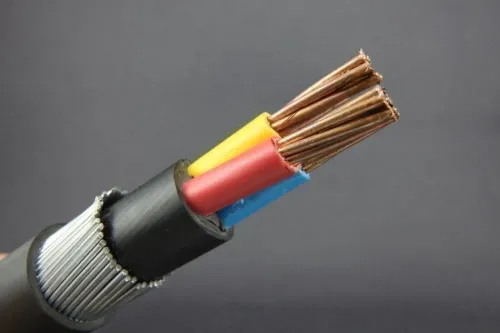
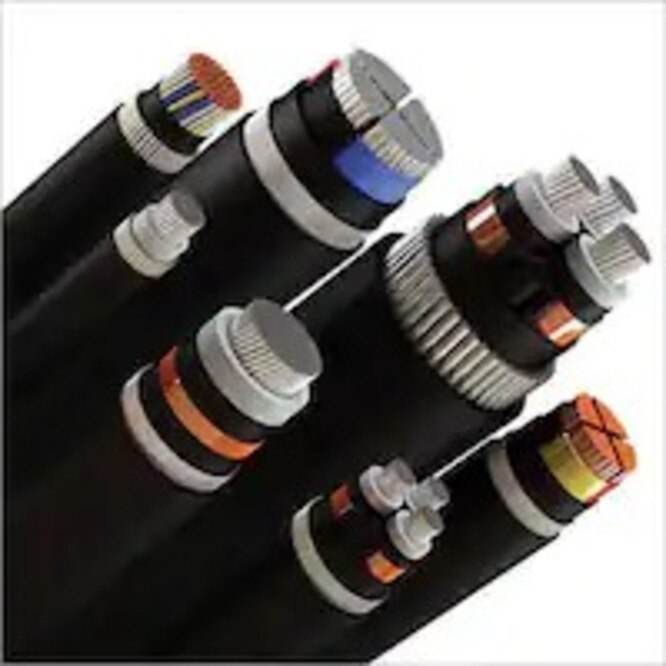
A complete purchase description must specify the cable construction, not merely say “3-core 33 kV cable.” Include conductor material and size, conductor class, XLPE insulation, metallic-screen material and cross-section, armour, oversheath material, voltage designation U0/U, required drum length and applicable standard.
- Select single-core or three-core construction from the voltage level, route, fault study, installation space and approved cable schedule.
- Check continuous ampacity, voltage drop and short-circuit withstand using actual ambient temperature, soil thermal resistivity, burial depth, duct installation, trefoil or flat formation, spacing, grouping and parallel-circuit assumptions.
- State the metallic-screen bonding arrangement: earth-fault current, protection-clearing time, single-point or both-end earthing, and permitted sheath-voltage limits.
- Identify IS 7098 Part 2 for XLPE cables rated 3.3 kV through 33 kV, IS 14255 where specified, or IEC 60502-2 for an IEC-based project. Reconcile voltage designation and test regime before ordering.
- Request type-test and routine-test evidence tied to the quoted conductor size, screen, armour, sheath and voltage class.
Copper and aluminium are engineering choices, not price-per-metre choices.
| Option | Ampacity and weight | Termination, cost and handling |
|---|---|---|
| Copper | Higher ampacity for a given cross-section and heavier cable | Easier compact terminations, higher material cost, harder manual handling |
| Aluminium | Larger cross-section for equivalent duty and lower weight | Requires approved lugs, oxide-control practices and correct torque; lower material cost and easier pulling |
A Polycab HT cable dealer for solar projects or a Polycab high tension cable supplier in Hyderabad should quote against this schedule, including engineered drum lengths rather than a catalogue number alone.
When a dealer is the right buying channel—and when it is not
A dealer is the right channel when local stock, Hyderabad delivery, shorter lead time or smaller drum quantities prevent installation delay and cable wastage. It is not automatically the best channel: project approval, engineered lengths, accessories, testing and traceability can outweigh a lower rupees-per-metre quote.
| Channel | Strength | Risk or limitation |
|---|---|---|
| Polycab cable and wire dealer | Local stock, split drums, shorter freight route and faster replacement | Confirm approved make, exact construction, drum records and warranty |
| Manufacturer direct | Engineered drum lengths, factory coordination, documentation and supervised testing | Higher minimum quantities, longer lead time or less flexible delivery |
| EPC contractor or project-approved vendor | Alignment with tender, cable schedule, accessories and inspection hold points | Less control over price, stock and surplus cable |
| General wholesaler | Availability for standard items | Weak project traceability, uncertain approval and limited factory support |
Choose direct or project-channel procurement when the tender requires factory coordination, engineered lengths, accessory matching, inspection hold points or manufacturer-supervised testing. For a Polycab HT cable dealer for solar projects, ask for written confirmation of the voltage class, conductor and screen construction, installation method and approved make status.
A Polycab cable and wire dealer, including Prabhat Cables Pvt. Ltd, belongs in the comparison only after the owner, consultant, tender, utility and DISCOM accept the proposed cable. Authorised-dealer status does not replace engineering approval.
- Approved vendor record and manufacturer datasheet
- Applicable type-test evidence and the supplied drum’s routine-test certificate
- Batch or drum traceability and warranty terms
- Confirmed drum lengths, freight, storage, accessories and split-drum charges
Related product
 | Polycab Telephone & Switchyard Wires Polycab Telephone & Switchyard Wires Polycab Telephone Wires are communication cables designed for reliable voice and data transmission in both residential and commercial settings. View product → |
What to check on the drum before accepting HT cable in Hyderabad
A correct quotation can still become a wrong delivery, so inspect every drum before acceptance. Whether you use a Polycab high tension cable supplier in Hyderabad or another Polycab cable and wire supplier, match the physical identification with the purchase order, invoice, datasheet and drum-specific routine-test certificate.
1. Check the manufacturer marking, voltage grade, conductor material and size, core count, metallic screen, armour, sheath, drum number, batch or manufacturing details and marked length. Quarantine the drum if any identification differs, the certificate belongs to another drum or the cable marking is missing.
2. Inspect both sealed cable ends. Reject or quarantine the drum for water entry, cuts, a crushed sheath, exposed screen or impact damage. Keep accepted drums upright, capped, dry and protected from vehicles, stacking and direct impact; an intact wooden drum does not prove that the cable inside is sound.
3. Before dispatch, confirm each drum length against the route and verify the pulling direction, minimum bending radius, maximum pulling tension, sidewall pressure, roller arrangement and drum orientation. Excessive pulling force can damage the screen or insulation without leaving an obvious external mark.
4. Confirm that buried, tray, duct or trefoil installation matches the ampacity derating used in the design. Select the termination or joint kit using conductor area, insulation diameter, screen type, armour and environment—not conductor size alone. A mismatch can cause poor moisture sealing or partial discharge.
How to make the final buy-or-bypass decision after testing and total-cost review
A dealer purchase is commercially sound only when the delivered and installed cost beats the alternatives without weakening technical control. Add cable price, engineered spare length, joints, terminations, freight, storage, inspection, wastage, testing and the cost of a delayed grid connection—not just the rupees-per-metre quote.
| Option | Commercial advantage | Control required |
|---|---|---|
| Local Polycab HT cable dealer for solar projects | Faster delivery, split drums and lower freight exposure | Approved make, traceable drums and factory records |
| Direct manufacturer or project channel | Stronger control of engineered lengths, accessories and inspection | Lead time and minimum-order cost must fit the schedule |
| Unverified local source | Possible lowest cable price | Bypass if records, construction or approval cannot be verified |
A polycab cable and wire supplier should receive the same acceptance requirements as any other channel. Do not buy ht cable for renewable energy projects when the quote cannot state the applicable standard, voltage designation, screen sizing, installation assumptions, approved make or drum-specific records.
- Freeze the acceptance plan before laying. Require engineering approval, the manufacturer datasheet, applicable type-test evidence, the supplied drum’s routine-test certificate, batch or drum traceability and warranty terms.
- Inspect and record conductor continuity, phase identification, sheath integrity and insulation resistance separately. These checks do not replace an acceptance withstand or partial-discharge test.
- Use the post-installation voltage, duration and method named in the project specification; do not substitute a convenient megohmmeter test. Confirm that the plan covers the cable, terminations and joints.
- Approve the purchase only when delivery inspection, installation method and commissioning evidence align. Otherwise, rework, accessory failure, protection delays or rejected utility energisation can erase the apparent saving.
Frequently asked questions
Where is HT cable used in a solar plant?
HT cable is used on medium-voltage AC circuits, including inverter-to-transformer, transformer-to-switchgear, collector feeder and grid-evacuation routes. PV module strings and low-voltage DC runs use different cable types.
How do you choose the HT cable voltage for a solar project?
Read the voltage level on the approved single-line diagram and confirm the system voltage, insulation level, conductor material, cross-section and installation method with the project electrical design.
What documents should you check before accepting an HT cable drum in Hyderabad?
Check the drum label, cable size and voltage grade, manufacturer details, batch or drum number, length, seal condition, routine test certificate and delivery documents. Inspect the outer sheath for cuts, crushing or water damage.
When is a Polycab cable and wire dealer suitable for buying solar-project HT cable?
A dealer suits orders that need genuine manufacturer supply, traceable documentation, coordinated delivery and support with standard project quantities. Buy directly from the manufacturer when the project demands factory contracts, unusual construction or direct technical approvals.
How should you compare HT cable quotes before buying?
Compare compliant cable specifications, test documents, delivered length, freight, taxes, testing, installation accessories, lead time, replacement terms and the cost of delays or rejected drums—not only the per-metre price.