A CCTV cable choice affects picture quality, fault-finding time, camera power and the maximum usable distance. By checking the transmission format, cable construction, termination, route and acceptance tests, you can decide whether coaxial cable is appropriate and assess whether a quoted Polycab reel is genuine and suitable for the installation.
Key takeaways
- Confirm TVI, CVI, AHD or IP before ordering cable.
- Specify impedance, shielding, conductor size and attenuation—not only the RG label.
- Match cable, BNC connectors and recorder across the complete video link.
- Test every run and inspect reel documents before approving delivery.
Choose the CCTV transmission method before choosing the cable
Choose coaxial CCTV for an existing analogue HD system, UTP with baluns when structured twisted-pair cabling is already available, and IP-network cabling for a new, scalable installation. Do not select a cable until you know whether the camera and recorder use TVI, CVI, AHD or network video.
| Option | Choose it when | Main trade-off |
|---|---|---|
| Coaxial cable | You are connecting analogue HD cameras to a DVR, including a Siamese run carrying video and power | Direct, simple links; distance and power voltage drop limit expansion |
| UTP with baluns | The building already has Cat5e or Cat6 routes and compatible transmitter-receiver baluns | Lower copper cost in some layouts, but balun quality and format compatibility control results |
| IP-network cabling | You need PoE, remote management, analytics, higher expansion capacity or a VMS | Requires network switches, addressing, bandwidth planning and cybersecurity controls |
Select coax when replacing cameras without replacing the DVR. Select IP when long new routes, centralised management or future camera additions matter more than reusing analogue equipment.
- Confirm the camera output and DVR input use the same analogue format; a TVI camera will not automatically work on every CVI or AHD recorder.
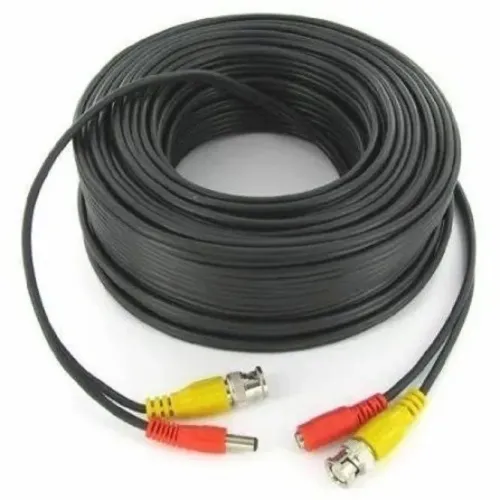
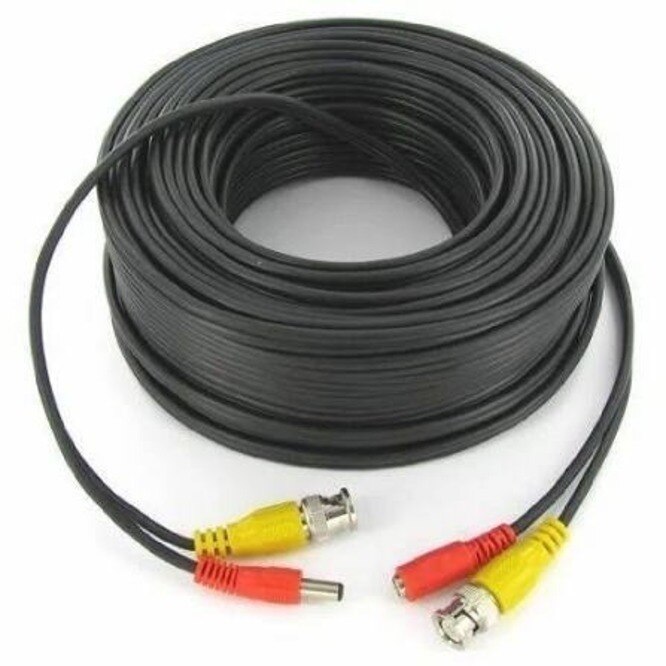
- Treat video and power as separate specifications on a Siamese cable. A thicker power core does not follow from an RG-59 label.
- Do not accept a quoted distance without its format, resolution, recorder, connectors and test conditions.
- A search for “polycab coaxial cable in mumbai” does not prove authorization, genuine stock or warranty; verify those separately.
Specify the coaxial cable by performance, not by RG label
Do not approve a reel labelled only “Polycab CCTV cable.” Ask a Polycab dealer or Polycab authorized dealer for the exact part number, conductor material, drum length and jacket marking before comparing prices.
| Specification | Ask for | Why it determines the run |
|---|---|---|
| Impedance | 75 Ω | Analogue HD cameras and DVR inputs expect a 75-ohm video path; mismatch causes reflections and ghosting. |
| Centre conductor | Solid bare copper, diameter or cross-sectional area | Lower resistance and reliable high-frequency performance. Copper-clad steel has higher DC resistance and can worsen power voltage drop. |
| Attenuation | dB per 100 m at stated frequencies | Shows how much TVI, CVI or AHD signal is lost; a distance claim without frequency and test conditions is incomplete. |
| Shielding | Braid percentage, foil, and coverage | Better screening reduces interference from lifts, motors, lighting circuits and power cables. |
| Dielectric and outer diameter | Dielectric type and finished diameter | These affect impedance stability, bend handling and connector fit. |
| Power core in Siamese cable | Copper gauge and DC resistance per metre | Do not infer power capacity from RG-59 or RG-6. Small or high-resistance cores can starve infrared cameras at night. |
Require the claimed maximum distance to name the format, resolution, camera and DVR chipset, cable attenuation, connectors and whether power shares the run. Video may work while power fails; PoC also requires compatible camera, recorder or injector, resistance and signalling.
If voltage drop or attenuation exceeds the equipment limits, shorten the run, use a specified amplifier or change to network-based CCTV.
Match the cable, BNC termination and recorder as one link
Treat the cable, termination and recorder as one 75 Ω video link. A 50 Ω RF connector, mismatched adapter or poor termination creates reflections, ghosting and lost high-frequency detail even when the cable itself is suitable.
Before approving the run, match each part as follows:
- Select 75 Ω BNC connectors for the cable, and check the connector’s specified outer-diameter and dielectric range against the actual reel. Use a correctly sized compression or crimp BNC; a loose twist-on type can produce intermittent faults.
- Confirm that the camera pigtail is 75 Ω and uses the connector required by the camera’s TVI, CVI or AHD output. Do not force a connector or adapter that changes the impedance.
- Confirm that every patch lead and the DVR input are 75 Ω and that the DVR supports the camera’s transmission format and resolution. A BNC socket alone does not prove compatibility.
- For Power-over-Coax, verify compatibility between the camera, DVR or injector, cable resistance, connectors and the selected PoC method. Video-rated coax can still fail when voltage drop or PoC signalling is wrong.
Ask a Polycab CCTV cable supplier to state the claimed maximum run with the video standard, resolution, camera, recorder and test conditions. The distance is not a universal cable property. If power shares a Siamese cable, check the power-core gauge and resistance separately; never infer power capacity from an RG-59 or RG-6 label.
Route and test the run before Mumbai’s building conditions expose faults
1. Plan the route before pulling cable. Keep coaxial cable away from lift motors, fluorescent-ballast wiring and mains circuits; cross power cables at 90 degrees. Use the specified minimum bend radius, leave service loops at the camera and DVR, and never crush the jacket with staples, sharp bends or over-tight cable ties.
2. Protect every exposed section from Mumbai’s sun and monsoon. Use a UV-resistant outdoor jacket inside suitable conduit or tray, add a downward drip loop before each camera, and seal wall penetrations with a proper gland. Keep connectors out of puddles and use weatherproof BNC boots or enclosures.
Water entering a connector can cause corrosion and intermittent video without breaking the cable.
3. Label both ends and test the installed run before closing the ceiling or conduit. Check centre-conductor continuity, shield continuity, shorts between conductor and shield, and conductor resistance. Compare the measured length and resistance with the reel documentation; ask a coaxial cable dealer in mumbai for the cable’s test limits if they are missing.
4. Test the complete camera-to-DVR link in daylight and with infrared night vision active. Watch for rolling lines, colour loss, snow, flicker and picture dropouts while moving the cable and operating nearby electrical equipment. Measure camera voltage with IR LEDs on; excessive voltage drop can create a fault that appears only after dark.
Record the result, connector locations and test conditions.
Use the dealer’s documents and reel checks to approve the purchase
Approve the reel only when the paperwork, printed jacket and measured cable agree. A search result for “Polycab coaxial cable in Mumbai” proves neither genuine stock nor authorization, and “CCTV cable” is not an adequate specification.
1. Ask the Polycab dealer to state the seller’s legal name, GSTIN, authorization or channel status, exact Polycab part number, drum length and warranty terms on the quotation and tax invoice. Distinguish manufacturer-authorized dealer, stockist, reseller and simple product availability.
2. Verify the authorization through Polycab’s current official channel or customer-support route, not only a marketplace profile, logo or forwarded certificate. Ask whether that exact part number is covered by the quoted warranty and what documents a claim requires.
3. Match the reel with the invoice before signing delivery. Photograph the label, batch or lot number, manufacturing details, printed jacket marking, drum length and both sealed ends; reject a reel with a broken seal, moisture, crushed cable geometry or unreadable identification.
4. Obtain the construction sheet showing impedance, solid bare-copper or copper-clad-steel conductor, conductor diameter, dielectric, braid or foil coverage, overall diameter, DC resistance and attenuation at named frequencies. For Siamese cable, record the power-core gauge and resistance separately.
5. Retain a cut sample and test continuity, shield continuity and conductor resistance before installation. Record the results against the reel number so a night-vision fault can be traced to the cable rather than blamed on the DVR.
A coaxial cable dealer in Mumbai should supply these records without substituting “Polycab CCTV cable” for a part number. Prabhat Cables Pvt. Ltd can be evaluated by the same receiving checklist: authorization evidence, traceable invoice, matching reel markings and warranty paperwork.
Related products
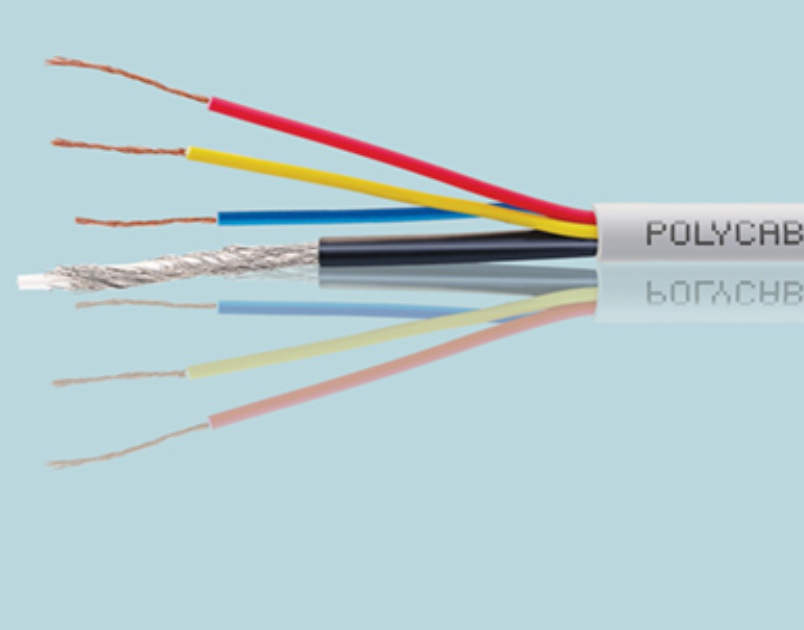 | Polycab CCTV Cables Polycab CCTV cables are specifically designed for use in closed-circuit television (CCTV) systems, offering reliable video signal transmission and... View product → |
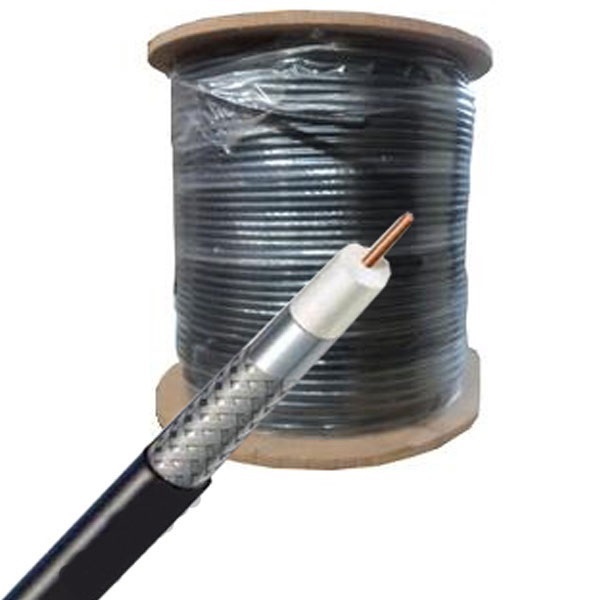 | Polycab Co-Axial Cables Polycab coaxial cable is a type of cable designed for transmitting high-frequency electrical signals, commonly used in cable television (CATV) and... View product → |
Frequently asked questions
When should CCTV installers choose coaxial cable instead of UTP or IP cabling?
Choose coaxial cable for an existing analogue HD system using TVI, CVI or AHD. Use UTP with baluns when structured twisted-pair cabling is already installed, and choose IP-network cabling for a new scalable system.
Why should installers specify coaxial cable by performance rather than RG label?
State the cable’s impedance, shielding, conductor size and attenuation at the required frequency. An RG label alone does not confirm that the cable suits the camera-to-recorder distance or video format.
What must installers match when terminating a CCTV coaxial link?
Match the coaxial cable, BNC connector type and recorder input as one link. Check connector fit, impedance and termination quality before commissioning the camera.
How should installers test CCTV coaxial cable runs in Mumbai buildings?
Route the run away from power interference, protect it from moisture and mechanical damage, then test continuity, image quality and the complete camera-to-recorder path before handover.
What should you check when buying Polycab coaxial cable from a Mumbai dealer?
Ask for product identification, batch details and applicable technical documents. Inspect the reel label, cable markings, seal, conductor and shield before accepting the purchase.