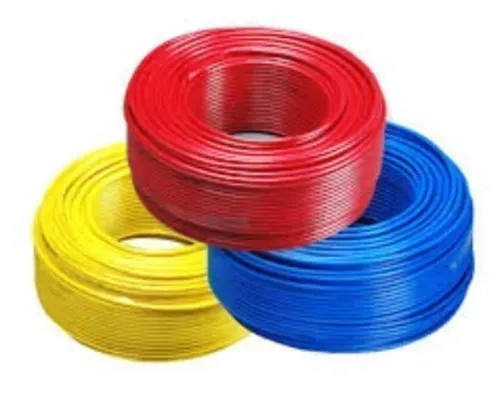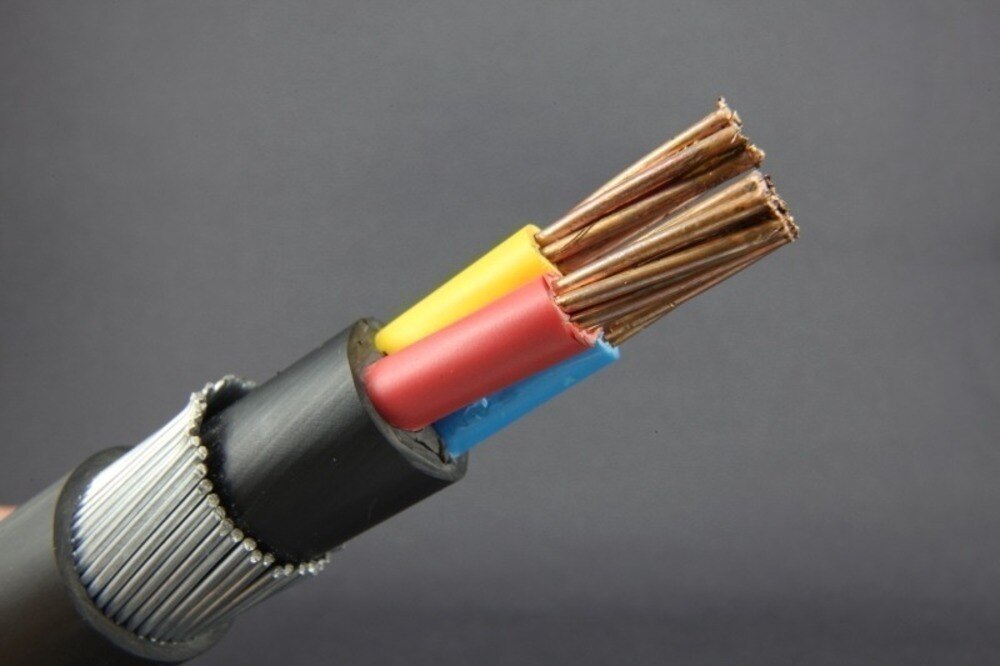
A request for a “Polycab armored cable” is incomplete unless it distinguishes an armoured optical-fibre cable from an electrical power cable installed beside a separate fibre route. You will be able to define the required construction, test a dealer’s quotation, plan the installation, and verify the delivered drum before approving the supply.
Key takeaways
- Confirm whether you need armoured fibre, ducted fibre or separate power and data cables.
- Match fibre count, armour, route length and environment before requesting quotations.
- Ask dealers for cable markings, batch details, test reports and genuine-supply documentation.
- Include OTDR tests, loss results, as-built drawings and handover records in the purchase scope.
Define the Fibre Cable Before You Ask for a Quotation
Choose the product before requesting a price: an armoured optical-fibre cable, fibre pulled through protective ducting, or a separate optical cable installed beside an electrical armoured cable. An electrical armoured cable carries power; it cannot replace an optical-fibre data cable.
| Option | What it means | When it applies |
|---|---|---|
| Armoured optical-fibre cable | Fibre, strength members and armour share one sheath | Exposed outdoor, underground or industrial routes |
| Fibre in protective ducting | Fibre cable receives mechanical protection from a separate duct | Routes where duct installation and replacement access are available |
| Separate optical and electrical cables | Data and power cables follow the same route independently | Projects requiring distinct power and communications systems |
Specify loose-tube or tight-buffered construction, then identify central-tube or stranded design. Loose tubes protect fibres from moisture and temperature movement; tight buffering suits shorter indoor runs and direct termination.
Your quotation request must state:
- Fibre count: 4, 6, 12, 24 or 48 cores
- Single-mode or multimode; OS1 or OS2 for single-mode, and OM3, OM4 or OM5 for multimode
- Fibre size: 9/125 micrometre or 50/125 micrometre
- Maximum attenuation, connector insertion loss, return loss and minimum bend radius
For most outdoor industrial and telecom backbones, verify that the polycab optical fibre is single-mode ITU-T G.652.D or G.657.A1/A2. These descriptions are not interchangeable; G.657 bend tolerance does not cancel the cable’s pulling and bend limits. Require actual figures from the polycab fibre cable supplier, not nominal core count alone.
Match Armour, Route and Environment to the Installation
An “industrial” label does not prove route suitability. Match the armour and sheath to the installation before accepting a quotation from a polycab armored cable dealer.
| Armour | Weight and protection | Installation implications |
|---|---|---|
| Steel-tape | Light; protects against abrasion and rodents; limited crush resistance | Suitable for fixed tray, conduit or burial only when the datasheet approves it |
| Steel-wire | Heavier; strong tensile and crush protection; metallic | Requires bonding or earthing and careful pulling control |
| Corrugated steel | Flexible metallic barrier with rodent protection | Check bonding, minimum bend radius and direct-burial approval |
| Dielectric | Light, nonconductive and immune to fault current or EMI | Use where grounding is undesirable; it provides less mechanical protection |
Confirm approval for indoor, outdoor, tray, conduit, underground, direct burial, aerial, wet, chemically exposed, high-EMI and railway routes. Armour alone does not establish water resistance: require water-blocking gel, swellable yarn or tape, and the exact sheath compound and diameter.
For substations and high-voltage areas, compare metallic armour with all-dielectric self-supporting cable. ADSS avoids induced voltage and bonding, while metallic cable offers stronger mechanical protection but needs grounding. Ask for operating and installation temperature ranges, dynamic and static bend radii, tensile strength, crush resistance and IEC 60794 test references.
Specify CPR or fire classification when required. Polycab optical fibre must not be substituted for coaxial, copper instrumentation, industrial Ethernet or power cable; each carries a different signal or energy type. Choose no armoured fibre for a protected indoor rack, highly mobile route or fire specification that excludes its sheath.
Build the Link Specification and Bill of Materials
Compatibility extends beyond the cable. Before ordering, match the network’s single-mode or multimode SFP modules, media converters, patch panels, LC or SC connectors, pigtails, splice trays and joint closures.
1. Calculate the optical link budget before approving the route. Add fibre attenuation for the actual length, splice loss, connector loss, splitter or other passive-component loss, and engineering margin.
Confirm that the total remains below the difference between transmitter output limits and receiver sensitivity limits; a cable that reaches the far end on paper can fail after splicing and connectorisation.
2. Build the bill of materials around the installation, not the drum alone. State route length, pulling slack, termination points, complete drum length and spare cores. Include patch cords, closures, glands, warning tape, ducts, bonding hardware for metallic armour and test access. Identify whether termination, splicing and testing are included in the quotation.
3. Request the exact catalogue or part number, fibre count and type, armour construction, sheath, drum length, manufacturing batch, datasheet and factory test report. Require the report to identify the drum, cable length, fibre count, fibre type, attenuation and test method.
Ask a polycab fibre cable supplier or optical fibre dealer in mumbai for actual attenuation and bandwidth figures, not only core count and diameter.
A generic catalogue page cannot prove that the delivered construction matches the approved design. Reject any quotation that omits traceability or leaves compatibility for the installer to resolve.
Compare Dealer Quotations and Verify Genuine Supply
A marketplace listing labelled “Polycab armored cable dealer for optical fibre in Mumbai” does not prove authorization. Ask every Polycab armored cable dealer for a current manufacturer-distributor authorization or channel document, then confirm that the tax invoice names the legal seller.
Reject “Polycab fibre” offers without a catalogue number and traceable drum. Before payment, require:
- Sealed factory packaging, printed cable marking, drum identification, batch or traceability details, and an invoice description matching the datasheet.
- A factory test report identifying the drum, fibre count, fibre type, attenuation, cable length and test method.
- Written responsibility for transit damage, including photographs, notification deadlines and replacement procedure.
Compare quotations on the same commercial scope:
| Option | Compare | What to confirm |
|---|---|---|
| Cable-only | Price and availability | Warranty, lead time, cut-length policy and complete-drum availability |
| Supply plus support | Selection and scheduling | Drum scheduling, accessories, splicing, testing and documentation |
| Project service | Installed outcome | Spares, after-sales resolution and responsibility for failed test results |
For a Mumbai project, confirm industrial-site access rules, unloading space, monsoon protection against standing water, delivery beyond central Mumbai and route-survey timing. An optical fibre dealer in Mumbai who excludes these conditions can produce a lower quote but a higher installed cost.
Use this evidence to assess whether Prabhat Cables Pvt. Ltd can meet the purchase order’s product, documentation and service boundaries before you compare its quotation with competing offers.
Related product
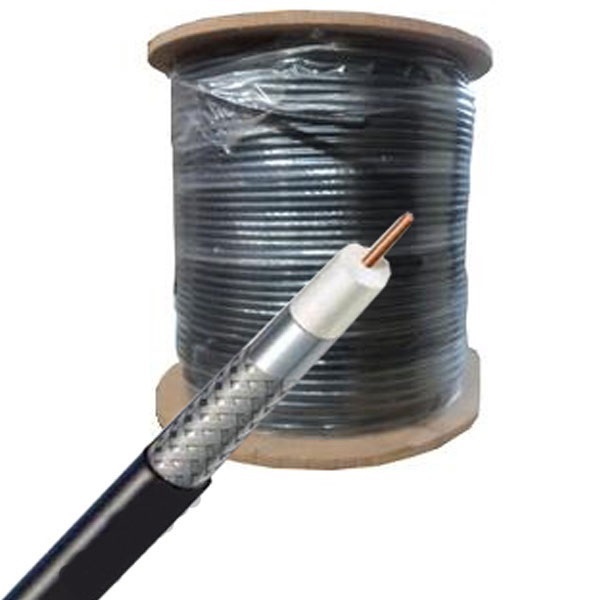 | Polycab Co-Axial Cables Polycab coaxial cable is a type of cable designed for transmitting high-frequency electrical signals, commonly used in cable television (CATV) and... View product → |
Control Installation, Testing and Handover Risk
Prevent a correct cable specification from failing by making installation controls and handover documents part of the purchase order.
1. Keep pulling tension below the cable datasheet limit and maintain the specified dynamic bend radius during pulling. After placement, maintain the static bend radius; G.657 fibre does not cancel the cable manufacturer’s mechanical limits.
2. Seal exposed cable ends against water, keep drums off standing water, use the specified lifting method and stop clamps from crushing the sheath. Label every fibre at both ends, then record route identification, core allocation and each splice location.
3. Commission the installed polycab optical fibre with end-face inspection and splice-loss records. Capture OTDR traces at the specified wavelengths, commonly 1,310 nm and 1,550 nm for single-mode links, then perform separate insertion-loss testing with a calibrated light source and power meter.
4. Require the handover pack to contain OTDR traces, loss results, instrument calibration details, route drawings and the core schedule. Before acceptance, match exact test reports and product datasheet references to the delivered drum.
A low quotation from a Polycab fibre cable supplier becomes expensive when the cable fails after placement. The recovery bill can include excavation or tray removal, resplicing, retesting every core, shutdown access and difficulty matching a replacement drum to the installed fibre.
Do not accept a generic catalogue sheet or cable-only price as proof of compliance.
Frequently asked questions
How do I define the optical-fibre cable before requesting a quotation?
State whether you need an armoured optical-fibre cable, fibre installed inside protective ducting, or a separate optical cable beside an electrical armoured cable. Specify fibre type, fibre count, cable length, connector requirements and application.
How should I match armour and cable construction to the installation route?
Assess direct burial, tray, duct, indoor, outdoor and industrial routes. Check mechanical protection, moisture exposure, crushing risk, bend radius, temperature and electromagnetic conditions before choosing the cable construction.
What should an optical-fibre bill of materials include?
List the cable, fibre count and type, joint closures, patch panels, pigtails, adapters, splice trays, glands, ducts, cable markers, earthing components, termination hardware, testing and installation accessories.
How can I compare Polycab optical-fibre dealer quotations?
Compare the exact cable construction, fibre specification, quantity, delivery terms, warranty, test documents, taxes, installation scope and exclusions. Ask for product markings, batch details and evidence of genuine authorised supply.
Which tests and documents belong in optical-fibre handover?
Require visual inspection, continuity checks, polarity verification, insertion-loss measurements and OTDR traces at the specified wavelengths. Collect route drawings, fibre schedules, splice records, test results, cable drum details and warranty documents.