Industrial fibre orders fail when the buyer specifies only a brand and fibre count, then discovers the wrong construction, drum length, connector system or optical budget. You will be able to define the cable, compare it with copper alternatives, check a Mumbai supply quotation and accept the installed link against measurable documents.
Key takeaways
- Use fibre across electrical-noise zones, buildings and substations.
- Choose single-mode or multimode after measuring distance and equipment compatibility.
- Include fibre count, connector type and optical loss in the purchase specification.
- Check drum markings, seals and test results before accepting the supply.
Where industrial optical fibre fits—and where it does not
Use optical fibre for links that cross electrical-noise zones, buildings or substations: plant-to-control-room communications, factory backbone networks, CCTV backhaul, data-centre interconnects and campus networks. Fibre rejects electromagnetic interference, but it carries no power, so each end needs an SFP, media converter or fibre switch, plus patch panels, connectors and splicing equipment.
| Link choice | What it supports | Main limitation |
|---|---|---|
| Single-mode, ITU-T G.652.D | Long plant, campus and inter-building links | Requires compatible single-mode optics |
| Bend-insensitive G.657 | Tight cabinets, trays and restricted routes | Confirm the offered fibre recommendation and bend limits |
| Multimode | Short indoor links with existing multimode transceivers | Distance and bandwidth depend on fibre grade and optics |
Do not select fibre from distance alone. Check the installed equipment’s transceiver type, operating wavelength, connector interface and supported fibre mode before ordering. A short machine connection can remain on copper when it needs Power over Ethernet, simple termination or frequent device changes; fibre adds transceivers, cleaning, testing and a bend-radius discipline.
Specify the cable construction separately from the transmission fibre. Indoor tight-buffered, outdoor loose-tube, duct, directly buried, aerial, armoured and dielectric designs solve different route problems. Metallic armour, messenger wires and strength members need a bonding and earthing decision; dielectric cable avoids conductive paths where ground-potential differences or hazardous-area segregation matter.
For a polycab optical fibre industrial use requirement, include spare cores and route-growth allowance rather than matching today’s ports. A polycab cable for industrial use optical fibre in mumbai quotation is incomplete unless it states fibre count, construction, sheath, armour, drum length and delivery point. Short drums create extra joints and loss.
Choose fibre mode and cable construction for the route
Choose the transmission fibre before choosing the jacket: single-mode G.652.D suits long plant and campus links, while multimode suits shorter runs only when the installed transceivers support it and the distance remains within their rated reach. G.657 is useful where tight bends are unavoidable, but confirm the offered fibre recommendation on the datasheet.
| Route | Suitable construction | Specify |
|---|---|---|
| Indoor plant | Tight-buffered indoor cable; multimode OM3 or OM4 for short equipment links, or single-mode for longer runs | LSZH or PVC sheath, fire performance, bend radius and connector compatibility |
| Outdoor interbuilding | Loose-tube, water-blocked outdoor cable | G.652.D or the required fibre type, UV-resistant polyethylene sheath and pulling strength |
| Duct route | Loose-tube duct cable, armoured where the duct is exposed to crushing or rodents | Duct diameter, tensile load, water blocking and maximum pulling tension |
| Direct burial | Armoured, water-blocked buried cable | Burial depth, armour type, impact resistance and soil or rodent protection |
| Aerial route | ADSS or a cable with a separate messenger | Span length, sag, wind and ice loading, pole hardware and metallic bonding |
Do not replace one construction because its fibre count matches another. Indoor fire performance, outdoor water blocking, burial protection and aerial loading are different procurement requirements. Name the required IEC 60332, IEC 60754 or IEC 61034 tests instead of writing “fire-rated.”
For a polycab optical fibre industrial use purchase, include spare fibres for failed links and future route growth. Metallic armour or messenger wires need a bonding and earthing decision; choose dielectric construction where induced currents or ground-potential differences create a concern.
Set fibre count, connectors and the optical link budget
Do not size the order from live ports alone: count active fibres, protection paths, planned expansion and the restoration time you can accept. A difficult-to-replace route deserves spare cores, because adding fibres later can mean a new cable, closures and downtime.
1. Set the fibre count from the architecture. Add fibres for each active link, diverse or protected path, and foreseeable ports, then reserve spare cores for failures and growth. Record the exact fibre mode, fibre type and operating wavelengths.
2. Specify connectors by equipment, not preference. LC suits high-density patching and SFP modules; SC suits larger patch panels; ST uses a bayonet coupling; FC uses a threaded coupling where vibration resistance matters. State connector polish, adapter type and whether pigtails or pre-terminated assemblies are required.
3. Build the loss budget before approving the cable. Add fibre attenuation at 850, 1310 or 1550 nm, splice loss, connector and patch-panel loss, engineering margin, and future ageing. Include chromatic and, for multimode links, modal bandwidth or dispersion limits. A cable that meets its kilometre rating can still fail after termination.
4. Put acceptance tests and delivery details in the order. Require insertion-loss limits, OTDR traces from both directions, the manufacturer’s cable test report, drum identification, traceable fibre length and attenuation, maximum drum length, permitted joint count and acceptable mixed drum lengths.
Ask a Polycab industrial cable supplier to confirm these against the exact construction, not a generic stock statement.
Continuity proves only that light reaches the far end. After installation, qualify each fibre with calibrated insertion-loss testing and OTDR results, then compare them with the approved budget.
Turn the requirement into a verifiable Mumbai purchase
Treat “available” as a documented, deliverable configuration—not a claim that Polycab optical fibre exists somewhere in Mumbai. Your RFQ must identify the cable that fits the route, the loss budget and the delivery plan.
1. State fibre type and quantity: single-mode or multimode, fibre count including spare cores, operating wavelengths, attenuation limit and dispersion limit. Add the required connector, patch-panel and splice specifications.
2. Name the construction: indoor, outdoor, duct, direct-burial or aerial; loose-tube or tight-buffered; sheath material; armour; metallic or dielectric strength members. For ADSS, include span length, sag-tension design, wind and ice assumptions, installation temperature and separation from electrical conductors.
3. Specify the loss calculation: fibre attenuation, splice loss, connector loss, patch-panel loss, engineering margin and future ageing. A cable that meets its kilometre rating can still fail after termination.
4. Put logistics in the order: Mumbai delivery address, required dispatch date, total route length, maximum and minimum drum lengths, permitted joint count and whether mixed drum lengths are acceptable. Several short drums create extra closures and splice loss.
5. Require the supplier to confirm the exact Polycab part or construction, available drum numbers and lengths, factory datasheet, test report and dispatch condition. Ask whether stock is physically held in Mumbai or sourced against order.
6. If the cable has armour, messenger wire or metallic strength members, record the bonding and earthing method; choose dielectric construction where induced currents or ground-potential differences create a risk.
A polycab distributor in mumbai, including Prabhat Cables Pvt. Ltd, should be able to reconcile the quotation with these documents. Without that evidence, polycab optical fibre availability remains an unverified sales statement.
Related product
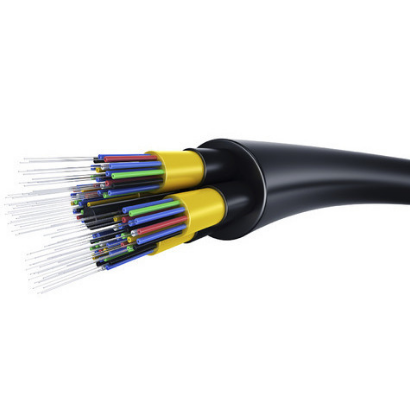 | Polycab Optical Fibre Polycab Optical Fiber refers to the Optical Fiber Cables (OFCs) manufactured and distributed by Polycab Telecom, a division of Polycab India Ltd. View product → |
Inspect the drum and qualify the installed link
A continuity check proves only that light travels from one end to the other. It will not expose excessive attenuation, a reflective bad splice, a crushed section, or a link that fails its power budget.
- Before unloading, match the drum number, fibre count, fibre type, construction, length and sheath to the purchase order. Obtain the manufacturer’s cable test report, with attenuation and length traceable to that drum.
- Reject or quarantine a drum with crushed flanges, water staining, loose wrapping or damaged cable ends. Keep factory end caps fitted, store the drum upright, and protect it from standing water and direct sun.
- Check that the order controls maximum and minimum drum lengths, permitted joint count and mixed drum lengths. A nominally available cable split across short drums creates extra closures, splices and loss; “polycab optical fibre availability” is not meaningful without these details.
- During installation, follow the cable maker’s marked minimum bend radius and pulling tension. Seal ducts, handholes, closures and cable ends against monsoon water; longitudinal water blocking does not protect an open end.
- Record drum numbers against route sections, splice trays, patch-panel ports and installed lengths. For a “polycab cable for industrial use optical fibre in mumbai” specification, retain spare fibres and route-growth capacity where replacement access is difficult.
After termination, measure insertion loss at every operating wavelength with a calibrated light source and power meter, from both ends, and compare the result with fibre, splice, connector, patch-panel and ageing allowances. Capture OTDR traces from both directions to locate events and reflections.
A passing continuity test cannot overrule excessive loss or a failing OTDR trace.
Frequently asked questions
Where does optical fibre fit in an industrial network?
Use it for plant-to-control-room links, factory backbones, CCTV backhaul, data-centre interconnects and campus networks, especially across electrical-noise zones, buildings or substations. Fibre does not carry power, so each end needs compatible active equipment such as an SFP, media converter or fibre switch.
How do you choose fibre mode and cable construction?
Select single-mode or multimode based on route length, transmission equipment and future capacity requirements. Select the construction for the installation environment, including indoor, outdoor, duct, direct-burial, armoured or high-bend conditions.
What details belong in an industrial optical fibre purchase specification?
State the fibre count, fibre mode, cable construction, connector type, termination method and required optical link budget. Confirm that the SFPs, patch panels, splice trays and test equipment match the selected fibre.
How do you inspect and qualify an optical fibre cable delivery?
Check the drum for damage, intact seals, cable markings, length and manufacturer documentation before installation. After installation, qualify each link with the required continuity, polarity, insertion-loss and optical-return-loss tests, then compare results with the link budget.