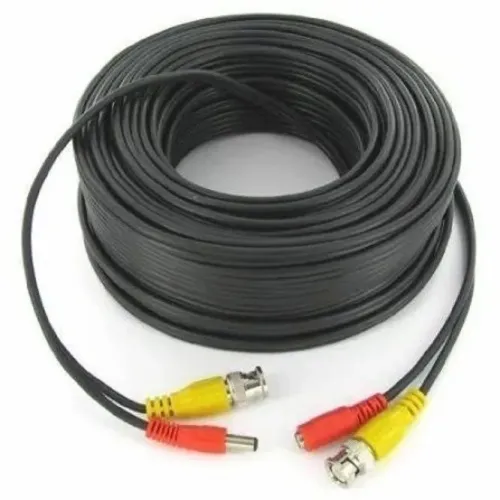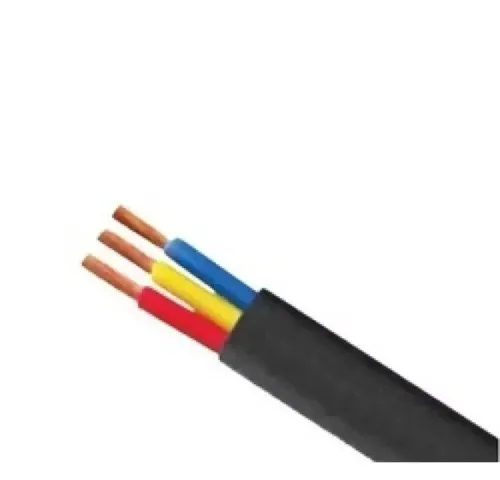
“Highrise cable” is not a complete technical specification. Before you order, get the exact product code, construction, standards, fire-performance evidence, sizing calculations and delivery controls so the cable suits the building rather than merely its floor count.
Key takeaways
- Get the exact Polycab series, product code and construction in writing.
- Match cable size to current, voltage drop, installation method and fault conditions.
- Request fire-test evidence and route compatibility for life-safety circuits.
- Check the quotation, drum label and delivery record before accepting cable.
What exact Polycab cable construction is being quoted?
Ask the polycab cable dealer to write the exact Polycab product name, series and product code on the quotation. “Polycab highrise cables” is not a specification; highrise cable is a market description, not a single cable standard.
Confirm these construction details before comparing prices:
- Copper or aluminium conductor; solid or stranded; and the conductor class stated by the quoted standard
- Insulation and sheath materials, number of cores, nominal cross-sectional area, voltage grade and available core configurations
- Conductor resistance, insulation resistance, overall diameter, approximate mass and drum length from the datasheet
For an ordinary 1.1 kV building feeder, ask whether the cable is XLPE-insulated and PVC-sheathed under IS 7098 (Part 1). For PVC-insulated building wires, ask whether IS 694 applies instead.
| Cable type | Specification to confirm | Why it matters |
|---|---|---|
| 1.1 kV feeder | XLPE insulation, PVC sheath, IS 7098 (Part 1) | Confirms the intended power-cable construction |
| PVC building wire | PVC insulation, IS 694 | Applies to a different cable type |
| Aluminium feeder | Compact conductor, oxide-control method, approved lugs and terminations | Copper-only terminals can overheat at aluminium joints |
Do not accept “same size” as proof of equivalence. Resistance, dimensions, mass and drum length expose substitutions, a different conductor class and short drums. Ask for the approved aluminium termination system, not merely a cable ampacity figure.
Which ratings, standards and fire tests will the supplied cable meet?
Ask for the datasheet’s voltage rating and maximum conductor temperature, then compare both with the building’s supply arrangement, prospective fault level and design temperature. A highrise building cable that suits a 1.1 kV system is not automatically suitable for the project’s fault conditions or operating environment.
Ask the dealer to name the applicable Indian Standard and every claimed IEC test standard. Reject a general “fire-safe” description. For polycab highrise cables, request:
- The exact cable classification and test method
- The test duration for any fire-survival claim
- The certificate number and applicable BIS licence or conformity evidence
- The manufacturer’s test certificate for the quoted product family
| Claim | What it establishes | Evidence to request |
|---|---|---|
| FRLS | Limits flame propagation, smoke and acidic-gas emission | Applicable classification and test report |
| LSZH or LS0H | Uses low-smoke, halogen-free materials | IS 17048 certificate or report covering flame spread, smoke emission and halogen-acid-gas performance |
| Fire-resistant or circuit-integrity | Continues operating for a stated period during fire exposure | Duration, circuit-integrity classification and test report |
If IEC evidence is quoted, identify the test precisely: IEC 60332 for flame propagation, IEC 60754 for halogen-acid-gas emission, IEC 61034 for smoke density and IEC 60331 for circuit integrity. These claims are not interchangeable.
FRLS or LSZH alone does not prove that a fire pump, smoke-extraction fan or alarm circuit will keep operating during a fire. Ask for the required survival time and test method stated on the cable schedule.
How was the cable size selected for each building circuit?
Ask for the calculation sheet, not a highrise building cable size chosen from the number of floors. It must show design current, protective-device rating, conductor material, installation method, ambient temperature, grouping, spacing, enclosure, number of loaded conductors and the applicable current-carrying-capacity table.
A crowded vertical shaft or tray does not have the rating of one cable in free air.
Request separate checks for:
- Voltage drop on long risers, submains and feeders
- Short-circuit withstand against prospective fault current and protective-device clearing time
- The cable’s location: incoming feeder, vertical riser, submain, final circuit or life-safety circuit
Polycab highrise cables should be compared by duty, not by the label alone.
| Cable type | Appropriate use | Check before approval |
|---|---|---|
| Standard Polycab LT | Ordinary low-voltage distribution | Construction and calculations match the design |
| HT cable | Medium- or high-voltage transmission | Not an ordinary 1.1 kV building circuit |
| Fire-resistant cable | Circuits requiring survival during fire | Required survival test and duration |
| FRLS or LSZH | Reduced flame, smoke or halogen hazards | Neither label alone proves circuit survival |
Ask where the quoted cable belongs and compare polycab highrise cables by voltage, duty, fire test, installation route and termination system. Standard Polycab LT cables can suit ordinary low-voltage distribution when their construction and calculations match the design. Fire-resistant construction is required where circuit survival matters; FRLS or LSZH alone does not fulfil that function.
Does the cable support life-safety circuits and the installation route?
1. Treat a highrise building cable as life-safety cable only after confirming whether fire pumps, smoke-extraction fans, fire alarms, lifts, emergency lighting and other designated emergency services require circuit integrity. Ask for the specified survival time and test method, such as IEC 60331 where required, and record both in the cable schedule.
FRLS or LSZH does not prove that a circuit will operate throughout a fire.
2. Ask who supplies the compatible, tested fire-stopping system for every cable penetration through a floor or fire-rated wall. Confirm who certifies the seal around the completed cable bundle; an unsealed penetration can allow fire and smoke to bypass the barrier, regardless of the cable’s fire rating.
3. Give the dealer the actual route before approving the cable: shaft, tray, conduit or enclosed riser; total cable length; bends; support spacing; ambient temperature; and the number of adjacent power cables. Ask for current-carrying capacity based on that arrangement, not a free-air catalogue rating.
4. Ask how power, ELV, data, fire-alarm and control cables will be segregated or spaced to limit electromagnetic interference and preserve inspection access. Confirm that the selected sheath, minimum bending radius, pulling tension and termination kit suit the route. A fire-rated cable cannot correct an overloaded tray, poor segregation or an incompatible termination.
What must appear on the quotation, drum and delivery record?
A quotation is incomplete if it says only “highrise cable” or gives a cross-sectional area. Ask the polycab cable dealer to record:
- Exact manufacturer product code and Polycab series
- Conductor size, copper or aluminium material, and conductor class
- Core count and configuration
- Insulation and sheath materials, such as PVC or XLPE
- Voltage grade and applicable Indian Standard
- Fire-performance classification, test method and duration, distinguishing FRLS, LSZH or LS0H from circuit-integrity cable
- Conductor resistance, insulation resistance, overall dimensions, approximate mass and drum length
- Delivery batch, warranty terms and manufacturer’s test certificate
“Same size” does not mean equivalent when copper and aluminium, PVC and XLPE, or FRLS and circuit-integrity constructions are compared. Request the BIS licence or conformity evidence for the exact product family, routine-test records and batch or drum traceability.
Record the factory drum seal, printed markings, batch number, drum length and end seals on delivery. Reject or quarantine a drum with sheath cuts, crushing, water damage, a broken seal or less cable than stated; write the procedure into the purchase order.
Specify covered storage away from standing water and excessive heat, the permitted storage period and the process for returning a damaged or short drum. For a polycab cable dealer highrise cable in bhubaneswar enquiry, Prabhat Cables Pvt. Ltd can assemble these records, while the project electrical designer gives technical approval.
Accept delivery only when the quotation, datasheet, calculations and drum show the same cable.
Related product
 | Polycab Highrise Cables Polycab Highrise Cables are a range of wires and cables specifically designed for use in high-rise buildings, prioritizing safety and performance in... View product → |
Frequently asked questions
What exact details should a Polycab cable dealer put on the quotation?
Ask for the exact Polycab product name, series, product code, conductor construction, insulation type, sheath type and rated voltage. “Highrise cable” alone is not a sufficient specification.
Which ratings and fire tests should you verify for a highrise building cable?
Ask the dealer to identify the cable’s voltage rating, temperature rating, applicable Indian Standard or manufacturer specification, and the fire, smoke and halogen tests claimed for that exact product. Request test reports or certificates that show the product code.
How should cable size be selected for each building circuit?
Select size from design current, protective-device rating, installation method, ambient temperature, grouping, permissible voltage drop and short-circuit withstand. Do not choose size from load current alone.
Can Polycab highrise cables be used for life-safety circuits?
Confirm the exact cable construction, fire-performance claim and installation route before using it for fire pumps, emergency lighting, smoke extraction, alarms or other life-safety circuits. Check the project fire strategy and applicable authority requirements.
What should you check on the cable drum and delivery record?
Check the product code, size, conductor material, length, voltage rating, manufacturing details, batch or drum number and seal condition. Record these details on delivery documents and match them with the quotation and test paperwork.