A standard wire can match a solar cable in conductor size and still fail on a rooftop because its insulation, temperature rating, outdoor resistance and connectors are unsuitable for prolonged DC service. By the end, you will be able to compare the cable construction, verify markings, size the conductors, inspect delivery and judge whether a lower per-metre offer is a genuine saving.
Key takeaways
- Choose cable marked EN 50618 or IEC 62930 for rooftop DC service.
- Keep solar DC cables separate from AC wiring and size for voltage drop.
- Match batch details, invoice, and dealer authorisation before installation.
- Compare lifecycle cost, not only the per-metre cable quote.
What actually differs between a solar cable and standard building wire?
A compliant Polycab solar cable is built for permanent DC service outdoors; ordinary building wire is usually built for protected indoor wiring. The difference is not simply conductor size.
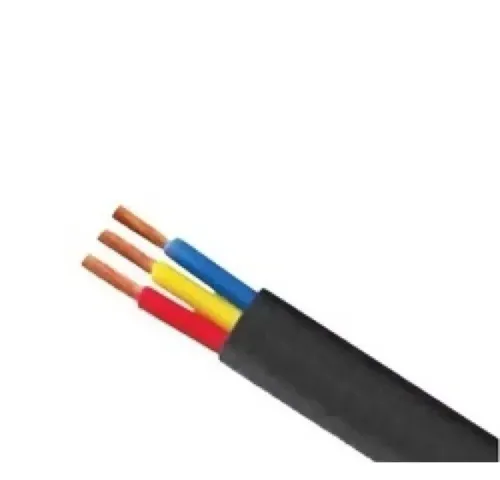
Solar cable normally uses a flexible, fine-stranded copper conductor, insulation and an outer sheath formulated to resist ultraviolet radiation, ozone, rain, moisture, abrasion and repeated roof-temperature changes.
| Feature | Solar cable | Standard building wire or power cable |
|---|---|---|
| Construction | Flexible, fine-stranded single core for panel and string routing | Construction varies; building wire is often intended for fixed, protected routes |
| Insulation and sheath | UV-, ozone-, moisture- and heat-resistant compounds, commonly marked H1Z2Z2-K | PVC insulation is common and may degrade under prolonged sunlight or rooftop heat |
| Voltage rating | PV-specific DC rating, commonly up to 1.5 kV DC under IS 17293 | Rating may suit AC distribution, but does not prove suitability for PV exposure or DC service |
| Installation purpose | Exposed module, string and combiner-box connections | Conduits, panels and protected building circuits; not an automatic rooftop substitute |
Check the actual sheath printing and documents for IS 17293 or recognised references such as EN 50618 and IEC 62930. A cable carrying the right voltage or cross-section can still fail through brittle insulation, water ingress or insulation-resistance loss.
Use DC-rated connectors, isolators and terminations as well; a standard AC accessory does not safely interrupt a persistent PV DC arc. Buy through a polycab authorized dealer for solar cable and reconcile the drum label, batch details and printed metre marks before installation.
Which markings prove that the cable belongs on an exposed rooftop?
A rooftop PV cable should carry an identifiable product standard, 1.5 kV DC rating and outdoor-performance markings; “solar cable” alone proves nothing. For Indian installations, look for IS 17293 on the sheath or drum and in the test documentation.
H1Z2Z2-K, EN 50618 or IEC 62930 are additional designations used for photovoltaic cables, but confirm that the stated standard matches the supplied product.
| Marking or document | What it confirms | Reject or query when |
|---|---|---|
| IS 17293 | Indian photovoltaic-cable product standard for systems up to 1.5 kV DC | The seller gives only a generic “solar wire” description |
| H1Z2Z2-K, EN 50618 or IEC 62930 | PV-specific construction and outdoor-service classification | The designation appears only on an unverified quotation |
| 1.5 kV DC | Rated system voltage | The label states only an AC voltage |
| UV, ozone, weather or sunlight resistance | Suitability for prolonged sun exposure | The sheath has no outdoor-performance claim |
| Temperature rating, conductor size and metre marks | Operating limit, cross-sectional area and delivered length | Size or metre printing is missing or inconsistent |
| Manufacturer name, batch number and drum identification | Traceability to test records and production details | Printing is blurred, incomplete or differs from the invoice |
The sheath must also identify polarity where supplied as red and black, or with clear positive and negative labels. Confirm insulation and sheath temperature ratings against the rooftop design: roof surfaces experience intense heat, rain, moisture and repeated expansion.
Ask for the manufacturer’s declaration or test report, then reconcile its standard, size, batch and voltage with the cable printing before accepting the drum.
How should you size the DC cable and separate it from AC wiring?
Use the array’s design current, not panel wattage, to choose the DC conductor. Start with the string or combiner short-circuit current (Isc), apply the project’s required safety factor, and check the cable’s permissible current after installation derating.
Calculate voltage drop over the complete circuit: positive run plus negative return. A 30-metre one-way route is a 60-metre electrical length.
Use the cable resistance at its operating temperature in Vdrop = current × resistance × length, then compare the result with your specified DC limit; a 1.5% target loses less energy than a 3% target.
Increase the cross-sectional area when current, circuit length or allowable voltage drop demands it. Do not assume every 4 mm² cable carries the same current.
- Free-air clipped cables usually dissipate heat better than cables in conduit.
- Conduit, buried routes, grouped circuits and high roof temperatures require ampacity derating.
- Keep the positive and negative conductors together on the same route to reduce loop area and induced voltage.
- Use a UV-, ozone-, moisture- and heat-resistant PV cable for exposed rooftop and outdoor runs.
- Use a cable approved for the enclosure and temperature conditions on protected indoor sections.
Route DC and AC separately in distinct conduits or cable trays. Cross them at 90 degrees where routes must intersect, label polarity at both ends, and never share a conduit merely because the insulation voltage rating appears sufficient. Terminate each PV cable with connectors rated for the inverter’s DC voltage and current.
How can you verify the cable and dealer before installation?
A search result calling a seller a Polycab solar cable dealer in Pune proves location, not authorization. Accept the drum only after these checks reconcile:
1. Verify the seller through Polycab’s current channel information or obtain written authorization. A listing that says “Polycab solar cable supplier” does not prove that the seller or specific drum is genuine.
2. Match the tax invoice with the order: exact product name, conductor size in mm², delivered length and batch number. Ask for Polycab’s datasheet or test certificate, including the IS 17293 reference and rated voltage.
3. Inspect the drum and sheath before installation. Look for continuous manufacturer printing showing Polycab, cable designation, conductor size, 1.5 kV DC rating where specified, temperature rating, applicable standard and batch details. Confirm printed metre marks and measure the drum length.
4. Reject a cable with broken packaging, missing printing, inconsistent markings or a size that does not match the invoice. Where the order is critical, verify conductor resistance or cross-sectional area; low price and copper weight alone cannot establish authenticity.
5. Check every connector and termination, not just the cable. Use connectors rated for the system’s DC voltage and current, the specified crimping tool and die, correct strip length and tightening torque. A loose contact or partial insertion can create heat and arcing.
If you buy through a Polycab authorized dealer in Pune, including Prabhat Cables Pvt. Ltd, retain the invoice, batch details and test documents with the installation records.
Related product
 | Polycab Solar Cables Polycab solar cables are specifically designed for solar power systems, offering high-quality, reliable, and durable wiring solutions for efficient... View product → |
What is the real cost difference beyond the per-metre quote?
Compare the installed cost, not the drum price. A cheaper quote can conceal a smaller copper cross-section, a short drum, missing connectors or extra labour to correct unsuitable routing.
| Cost item | Solar-cable offer | Standard-cable offer | What to verify |
|---|---|---|---|
| Copper | Confirm the ordered 4 mm², 6 mm² or larger conductor | A similar-looking cable may have a smaller conductor | Check printed size, conductor resistance and permissible current for the actual installation |
| Delivered length | Pay for the verified drum length and metre markings | A short delivery creates a second purchase and a joint | Measure the drum and reconcile it with the invoice |
| Connectors | Include compatible PV connectors, crimping and sealing parts | Standard terminals may not suit outdoor DC use | Price connector pairs, crimping tools and termination labour |
| Routing materials | Include conduit, clips, glands, ties and UV-resistant supports | Lower cable cost may require extra protection | Compare the complete route, not cable alone |
| Documents | Require the datasheet, batch details, tax invoice and test records | Missing documents increase acceptance and commissioning effort | Check IS 17293, size, voltage rating and batch against the drum |
| Installation | Correct cable flexibility and routing reduce fitting time | Re-routing or added protection can erase the saving | Obtain a labour estimate for the actual roof route |
| Replacement risk | Outdoor-rated construction reduces premature rework exposure | Degraded insulation, water ingress or failed terminations create replacement cost | Include access, shutdown, fault-finding and rewiring time |
Ask a Polycab solar cable supplier for one itemised quote covering material, delivery, connectors, routing, testing and commissioning. Compare the totals again after allowing for voltage-drop compliance and the cable’s permissible current in its installed location, because the same 4 mm² cable does not carry the same current in free air, conduit or grouped runs.
Frequently asked questions
What actually differs between solar cable and standard building wire?
Solar cable is designed for permanent outdoor DC service, with insulation and sheathing tested for sunlight, temperature changes, moisture, and mechanical stress. Standard building wire is intended for protected wiring and is not automatically suitable on a rooftop.
Which markings prove that a cable belongs on an exposed rooftop?
Look for EN 50618 or IEC 62930, the designation H1Z2Z2-K, a voltage rating such as 1.5 kV DC, conductor size, manufacturer name, and batch or traceability details. Check the printed sheath rather than relying only on a sales description.
How should you size the DC cable and separate it from AC wiring?
Size the positive and negative conductors for the string current, installation conditions, protection requirements, and acceptable voltage drop. Route DC and AC wiring separately, use correctly rated connectors, and follow the inverter and installation design.
How can you verify the cable and dealer before installation?
Request a tax invoice, product packaging, batch or QR details, and current authorisation evidence from the Polycab dealer. Confirm that the markings on the cable match the documentation before cutting or installing it.
What is the real cost difference beyond the per-metre quote?
Include connectors, clips, conduit, rooftop routing, voltage-drop losses, replacement labour, inspection delays, and the cost of correcting unsuitable cable. A cheaper indoor wire can become more expensive if it fails outdoor-service requirements.