A security installer choosing between fibre, Cat6 or Cat6A, and coaxial CCTV cable must match the cable to distance, power delivery, interference, weather exposure, and existing equipment. By the end, you will be able to select the fibre category and construction, design the active network around it, and compare supplier quotations without treating every “optical fibre cable” offer as equivalent.
Key takeaways
- Use Cat 5e or Cat 6 for IP cameras within 100 metres with PoE.
- Choose single-mode fibre for long links and multimode for shorter network backbones.
- Specify armouring, moisture protection and UV resistance for exposed Guwahati routes.
- Require fibre test results, power budgets and labelled termination details before acceptance.
Choose the cable by camera distance, power and existing equipment
A copper Ethernet link is the practical choice for most IP cameras within 100 metres, because one Cat 5e or Cat 6 run can carry data and PoE to the camera. Choose fibre when the route exceeds 100 metres, crosses between buildings, or needs electrical isolation from lightning and ground-potential differences.
| Option | What it carries | Practical choice |
|---|---|---|
| IP over Cat 5e/Cat 6 | Data and PoE on one run, up to 100 m including patch leads | New cameras near an NVR or PoE switch |
| Optical fibre | Data only; requires SFPs, fibre switches or media converters | Long backbone routes, high interference or separate buildings |
| Analogue coaxial cable | Video to a DVR; camera power needs a separate pair | Replacing an existing analogue system without changing the DVR |
The optical fibre versus cable decision must include the equipment already installed. Fibre does not power a camera, so the far end still needs a powered fibre switch, media converter with a PoE output, or a local PoE switch; the final camera lead is usually copper Ethernet.
- Keep existing analogue cameras and DVRs on coaxial cable unless a conversion project justifies new hardware.
- Use copper IP cabling for short, powered camera runs where installation cost and simplicity matter.
- Specify fibre for long or electrically exposed links, then price the transceivers, termination, patch leads and power equipment—not only the cable drum. Ask cable dealers polycab for the exact product code and datasheet before comparing quotations.
Match single-mode or multimode fibre to the network reach
Specify single-mode fibre for road, perimeter, campus and inter-building links; choose multimode for shorter links inside a warehouse or apartment block. The SFP or optical transceiver must support the selected fibre type and wavelength. Core count alone does not determine reach.
| Option | What it means | Security-network fit |
|---|---|---|
| OS1 | Single-mode fibre, usually 9/125 µm, specified for indoor cabling | Short building backbones where indoor-rated cable and compatible SFPs are used |
| OS2 | Low-loss single-mode fibre, usually 9/125 µm | Long campus, roadside, perimeter and inter-building links |
| OM1 | 62.5/125 µm multimode fibre | Legacy equipment or short links; check that the switch accepts OM1 |
| OM2 | 50/125 µm multimode fibre | Shorter building backbones and moderate-speed links |
| OM3 | Laser-optimised 50/125 µm multimode fibre | Higher-speed warehouse, apartment and building backbones |
| OM4 | Enhanced laser-optimised 50/125 µm multimode fibre | Higher-speed links needing more multimode reach than OM3 |
For 10-gigabit Ethernet, common multimode limits are about 33 metres on OM1, 82 metres on OM2, 300 metres on OM3 and 400 metres on OM4; verify the transceiver datasheet before ordering. OS2 is the safer choice when the route may expand beyond a building.
A quotation for Polycab optical fibre in Guwahati must state the exact product code, fibre category, attenuation and compatible transceiver. Ask for the current datasheet, not a line item labelled only “optical fibre.”
Specify the construction for Guwahati’s route and weather
Choose the construction by what can damage the route, not by fibre count. Guwahati’s rain, flooding, humidity, sunlight and rodents make an indoor cable unsuitable for many outdoor camera links.
| Option | Construction and sheath | Use |
|---|---|---|
| Indoor | Tight-buffered fibre with LSZH jacket | Buildings, trays and protected risers; it terminates easily but is not a buried or UV-exposed cable. |
| Outdoor | Loose-tube fibre with UV-resistant black PE jacket | External walls, ducts and pathways exposed to rain; gel-free designs simplify water management. |
| Buried | Armoured loose-tube cable with PE sheath | Direct burial or rodent-prone ground; add duct protection where vehicles, excavation or flooding threaten the route. |
| Aerial | ADSS or messenger-supported outdoor cable | Poles and building-to-building spans; specify span length, wind loading and sag limits rather than suspending ordinary indoor fibre. |
| Exposed | Outdoor PE-jacketed cable, armoured where impact or rodents are likely | Rooftops, compound walls and roadside runs; confirm UV resistance and secure every support point. |
For a cable dealers polycab for optical fibre comparison in guwahati search, request the exact product code and current datasheet. Check tensile strength, crush resistance, operating temperature, attenuation, static and dynamic bend radius, and whether the sheath is LSZH or PE.
Do not pull, twist or sharply bend the cable during installation. Exceeding the manufacturer’s pulling tension can raise attenuation immediately or cause a delayed fibre break. A quotation that says only “Polycab fibre” does not identify the route-ready construction.
Design the fibre backbone, power system and acceptance test
Treat optical fibre versus cable as a backbone decision, not a camera-end replacement. Run fibre between buildings, floors or remote cabinets, then connect each camera with copper Ethernet from a local PoE switch, powered fibre switch, media converter or PoE extender. Fibre carries data, not PoE.
Use a star topology from the control-room core switch to each field switch. A ring adds resilience only when every switch supports the required protocol and recovery time; otherwise it adds failure points and configuration work.
Calculate the link budget before choosing SFPs. Add fibre attenuation for the installed length, connector loss, splice loss and a maintenance margin. The total must remain below the SFP receiver’s specified power range, with the fibre type and wavelength matching at both ends.
- Record camera bitrate, switch uplink speed, fibre length, fibre count, connector type and every planned splice.
- Install matched SFPs or fibre switches, label both ends, clean connectors with approved lint-free tools and verify polarity.
- Measure end-to-end insertion loss with a calibrated optical-loss test set at the operating wavelength. Compare each result with the calculated budget.
- Run an OTDR trace from both ends to locate bends, breaks, reflective connectors or high-loss splices. An OTDR trace alone does not replace insertion-loss measurement.
- Commission cameras under load, verify PoE voltage, video continuity, recording, alarms and failover, then retain loss reports, OTDR traces and port-to-camera labels.
Compare supplier quotations using a complete fibre specification
A quotation saying “Polycab optical fibre” is incomplete. Ask every cable dealers polycab candidate, including a Polycab distributor in Guwahati, for the exact product code and current datasheet before comparing price.
Request these quotation details:
- Fibre mode and category: single-mode OS2 or multimode OM3, for example
- Fibre count, cable construction, indoor or outdoor jacket, and armouring
- Operating temperature, maximum pulling tension, crush resistance, and static and dynamic bend radius
- Maximum attenuation, optical return-loss requirement where applicable, and product standards
- Drum length, accessories, delivery scope, warranty, and whether splicing, connectors, closures, patch panels and pigtails are included
- Local copper Ethernet or PoE equipment at each camera-side endpoint, because fibre alone does not power a camera
| Quotation item | Compare this | Why it matters |
|---|---|---|
| Fibre cable | Product code, fibre category and construction | The same fibre count can hide different route limits |
| Active hardware | PoE switch, media converter or fibre switch | A fibre drum cannot provide the camera’s final copper or power connection |
| Acceptance testing | Calibrated end-to-end loss test plus OTDR trace | OTDR locates faults; it does not replace insertion-loss measurement |
| Installation limits | Manufacturer’s tension and bend-radius figures | Over-pulling or tight bends can cause attenuation and delayed failure |
Prabhat Cables Pvt. Ltd can help an installer identify the offered Polycab code, but the datasheet—not the brand name alone—should decide whether two quotations are equivalent.
Related products
 | Polycab Optical Fibre Polycab Optical Fiber refers to the Optical Fiber Cables (OFCs) manufactured and distributed by Polycab Telecom, a division of Polycab India Ltd. View product → |
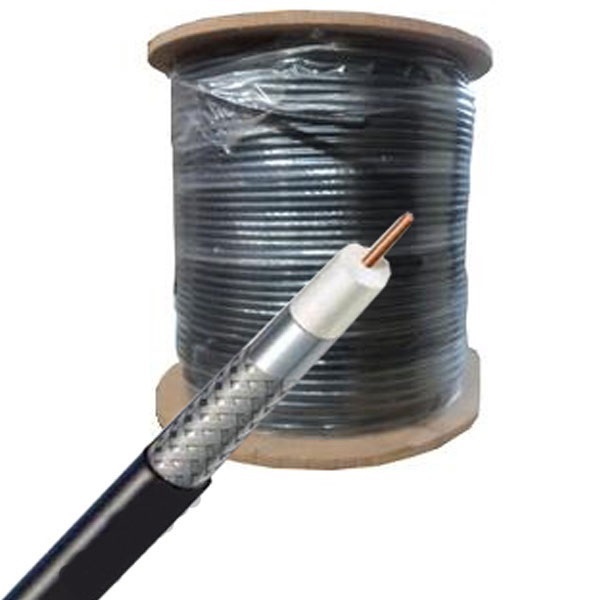 | Polycab Co-Axial Cables Polycab coaxial cable is a type of cable designed for transmitting high-frequency electrical signals, commonly used in cable television (CATV) and... View product → |
Frequently asked questions
When should a Guwahati security installer choose fibre instead of copper Ethernet?
Use Cat 5e or Cat 6 with PoE for most IP cameras within 100 metres. Choose fibre for routes over 100 metres, links between buildings, or locations requiring electrical isolation from lightning and ground-potential differences.
Should a CCTV backbone use single-mode or multimode optical fibre?
Choose single-mode fibre for longer network reaches and future expansion. Choose multimode fibre for shorter backbone links when the installed switches, transceivers and distance support it.
What fibre construction suits Guwahati CCTV routes?
Specify construction according to the route: UV-resistant and moisture-protected cable for exposed runs, suitable armouring where crushing or rodent damage is possible, and indoor-rated cable only inside protected spaces.
What should the fibre backbone acceptance test include?
Check labelled cores, connector cleanliness, optical loss, link length and transceiver compatibility. Require test results from an optical power meter and, for critical links, an OTDR trace.
How can installers compare optical fibre quotations fairly?
Compare fibre mode and count, cable construction, attenuation, armouring, accessories, termination, testing, warranty and installation scope rather than comparing only the cable price.
Related product
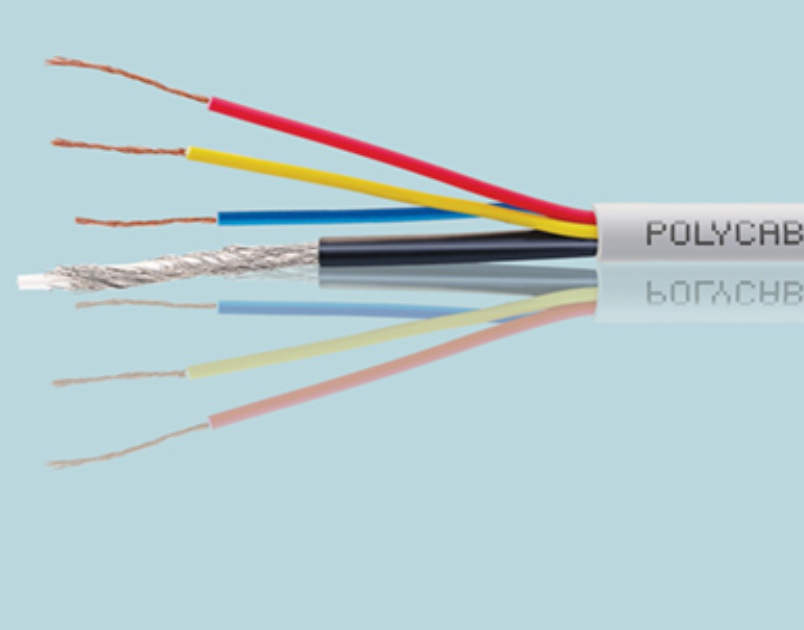 | Polycab CCTV Cables Polycab CCTV cables are specifically designed for use in closed-circuit television (CCTV) systems, offering reliable video signal transmission and... View product → |