Choose flexible cable when the installed route or connected equipment will move, vibrate, be repositioned, or require repeated bending. By separating occasional installation movement from continuous motion, then checking construction, load, environment and termination requirements, you can specify the right cable instead of relying on the word “flexible.”
Key takeaways
- Use flexible cable for repeated movement, portable equipment and moving machinery.
- Match the cable to bending cycles, travel distance, speed and bend radius.
- Size conductors for current, voltage drop, installation method and ambient temperature.
- Verify Polycab part number, voltage rating, construction and genuine supply documents.
When does an installation genuinely need flexible cable?
Flexibility is necessary when the cable moves repeatedly, follows moving machinery, hangs from a festoon system, travels through a drag chain, or supplies portable equipment. It is convenient, rather than essential, when a cable remains fixed but must pass through conduit or a tight panel route.
A solid-core cable is unsuitable for repeated movement: bending concentrates stress until the conductor or insulation cracks. Stranding improves bend life, but not every stranded cable is designed for motion.
- Classify the movement: continuous travel requires a cable designed for that travel; occasional bending during servicing needs less demanding flexibility; a permanently fixed route does not need a flexible construction.
- Check the equipment: machinery and variable-speed drives may require a protective earth, screen, EMC construction, special insulation and matching glands or connectors. Do not replace a screened motor cable with a general-purpose flexible cable.
- Confirm the bend radius from the current datasheet. Use the manufacturer’s static or dynamic limit for the completed cable diameter, not a radius guessed from conductor size.
- Match the termination. Fine strands need correctly sized ferrules, lugs or terminals; loose strands outside the clamp create hot spots and unreliable contact.
- Treat IS 694 as a reference, not a complete selection. It covers PVC-insulated cables up to 1,100 V, but construction, temperature rating, sheath and installation method still matter. The phrase polycab distributor flexible cable for uses is not a sufficient purchase specification.
| Cable type | Movement it suits | Decision |
|---|---|---|
| Flexible PVC | Fixed routes, tight panels, occasional servicing | Convenient or lightly flexible |
| Rubber | Portable equipment, vibration and repeated handling | Necessary for demanding handling |
| Festoon | Suspended cranes and trolley systems | Necessary for guided travel |
| Drag-chain | Repeated machine travel along a chain | Necessary for continuous movement |
What type of movement must the cable withstand?
A cable that moves continuously needs more than a stranded conductor. IEC 60228 Class 2 is stranded but relatively rigid, making it suitable for fixed wiring; Class 5 is flexible for routing and occasional movement, while Class 6 tolerates tighter, more frequent bending.
Solid-core cable is unsuitable for repeated movement because bending concentrates stress in one conductor.
- Fixed after installation: Choose Class 1 solid or Class 2 stranded construction when the cable will remain supported in conduit, trunking or a panel. A Polycab flexible cable can ease pulling through a tight route, but its terminals must accept fine strands.
- Moved during servicing: Use Class 5 construction and check the manufacturer’s static bend radius. Repeatedly bending a cable below that radius can damage insulation and break strands.
- Travels continuously: Use a cable designed for dynamic service, with fine stranding, a suitable sheath and construction rated for drag-chain, festoon or robotic movement. Class 5 alone does not prove continuous-travel performance.
| Movement pattern | Suitable construction | Main check |
|---|---|---|
| Fixed wiring | Class 1 or Class 2; flexible PVC can suit difficult routing | Terminal compatibility and completed cable diameter |
| Occasional bending | Class 5 flexible cable | Static bend radius, vibration and support |
| Continuous travel | Dynamic-rated Class 5 or Class 6 cable; drag-chain or festoon design | Dynamic bend radius, travel speed, cycles and chain compatibility |
| Portable equipment | Fine-stranded rubber or PVC construction | Flexing direction, abrasion and strain relief |
For flexible cable applications, confirm the exact product datasheet. The minimum bend radius applies to the finished cable, not simply its conductor size. Terminals, ferrules, lugs and glands must match the actual conductor class and cable diameter.
How should you size flexible cable for the electrical load?
Size the conductor from the design current after derating, then confirm voltage drop, fault withstand and termination compatibility. “Flexible” describes construction, not ampacity; a catalogue current figure can become unsafe when heat cannot escape.
Before fixing the cross-sectional area, check:
- Design current, duty cycle and motor starting current.
- Installation method: conduit, tray, trunking, free air or a confined enclosure.
- Ambient temperature, number of loaded circuits, thermal insulation and enclosure ventilation.
- Route length, supply voltage and permitted voltage drop.
- Harmonic currents, especially where electronic loads can overload the neutral.
- The protective device’s disconnection time and the cable’s short-circuit withstand.
- The actual conductor class, ferrule or lug, gland, connector and breaker-terminal capacity.
| Condition | What to verify | Why it changes the choice |
|---|---|---|
| Thermal | Current-carrying method, ambient temperature, grouping and insulation | Apply the manufacturer’s correction factors; derating can require a larger conductor. |
| Voltage and fault duty | Route length, allowable voltage drop, prospective fault current and protective device | A longer route or higher fault energy can require increased size or a different protection scheme. |
| Physical installation | Completed cable diameter and the current Polycab datasheet’s static or dynamic bend radius | Cross-sectional area alone cannot establish bend safety; a tight route can reject an otherwise adequate cable. |
| Termination | Fine-stranded conductor class, stripping length, ferrule or lug and terminal acceptance | Poor clamping leaves strands outside the contact area and creates heating. |
IS 694 covers PVC-insulated cables up to 1,100 V, but that reference alone does not prove suitability for every installation. Confirm the specific construction, insulation rating, sheath and installation method.
Which cable construction suits the equipment and environment?
Choose the cable by movement pattern and exposure, not by the word “flexible” on the packet. A Class 5 PVC conductor suits handling and occasional repositioning; continuous travel needs a cable whose datasheet states bend radius, torsion or cycle-life limits.
| Option | What it means | When it applies |
|---|---|---|
| PVC flexible | Lightweight insulation for ordinary indoor service | Homes, appliances, control wiring and short-term repositioning; not continuous drag-chain travel |
| Rubber | Tougher sheath with better resistance to impact, abrasion and rough handling | Temporary power, construction areas, workshops and portable equipment |
| Festoon | Designed to hang in loops and travel along a track | Cranes, hoists and moving building systems with guided horizontal travel |
| Drag-chain | Built for repeated bending inside an energy chain, with controlled bend radius | CNC machines, automated machinery and cable carriers |
| Specialised | Includes screened, shielded, motor, robotic or high-temperature constructions | Variable-speed drives, robotic axes, high electromagnetic interference or unusual heat and chemicals |
For permanent building wiring, do not substitute an appliance cord because it is easy to bend. Verify mechanical protection, support, enclosure entry, earthing and fire requirements.
For machinery, match the insulation, sheath, screen, protective earth and gland to the equipment. A general-purpose Polycab flexible cable is not automatically a motor or EMC cable. The phrase “Polycab flexible cable” remains incomplete until you specify conductor size, voltage grade, construction and intended flexible cable applications.
What should you verify before ordering from a Polycab distributor?
Put the exact product code on the purchase order, not simply “Polycab flexible cable.” Confirm conductor material and cross-sectional area, conductor class under IEC 60228, voltage grade, insulation and sheath material, and the intended installation.
A Polycab distributor needs the application stated: flexible cable for uses such as portable equipment, servicing bends or continuous machine travel.
- Ask for the current technical datasheet, not an old catalogue page. Check the completed cable diameter, static and dynamic minimum bend radius, temperature rating, ampacity, and any movement-cycle limit.
- Match the marking to the specification: IS 694 for PVC-insulated cables up to 1,100 V, IEC 60228 conductor class, voltage designation, metre marking, and manufacturing batch number.
- Reject a generic “FR” recommendation until you identify the required property: flame retardance, low smoke, halogen-free behaviour, circuit integrity or fire resistance.
- Confirm termination details: lug or terminal size, stripped-length requirement, gland range, cable outer diameter, bending space and whether ferrules are required. A Class 5 conductor can fail at a poorly fitted terminal even when its size is correct.
| Purchase check | Confirm before release | What a mismatch causes |
|---|---|---|
| Product identity | Exact Polycab code, conductor size, class and voltage | The wrong cable construction reaches site |
| Datasheet | Current revision, bend radius, temperature and ampacity | Overheating or premature flex failure |
| Marking | Standard, batch number and metre marking | Traceability and inspection problems |
| Termination | Lug, gland, terminal and strip dimensions | Loose connections or damaged strands |
For Polycab cable selection, Prabhat Cables Pvt. Ltd can record these fields against the quotation so the supplied coil can be checked before installation.
Related products
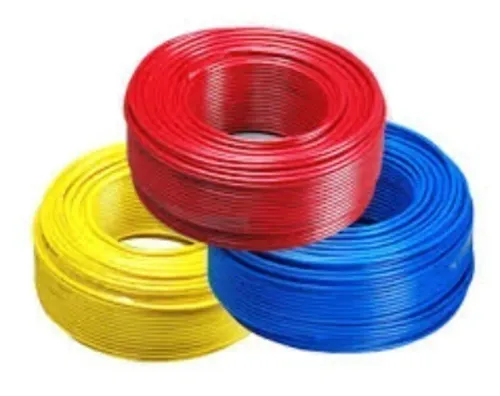
 | Polycab Flexible Cables Polycab flexible cables are electrical cables designed with enhanced flexibility for various applications, including those involving movement,... View product → |
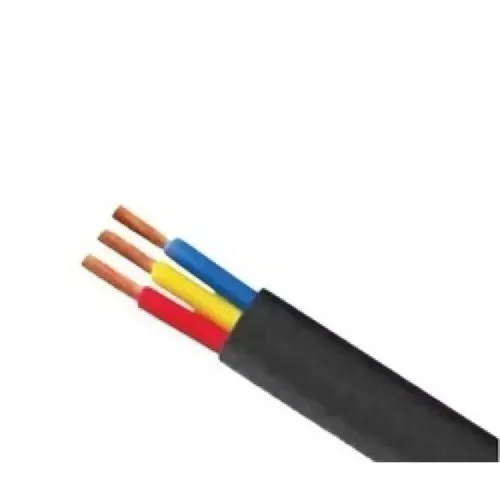
 | Polycab Festoon Cables Polycab Festoon Cables are specialized flat, flexible cables designed for use in festoon systems, particularly on cranes, hoists, and lifts. View product → |
Frequently asked questions
When does an installation genuinely need flexible cable?
Use flexible cable when the cable moves repeatedly, supplies portable equipment, hangs from a festoon system, follows moving machinery or travels through a drag chain. For fixed wiring, flexibility is a convenience rather than a requirement.
What type of movement must flexible cable withstand?
Identify whether the cable will flex continuously, bend occasionally, twist, hang vertically or travel through a drag chain. Check the equipment maker’s bend radius, travel speed, cycle requirements and installation method before selecting the cable.
How should you size flexible cable for the electrical load?
Select the conductor cross-section after checking design current, starting current, voltage drop, ambient temperature, grouping and installation method. Confirm that the cable’s voltage rating and permissible current suit the circuit.
Which cable construction suits the equipment and environment?
Compare conductor flexibility, insulation and sheath materials, number of cores, screening, armour, oil or chemical resistance, water exposure, temperature range and mechanical protection against the installation conditions.
What should you verify before ordering from a Polycab distributor?
Confirm the exact Polycab part number, conductor size, core count, voltage rating, insulation and sheath type, required length, packing details and manufacturer markings. Ask for the invoice and product documentation, and inspect the seal and batch details on delivery.