Choosing a screened cable starts with identifying the circuit, interference source, fault duty and installation environment—not with the word “screened” on a quotation. By the end, you can specify the cable construction, screen termination, gland system and documents needed for a like-for-like industrial purchase in Guwahati.
Key takeaways
- Use screened cable where EMI threatens signal integrity, drives, instrumentation or control circuits.
- Compare screen coverage, conductor size, voltage rating, temperature rating and short-circuit withstand.
- Bond the screen, gland and joints according to the circuit’s earthing and EMC design.
- Specify UV, moisture, mechanical and corrosion protection for Guwahati industrial routes.
Which industrial circuit actually needs a screened cable?
A short, separated power run in a low-noise route does not need screening; choose it when the circuit faces electromagnetic interference (EMI), meaning unwanted electromagnetic disturbance across a broad frequency range. Radio-frequency interference (RFI) is the narrower problem involving radio frequencies.
| Circuit or cable | Choose it when | Do not substitute it for |
|---|---|---|
| Screened power or VFD cable | Feeding inverter-fed motors, welding sets, or long motor runs | Instrumentation cable |
| Screened instrumentation or control cable | Carrying 4–20 mA, thermocouple, RTD, data, or control signals | VFD or motor cable |
| Coaxial cable | A single high-frequency signal needs controlled impedance | Multicore control wiring |
| Twisted-pair cable | Balanced data or signal pairs need reduced magnetic pickup | High-current motor feeders |
| Unscreened industrial cable | The route is short, separated, and electrically quiet | Noisy parallel routes |
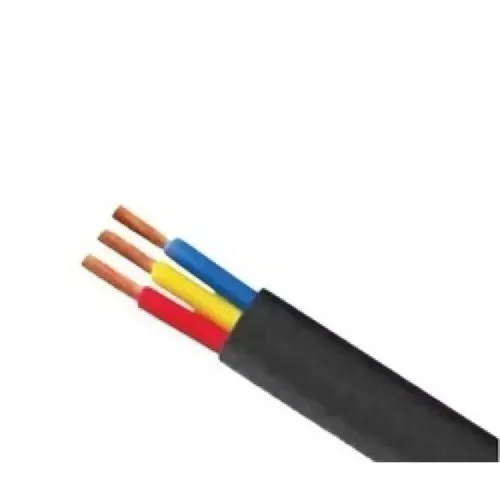
At a Guwahati site, variable-frequency drives, inverter-fed motors, welding sets, large contactors, switch-mode power supplies, busbars, radio transmitters, and long parallel runs beside power circuits justify screening. Individually screened pairs reduce pair-to-pair crosstalk but increase diameter and cost; an overall foil-and-drain or braid screen suits simpler signal protection.
A screened cable for industrial use must match the circuit. A search for Polycab cable for industrial use screened cable in Guwahati still requires conductor count, size, voltage rating, screen construction, and standard—not just the word screened.
How to compare screen construction and cable ratings
Compare the screen’s job and construction before comparing price: a screened cable for industrial use is not automatically a better cable.
| Screen construction | Main advantage | Check before choosing |
|---|---|---|
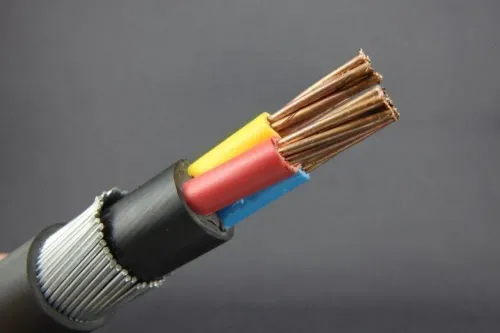
| Aluminium-polyester foil with drain wire | Economical high-frequency coverage and simple drain-wire termination | Coverage, drain-wire size and resistance |
| Copper wire braid | Mechanical strength and lower impedance across a broader frequency range | Braid coverage, flexibility and termination method |
| Copper tape | Continuous metallic screen for power-cable shielding | Fault-current duty and short-circuit rating |
| Concentric copper wires | Robust power-cable screen with defined current capacity | Whether the design assigns it fault-current duty |
| Combined foil and braid | Broad noise coverage with improved mechanical and bonding performance | Total screen resistance, coverage and installation space |
Ask the supplier to state whether the screen provides electromagnetic shielding, noise drainage, fault-current conduction, or all three. Specify a separate protective-earth conductor where the screen is not permitted to perform that duty.
For a Polycab screened cable in Guwahati, require the quotation to list:
- Conductor count, conductor class and cross-sectional area
- Voltage grade, PVC or XLPE insulation, and sheath material
- Screen coverage, screen resistance and screen construction
- Continuous temperature rating, minimum bending radius and short-circuit rating
- Applicable standard and installation derating basis
IS 1554, IS 7098 and IEC 60502 appear in Indian procurement, but the correct standard depends on cable type and voltage class. A foil screen can suit high-frequency noise at controlled cost; braid suits harsher movement and wider-frequency interference.
Copper tape or concentric copper screens fit power duties only when the design assigns them that role.
How should the screen, gland and joints be bonded?
Do not earth every screen at one end. Instrumentation screens are often bonded at one end to limit low-frequency circulating ground-loop current, while power-cable metallic screens and high-frequency EMC shields can require bonding at both ends. Let the installation drawing and equipment manufacturer’s EMC and earthing instructions decide.
A screened cable for industrial use must retain screen continuity through cable glands, junction-box joints, metallic trays, control-panel entry plates and motor terminals. A long, thin pigtail can pass a multimeter continuity test yet add high-frequency impedance, allowing noise to reach the conductors.
For a polycab screened cable in guwahati, specify an EMC gland whose entry thread, cable range, sheath diameter, screen type and IP rating match the cable. The gland must grip the outer sheath and contact the screen across a broad area. An incorrectly sized gland or excessive stripping interrupts the shield.
Inspect every termination before energising:
- Check braid or foil for cuts, crushed sections and gaps.
- Confirm the drain wire is connected where the design requires it.
- Check gland compression around the outer sheath, not loose over exposed screen.
- Verify panel entry plates and metallic glands bond to the panel earth bar.
- Confirm screen continuity across each junction-box joint, tray transition and motor terminal.
- Check that the bonded ends match the drawing; adding a second bond can create loop current, while omitting one can defeat EMC control.
What changes on a Guwahati industrial route?
The usable cable size is the result of the route calculation, not the conductor cross-section printed in a catalogue. A polycab cable for industrial use screened cable in guwahati must be quoted against its installation method and derating basis.
1. Calculate current-carrying capacity for ambient temperature, grouped loaded circuits, tray or conduit installation, burial, solar exposure and heat inside enclosures. Then check voltage drop and prospective fault current on long runs; ampacity alone can pass while the motor starts poorly or protection fails to clear a fault.
2. Recalculate the installed arrangement if you choose a larger screened or armoured cable. It increases tray fill, gland size, bending radius, support spacing and termination labour. Specify the manufacturer’s minimum bending radius and mechanical supports rather than forcing the cable around a tight entry.
3. Treat Guwahati’s humid, high-rainfall conditions separately from EMI. Confirm sheath material, gland IP rating and sealing at every termination; store drums above standing water and assess flooding, sunlight, chemicals and termites. A screen provides neither impact, crushing nor rodent protection, so use armour or conduit where the route demands it.
- Complete this pre-order survey before selecting a screened cable for industrial use:
- Measure motor-terminal space, panel-entry clearance and gland-plate openings.
- Record parallel cable separation and tray capacity.
- Identify available earthing and bonding points at panels, joints and equipment.
- Confirm drum access, support locations and the route’s wet or exposed sections.
A cable that fits the electrical calculation but not the route is not a usable cable.
What should you demand from a Polycab industrial cable dealer?
A Polycab industrial cable dealer should give you a document-ready offer, not a price for “screened cable.” “Polycab industrial cable dealer” and “Polycab screened cable in Guwahati” are search terms, not precise product specifications.
1. Request the exact manufacturer designation, conductor class, conductor size, voltage grade, construction-standard marking, insulation and sheath materials, screen construction, screen resistance, manufacturing batch and test certificate.
2. Require the quotation to state drum length, available quantity, warranty terms and the derating basis, including ambient temperature, grouped circuits, tray or conduit installation and burial conditions.
3. Ask the seller to confirm gland compatibility by cable diameter, entry thread, screen type, sheath and IP rating. Make the quotation distinguish the screen or drain wire, armour and protective-earth conductor; a signal screen is not automatically a fault-current path.
4. Verify authorised status through current manufacturer documentation or Polycab’s channel-confirmation process. Check that the invoice names the legal seller and the exact cable product, not only a brand or category.
Prabhat Cables Pvt. Ltd can help a business buyer source genuine Polycab wires, cables and associated electrical equipment by preparing a technically complete quotation for projects in Guwahati and across India.
Compare documented construction, compliance, stock availability, delivery, termination requirements and installed cost; the lowest per-metre offer can become the costliest choice after larger glands, tray changes and extra labour.
Related products
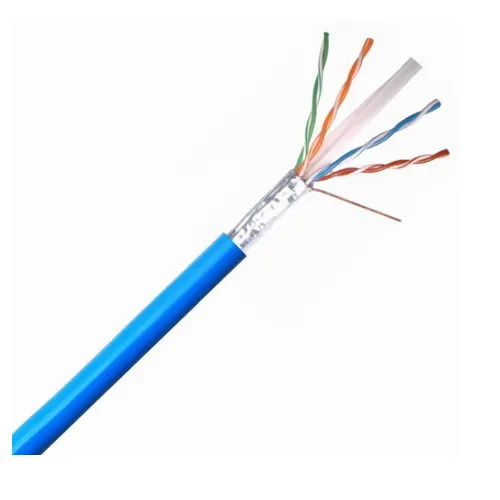 | Polycab Screened Cables Polycab screened cables are power cables designed with a metallic shield (screen) to minimize electromagnetic interference (EMI) and ensure signal... View product → |
 | Polycab Industrial Wires Polycab Industrial Wires are a range of electrical wires and cables designed for use in various industrial applications. View product → |
Frequently asked questions
Which industrial circuits need a screened cable?
Use screened cable for instrumentation, control, data, variable-frequency drive and other circuits exposed to EMI or RFI. A short, separated power run in a low-noise route does not need screening.
How do you compare screened cable construction and ratings?
Compare the screen type and coverage, conductor size, voltage rating, insulation, temperature range, mechanical protection and short-circuit withstand. Match each rating to the installation environment and load.
How should a screened cable screen, gland and joint be bonded?
Bond the screen to the designated earth or EMC termination through a compatible gland, maintain continuity across joints and follow the equipment maker’s earthing arrangement. Do not leave the screen floating without a documented design reason.
What should you check for a screened cable route in Guwahati?
Check exposure to monsoon moisture, flooding, heat, sunlight, corrosion, cable-tray congestion and mechanical damage. Specify suitable sheathing, sealing, gland protection and route separation before ordering.
Related product
 | POLYCAB CABLE GLANDS Weatherproof DC Cable Gland Archives - ICCPolycab cable glands are mechanical devices designed to terminate and secure electrical cables, providing... View product → |