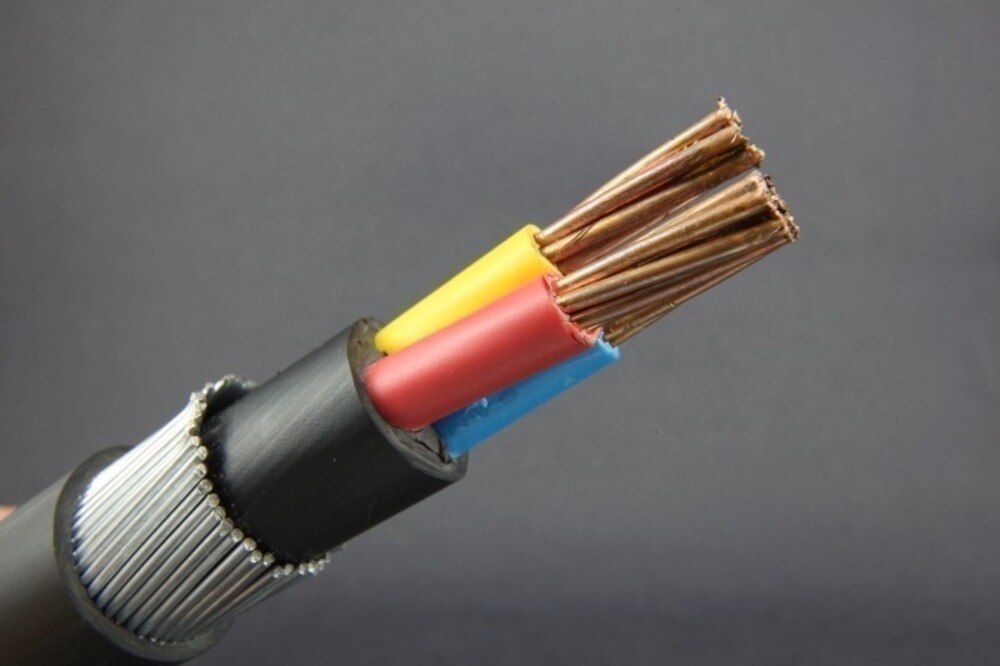
A Guwahati installer needs more than a dealer’s assurance that solar cable is available: the required size, red and black polarity, voltage class, quantity and supply format must be confirmed as physical stock. By the end, you will have a specification, quotation and receiving checklist that separates compliant Polycab PV cable from unsuitable or untraceable wire.
Key takeaways
- Confirm the exact SKU, cross-sectional area, colour and dispatch condition.
- Match cable size to current, voltage, route length and installation method.
- Request stock confirmation, batch details and Guwahati delivery terms in writing.
- Check markings, seals, storage damage and connector compatibility before installation.
Define availability by SKU, colour and dispatch condition
A Guwahati installer should treat Polycab solar cable as available only when the supplier confirms the exact SKU, not merely that “solar cable” is in stock. Polycab solar cable availability is SKU-specific: 4 mm² does not prove that 6 mm² is available, and one polarity does not cover both.
Request written confirmation of these details:
- The precise Polycab SKU, conductor cross-section and voltage class required for the design.
- Red and black cable availability, including whether both colours are held in the quoted quantity.
- The supply format: full drum, specified cut length, or another pack size, plus the minimum order quantity.
- The physical quantity available and the complete printed cable marking.
- A photograph of the manufacturer’s label showing the product identity before you approve the quotation.
“Available” should mean physically held at a named Guwahati location, reserved against your order, and linked to a stated dispatch date. Ask whether you can collect it locally or whether the supplier will arrange delivery.
“Available on order” is a different condition. Factory lead time, transport to Assam and minimum drum quantities can move the installation date, so do not count it as ready stock. Require the supplier to identify any shortfall instead of substituting a different size, colour or ordinary PVC wire.
Choose the cable from electrical and installation data
Panel wattage alone does not determine the correct Polycab PV cable. Select the cable after checking design current, total route length, allowable voltage drop, installation method, ambient temperature and grouping, then apply the required derating.
| Selection input | Why it changes the cable choice | What to confirm |
|---|---|---|
| Design current and parallel strings | Parallel strings increase the current carried by shared sections | Maximum current for each string and combined circuit |
| Route length | Long module-to-inverter or combiner runs increase voltage drop and power loss | One-way length, or the calculation basis used by the designer |
| Installation method | Trays, conduit, rooftop clips and buried sections dissipate heat differently | How and where the cable will be installed |
| Temperature and grouping | Heat and adjacent loaded cables reduce permissible ampacity | Ambient temperature and number of grouped circuits |
| Connector and gland | The conductor may fit electrically while its outside diameter does not fit the connector seal | Connector contact range, cable diameter range and gland size |
Then send the supplier the system voltage, cable polarity, required cross-section, route length and connector type. A 4 mm² cable is not an automatic substitute for 6 mm², and a larger conductor is not a cure for an unsuitable voltage class or connector fit.
Use stranded, flexible PV cable specified for outdoor solar service. Do not replace it with ordinary house wire: its insulation, weather resistance, mechanical flexibility and termination compatibility may not suit rooftop exposure. Ask for the manufacturer datasheet before approving an alternative SKU.
Send a complete quote request and confirm Guwahati fulfilment
Send a project brief, not a message asking whether “solar cable” is available. A solar cable supplier in Guwahati needs enough data to quote the specified SKU rather than substitute the nearest stocked size.
- System voltage and array configuration
- Design current and required conductor cross-section
- Route length from modules to combiner box and inverter
- Required red and black quantities
- Cable voltage class
- Connector type, including the mating connector or MC4-compatible requirement
- Total quantity, drum or cut-length preference, and delivery address
For a request to a Polycab dealer solar cable in Guwahati, ask for a photograph of the manufacturer’s label and the complete printed cable marking. Prabhat Cables Pvt. Ltd can use these details to distinguish a specified Polycab PV cable from ordinary DC wire or an unlabelled substitute.
Ask the supplier to confirm these fulfilment details in writing:
- Exact SKU, conductor size, colour, voltage rating and quantity physically available
- Whether both polarities are ready for dispatch
- Factory drum or cut-length format, minimum order and local collection option
- Dispatch date, Guwahati delivery date, freight charge and delivery coverage
- Tax invoice description, applicable tax details and transport tracking
- Manufacturer datasheet, conformity or test documents, and factory-sealed stock
Require confirmation that the cable is not locally repacked. If the quote omits a delivery date or says only “Polycab cable available,” it is not a complete procurement commitment.
Related product
 | Polycab Solar Cables Polycab solar cables are specifically designed for solar power systems, offering high-quality, reliable, and durable wiring solutions for efficient... View product → |
Verify that the cable is genuine, marked and traceable
Before accepting a coil, match the cable’s complete printed legend to the manufacturer label, invoice and datasheet; a seller’s statement that “solar cable is available” proves nothing.
Look for the Polycab name, exact PV-cable product designation, conductor area, polarity colour, marked DC voltage class such as 1.5 kV DC, and IS 17293 or an equivalent recognised PV-cable specification. Check metre marks and manufacturing, batch or lot identification.
Request these records before payment or dispatch:
- A clear photograph of the original drum or package label and the complete cable printing.
- A tax invoice stating the exact Polycab product description, conductor size, colour, quantity and applicable tax details.
- The manufacturer’s datasheet showing the cable’s voltage class and PV-cable specification.
- Applicable conformity or test documentation linked to the product, batch or supply.
- For cut lengths, written confirmation linking the piece to the original drum, label and invoice.
| Supply form | Traceability evidence | Acceptance decision |
|---|---|---|
| Full drum | Original label, batch details, continuous marking and invoice match | Accept after physical verification |
| Cut length | Manufacturer marking remains visible and invoice links it to the source drum | Accept only with retained identification |
| Unlabelled or locally repacked cable | No reliable batch, standard or factory-stock evidence | Quarantine and request replacement |
Do not accept ordinary DC wire because its conductor size matches your design. If the marking, datasheet and documents disagree, stop the receipt until the supplier resolves the discrepancy in writing.
Inspect packaging, storage condition and connector fit
Reject the coil if its factory end seals are broken, the drum or coil is wet, or the sheath shows cuts, flattening, abrasions or swelling. A correct brand label does not rescue material damaged during monsoon transport or rooftop storage.
Check every delivered pack against the confirmed SKU, conductor size, red or black colour, voltage class, quantity and drum or cut-length format. Photograph the label before opening, then inspect the cable surface and confirm that the printed marking remains readable along the accessible length.
Use this arrival checklist:
- Confirm the drum or coil label matches the ordered Polycab SKU, polarity, length and batch or traceability details.
- Look for intact end caps or seals; quarantine any pack with exposed, muddy or water-stained cable ends.
- Reject cable with sheath cuts, crushed sections, kinks, oil contamination, mould or prolonged water exposure.
- Keep accepted coils raised off the floor, covered from rain and direct sun, and protected from sharp edges.
- Measure or verify the cable’s insulation outside diameter against the selected PV connector’s permitted cable range.
- Confirm the conductor size fits the connector contact and crimp barrel; never force an oversized cable into a gland or use a loose seal.
- Quarantine any coil whose connector fit is unconfirmed, even when its cross-section satisfies the electrical design.
Do not treat a generic claim of polycab solar cable availability as proof that the supplied coil is usable. Release it only after the installer approves its condition and connector compatibility.
Frequently asked questions
What does Polycab solar cable availability mean for a Guwahati installer?
Availability means the supplier confirms the exact SKU, cross-sectional area, colour, quantity and dispatch condition. A statement that “solar cable” is in stock does not confirm that 4 mm² and 6 mm² cables, or both polarity colours, are available.
What information should you include in a solar cable quote request?
State the required Polycab SKU, cable size, colour, quantity, delivery location in Guwahati, required dispatch date and whether you need cut lengths or sealed coils. Ask the supplier to confirm freight, lead time and stock status in writing.
How can you verify genuine and traceable Polycab solar cable?
Inspect the cable jacket for clear, consistent manufacturer markings and compare the product details with the packaging label. Record the batch or lot number, invoice details and supplier information, and ask for clarification if markings are missing or inconsistent.
What should you check when the cable arrives?
Check that packaging is sealed and dry, the cable has no cuts or crushing, labels match the order and the cable fits the specified connectors. Keep coils protected from moisture, heat and mechanical damage before installation.