A telephone-cable quotation is incomplete if it says only “jelly filled” and gives a price per metre. You need to confirm the conductor size, pair count, route suitability, governing specification, installation method, test documents and seller authorization before approving a drum or cut length.
Key takeaways
- State sheath, armour and route before requesting a quotation.
- Match pair count to connected lines and future expansion.
- Include jointing, termination and acceptance testing in the work plan.
- Compare cable, trenching, joints, labour and delivery as one installed cost.
Specify the cable construction before requesting a quotation
A quotation for Polycab jelly filled telephone cable in Vadodara must identify the cable construction, not only the brand and pair count. State the installation route—direct burial, duct, underground chamber, building entry or aerial exposure—because sheath, armour, bend radius and mechanical protection depend on it.
1. Name the product as jelly-filled telephone cable and cite the exact Polycab catalogue number, datasheet and applicable Indian Standard, IEC standard or telecom specification. Ask the seller to quote against that reference.
2. Specify conductor material and nominal diameter, such as 0.4 mm, 0.5 mm or 0.63 mm. Do not infer diameter from outside diameter. State pair count clearly: a 20-pair cable has 40 individual insulated conductors, so “40-core” alone is unsafe.
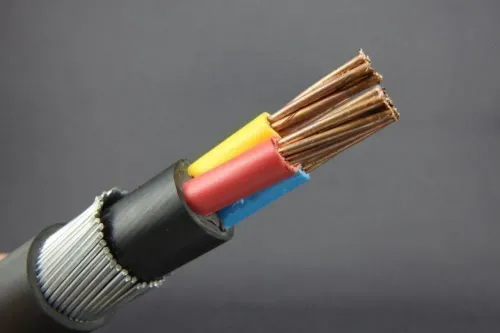
3. Record the pair or quad arrangement, insulation material, jelly or filling compound, inner and outer sheath materials, colour, armour option and finished outside diameter.
4. Add cable length, drum length, voltage rating, transmission frequency range, minimum bend radius, tensile limit and operating temperature range where the project specification requires them. Request routine test results and a certificate of conformity with the quoted construction.
5. Exclude Cat 5e, Cat 6 and LAN cable unless the design specifically permits substitution. Pair geometry, crosstalk, impedance and Ethernet transmission performance differ from telephone cable, even when the pair count matches.
Match pair count and cable type to the route and service
A 20-pair cable contains 40 individual insulated conductors. Specify pair count and conductor diameter separately; 0.4 mm, 0.5 mm and 0.63 mm are common procurement sizes, but confirm the selected construction and datasheet before ordering. Ask a Polycab telephone cable dealer to state the route as well as the cable type.
| Route or service | Suitable selection | When to choose another cable |
|---|---|---|
| Direct burial in soil | Jelly-filled cable with a sheath and mechanical protection rated for burial | Choose another construction if the datasheet excludes direct burial |
| Underground duct or cable trench | Jelly-filled cable sized for the duct, pulling method and bend radius | Use a different sheath when water, crushing or repeated movement exceeds its rating |
| Chamber or outdoor building entry | Water-resistant jelly-filled cable with protected entry and jointing provisions | Select another cable if the entry requires fire, armoured or special mechanical protection |
| Pole or unsupported aerial route | Aerial-rated self-supporting cable with the required messenger or support system | Do not suspend ordinary buried or duct cable between poles |
| Ethernet or broadband data link | Cat 5e, Cat 6 or the specified balanced data cable | Jelly-filled telephone cable is not a direct replacement |
An available pair count does not prove Ethernet capability. Telephone pair geometry, pair-to-pair crosstalk, characteristic impedance and transmission specifications differ from balanced data cable. For voice or basic telephone distribution, match pair capacity to the connected lines and spare-pair allowance; for high-speed data, select the cable designed and tested for that service.
Plan burial, jointing, termination and acceptance testing
Before the cable leaves the drum, confirm whether the route is direct burial, duct, underground chamber, building entry or aerial exposure. That choice controls sheath protection, armour, mechanical support, bend radius and sealing. Do not use a duct-rated cable for unsupported aerial spans or bury it directly unless the Polycab datasheet permits that installation.
Use this sequence:
- Inspect the drum, seals, cable ends, sheath and printed identification. Record the batch, length and any transit damage before cutting.
- Prepare the trench, duct or chamber to the specified depth, bedding, draw rope and water protection. Pull with a swivel, observe the manufacturer’s minimum bend radius and never exceed the stated pulling tension.
- Leave measured slack at chambers, joints and building entries. Protect exposed sections with the specified duct, gland or mechanical guard.
- Joint only with a compatible, moisture-sealed telephone-cable kit. Remove and wipe jelly from conductors before IDC, Krone-type or soldered work; residue can foul contacts and leave a weak, untidy joint.
- Preserve pair identification and twist, fit strain relief, seal every entry and label both cable ends and each joint.
- Test every pair for continuity, shorts, earth faults, insulation resistance and loop resistance using the project specification’s test voltage and limits. Do not apply a power-cable test voltage.
- Repeat the tests after jointing and termination, then record pair numbers, readings, instrument identity, date and defects. Accept the route only after damaged pairs are repaired and the records match the as-built drawing.
Verify the Vadodara dealer, product identity and delivery terms
A search result for “polycab authorized dealer jelly filled telephone cable” does not prove that a Vadodara seller is authorised. Ask for current Polycab dealership or authorization confirmation covering jelly-filled telephone cable and the Vadodara territory; permission to sell electrical wire or power cable is not enough.
Check these details before issuing the purchase order:
- Seller’s legal name and GSTIN, shown identically on the authorization document, quotation and tax invoice.
- Polycab named as the manufacturer, not merely included in a product description.
- Exact product identification: jelly-filled telephone cable, conductor diameter, pair count, construction, sheath or armour, drum length and manufacturer catalogue or datasheet reference.
- Written confirmation that the selected construction suits your route—direct burial, duct, chamber, building entry or aerial exposure.
- Dispatch location, stock status, production lead time, delivery date to the site, freight responsibility and unloading arrangements.
- Drum markings, batch or lot identification, inspection documents and the process for reporting short length, transit damage or nonconforming cable.
Prabhat Cables Pvt. Ltd can be assessed by the same evidence: compare its legal details with the Polycab confirmation and final invoice rather than relying on the label “polycab authorized dealer.” Put the agreed delivery date, drum lengths, replacement obligation and document list into the order.
A low quote without confirmed stock or a matching datasheet can leave the project waiting for the correct cable.
Related products
 | Polycab Jelly Filled Telephone Cables Polycab Jelly Filled Telephone Cables Polycab Jelly Filled Telephone Cables are designed for outdoor telephone communication, offering protection against moisture, rodents, and other... View product → |
 | Polycab Telephone & Switchyard Wires Polycab Telephone & Switchyard Wires Polycab Telephone Wires are communication cables designed for reliable voice and data transmission in both residential and commercial settings. View product → |
Compare the total installed cost before approving the order
A low reel price is not the installed cost. Compare the same jelly-filled telephone cable specification, then add every expense required to place it in service.
Plan the ordered quantity from the measured route, not the map distance:
- Measure each duct, trench, chamber approach and building entry separately.
- Add route-specific slack at joints, chambers and termination points, plus the specified joint allowance.
- Add a documented spare length for repairs; do not hide it inside an unexplained percentage.
- Convert capacity correctly: a 20-pair cable has 40 insulated conductors, not 40 pairs.
- Round the result to the supplier’s drum or coil lengths and check whether the final shortfall creates another joint.
Compare quotations using the same cost lines:
| Cost line | Include in comparison | Why it changes total cost |
|---|---|---|
| Cable | Pair count, conductor diameter, construction, jelly filling and named specification | A cheaper cable with fewer pairs or a different construction is not equivalent |
| Delivery | GST, freight to Vadodara, unloading and return handling | A low ex-warehouse price can become expensive at site |
| Installation | Excavation, duct work, pulling, laying, protection and labour | Route conditions drive labour and equipment costs |
| Jointing | Joint kits, cleaning compound, connectors and termination labour | Jelly residue adds preparation time and consumables |
| Testing | Continuity, insulation and identification testing | Rework costs more after backfilling |
Before approval, reconcile the purchase order’s nominal length with each sealed drum. Record marking, batch or manufacturing date, pair count, conductor size, drum condition and sheath damage; a dealer-cut length may not provide the same traceability.
Frequently asked questions
What cable details should you provide for a quotation?
Provide the pair count, conductor details, insulation and sheath construction, armour requirement, route, installation method, cable length and termination needs.
How do you choose cable type and pair count?
Choose the cable type for direct burial, duct, chamber, building entry or aerial exposure, then add enough pairs for current service, spare capacity and route conditions.
What should the installation and acceptance plan include?
Define burial depth and protection, bend-radius control, joint locations, termination hardware, identification, continuity checks, insulation resistance testing and pair-by-pair acceptance records.
How can you verify a Vadodara dealer and compare quotations?
Confirm authorised-dealer status, product identity, reel labels, batch details, cable construction, warranty terms, delivery conditions and the full installed cost before approval.