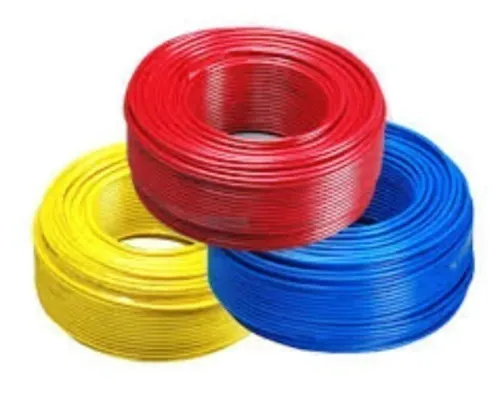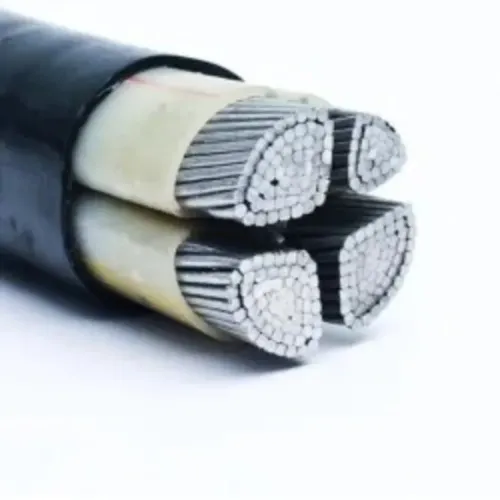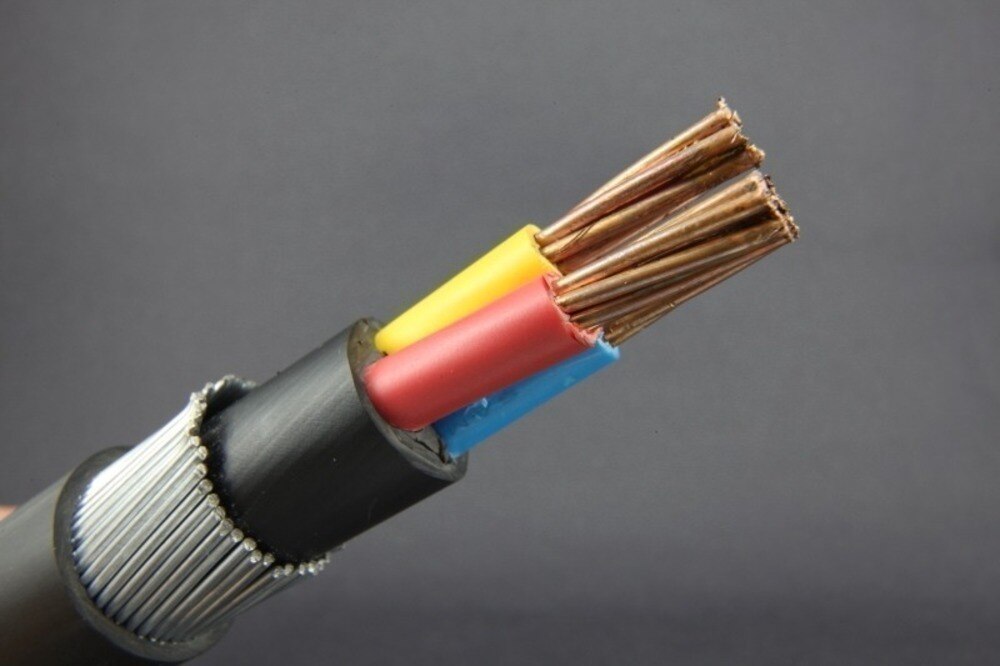
The words flame retardant on a coaxial cable quotation do not tell you whether the cable will limit flame spread, produce less smoke, survive a fire, or suit your signal system. By checking the exact construction, fire-test evidence, 75-ohm compatibility, route conditions, and installed cost, you can decide whether Polycab flame retardant coaxial cable is the right specification rather than simply accepting the label.
Key takeaways
- Flame retardant limits flame spread; it does not make coaxial cable fireproof.
- Request the exact model datasheet and test report before buying.
- Choose cable by impedance, attenuation, shielding, connector compatibility, and route length.
- Use fire-rated cable only when its added protection suits the installation risk.
What flame retardant means—and what it does not mean
Flame retardant does not make a coaxial cable fireproof. A polycab flame retardant coaxial cable is designed to resist ignition and limit flame propagation during a specified test; it is not guaranteed to keep transmitting through a fire, survive high temperatures, or prevent smoke.
A flame-retardant PVC jacket can still burn, release smoke, and fail when exposed to sustained heat.
Before treating the label as proof, ask for:
- The exact Polycab part number and current datasheet revision, not only “RG6” or “FR coaxial cable”.
- The declared flame test, such as IEC 60332-1-2 for a single cable or the applicable IEC 60332-3 category for bunched cables.
- The construction details: nominal impedance, usually 75 ohms for TV distribution; conductor material and size; dielectric; shield or braid coverage; jacket material; attenuation; frequency range; and operating temperature.
- The drum marking, batch number, Indian Standard reference where declared, and manufacturer test certificate.
Do not confuse flame retardance with these properties:
| Option | What it provides | What it does not provide |
|---|---|---|
| Ordinary PVC coaxial | Signal transmission with a standard PVC jacket | A declared flame-propagation limit |
| Flame-retardant PVC coaxial | Reduced flame spread under its stated test | Fire survival, low smoke, or zero halogens |
| LSZH coaxial | Lower smoke and reduced acidic or corrosive gas emissions, assessed by IEC 60754 and IEC 61034 methods | Guaranteed fire survival |
| Fire-resistant communication cable | Continued circuit operation for a specified fire exposure | The same construction or signal performance as coaxial cable |
Which Polycab specification and test documents should you request?
A quote for polycab flame retardant cable coaxial cable in Bengaluru is not verifiable from the words “FR coaxial” alone. Ask for the exact Polycab part number, datasheet revision, nominal impedance—usually 75 ohms for television distribution—and the intended application.
Request these items before approving the order:
- Conductor material and diameter, dielectric construction, shield or braid coverage, jacket material, cable size, capacitance, attenuation at stated frequencies, return loss, and operating frequency range.
- The Indian Standard reference printed on the datasheet or drum, if one is declared, plus the flame-propagation test standard. IEC 60332-1-2 applies to a single cable; bunched installations require the applicable IEC 60332-3 category.
- A manufacturer test certificate identifying the cable type, test method, result, date, and batch or drum number.
- A declaration of conformity where the project specification requires one, and a tax invoice showing the exact description, quantity, batch or drum details, and unit of sale.
Do not treat “flame retardant” as proof of LSZH performance. IEC 60754 addresses acidic or corrosive gases, while IEC 61034 addresses smoke density; request those results only when low-smoke zero-halogen performance is specified.
| Claim | Evidence to request | What it does not prove |
|---|---|---|
| Flame retardant | IEC 60332 result | Fire survival |
| LSZH | IEC 60754 and IEC 61034 results | Higher signal performance |
| RG6 | Complete datasheet | One fixed attenuation or shielding level |
For polycab coaxial cable in Bengaluru, compare the exact part number and revision, not the retailer’s shortened name or price per metre, roll, or drum.
Where is it worth using in Bengaluru, and when is another cable better?
Use it for a 75-ohm indoor TV, CATV, legacy analogue CCTV, or satellite distribution route in a Bengaluru apartment, office, hotel, or campus when the cable runs through conduit, ceiling voids, or a protected riser and the project accepts PVC smoke performance.
A flame-retardant jacket limits flame spread; it does not keep the circuit operating during a fire.
| Option | What it provides | When it applies |
|---|---|---|
| FR PVC coaxial cable | Reduced flame propagation; PVC smoke and acidic gases remain possible | Indoor distribution routes where the specification accepts PVC |
| Ordinary PVC coaxial cable | Signal transmission without declared flame-performance evidence | Short, protected routes with no FR requirement |
| LSZH coaxial cable | Lower smoke and corrosive-gas emissions, assessed using IEC 60754 and IEC 61034 methods | Escape routes, occupied public areas, shafts, and projects specifying LSZH |
| Fire-resistant communication cable | Circuit integrity for a defined fire-survival period | Emergency voice, fire alarm, or other life-safety circuits requiring operation during fire |
Choose an outdoor-rated, UV-resistant and moisture-resistant construction for terraces, external walls, or exposed service routes; indoor FR PVC is not a substitute. Use fibre or a specified structured-cabling system for modern Ethernet, Wi-Fi backhaul, or long data links.
A listing for polycab flame retardant coaxial cable or polycab coaxial cable in bengaluru is not enough to select the product. Match the exact part number and datasheet revision to impedance, attenuation, frequency range, shielding, and route length, then confirm the required flame, LSZH, or fire-survival test before ordering.
How do you select the cable for signal performance?
Start with the equipment, not the “RG6” label. A television, CATV, or DTH distribution system normally requires 75 Ω cable, 75 Ω splitters, taps, connectors, and termination hardware. A 50 Ω cable in that chain creates mismatch loss and reflections.
1. Confirm the operating frequency range. Ask for attenuation values at your actual frequencies, such as television channels, satellite IF, broadband data, or RF carrier bands. “High frequency” without figures is not enough.
2. Compare attenuation in dB per 100 metres, conductor size, dielectric type, capacitance, and return loss. RG6 describes a cable format, not one performance level.
3. Calculate the link budget for the complete route. Add cable attenuation for the measured length to losses from connectors, splitters, taps, and bends, then check that the result stays within the receiver or distribution amplifier’s usable level range.
4. Match the connector to the cable construction. RG6-style F connectors, BNC connectors, and other terminations differ in diameter and attachment method. A mismatched connector can leave the braid poorly terminated, weaken shielding, and cause intermittent faults.
5. Check shielding construction and braid or foil coverage on the datasheet, not only the jacket claim. Poor shielding allows interference in and leakage out; an amplifier cannot repair that or eliminate reflections from bad terminations.
For a long route, a lower-attenuation cable can cost less overall if it avoids an amplifier. Record the cable length, connector type, frequency, calculated losses, and required margin before ordering.
What should you check before buying and installing it?
Compare quotes only after converting them to cost per usable metre. A price per metre is not comparable with a roll or drum unless the seller states roll length, conductor construction, shield coverage, jacket marking, and included connectors or termination accessories.
- Ask a polycab dealer in bengaluru for the exact product description, nominal impedance, cable size, conductor material, dielectric, shield or braid coverage, jacket material, frequency range, and attenuation.
- Check the drum or datasheet for the batch number, Indian Standard reference, and declared flame test, such as IEC 60332-1-2 for a single cable or the applicable IEC 60332-3 category for bunched cables. “Flame retardant” alone proves nothing.
- Inspect sealed ends, drum flanges, and the jacket. Reject cable exposed to moisture, crushing, flattening, or sharp kinks; these defects can create impedance discontinuities.
- Add conduit, clips, connectors, labour, wastage, testing, transport, and taxes to the comparison. Keep the cable within the manufacturer’s minimum bend radius during pulling and termination.
| Supply form | What to compare | Cost or error risk |
|---|---|---|
| Metre | Cut length and wastage allowance | Short delivery or excess joints |
| Roll | Declared roll length and sealed ends | Unusable remainder |
| Drum | Drum length, condition, and handling | Crushing during unloading |
| Terminated set | Connector type and test responsibility | Paying twice for fittings |
A coaxial cable dealer in bengaluru should provide a tax invoice naming the exact product, quantity, batch or drum details, datasheet, test certificate, and declaration of conformity. Prabhat Cables Pvt. Ltd can be evaluated by the same evidence. For rooftop routes, confirm UV, water, temperature, and outdoor-use permission; otherwise specify conduit or outdoor-rated cable.
Related product
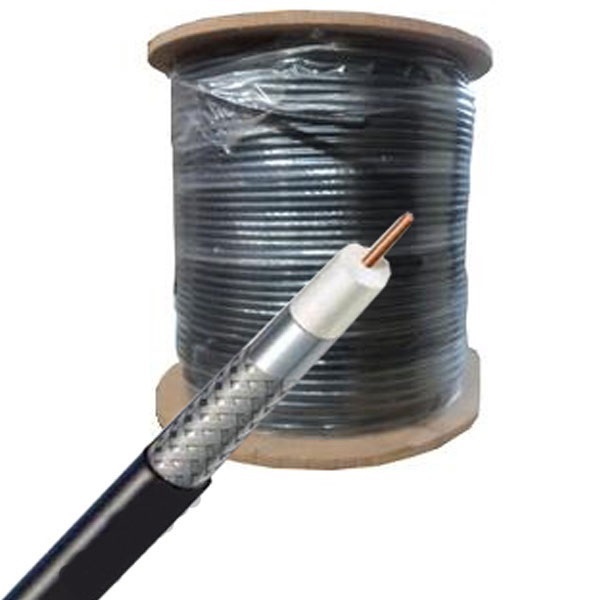 | Polycab Co-Axial Cables Polycab coaxial cable is a type of cable designed for transmitting high-frequency electrical signals, commonly used in cable television (CATV) and... View product → |
Frequently asked questions
What does flame retardant mean for a coaxial cable?
It means the cable is designed to resist ignition and limit flame propagation during a specified test. It does not guarantee continued signal transmission during a fire, resistance to high temperatures, or low smoke emission.
Which Polycab documents should you request before buying?
Request the exact model datasheet, product specification, applicable IS or IEC standard, installation guidance, and a flame-test report or conformity declaration that identifies the tested cable construction. Match the document model number to the printing on the cable and packaging.
Where is flame-retardant coaxial cable useful in Bengaluru?
It suits routes where limiting flame spread matters, such as commercial buildings, shared risers, service shafts, and densely occupied premises. Select another cable when the route needs low-smoke performance, fire survival, outdoor weather resistance, burial protection, or a different impedance.
How do you select coaxial cable for signal performance?
Check the required impedance, attenuation at the operating frequency, shielding performance, conductor and dielectric construction, maximum route length, and connector type. Calculate losses across the cable, connectors, splitters, and bends before installation.
What should you check before buying and installing Polycab coaxial cable?
Verify the model number, cable markings, batch details, packaging seal, datasheet values, test documents, connector fit, drum length, and visible damage. Keep bend radius within the manufacturer’s limit and avoid crushing, sharp bends, water ingress, and poorly fitted connectors.