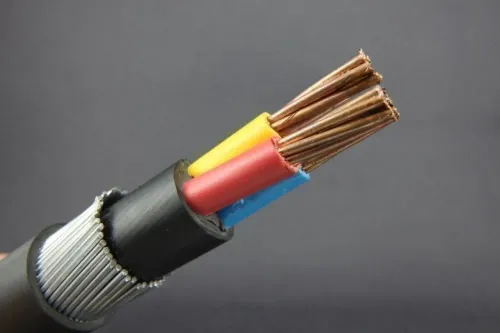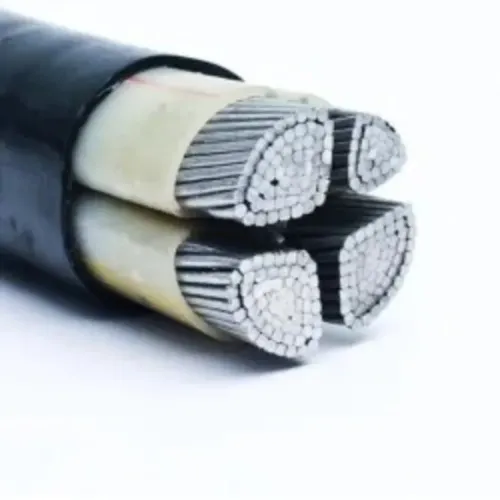
A cable marked flexible or FR is not automatically suitable for repeated festoon movement, and “flame retardant” does not mean it will keep a circuit operating during a fire. By checking the fire test, construction, electrical load, movement duty, documents and installation conditions, you can reject an unsuitable cable before it reaches the crane, hoist or production line.
Key takeaways
- Check the exact catalogue code and named flame test in the current datasheet.
- Match cable dimensions, bend radius and conductor layout to the festoon hardware.
- Calculate load, voltage drop and heat for every circuit before selection.
- Give the supplier travel length, speed, environment and duty-cycle details.
Confirm what the flame-retardant claim actually covers
A “flame retardant” label proves only the fire-performance test stated for that exact finished cable. Confirm the catalogue code, then record the named test, flame-spread requirement and result shown in the current datasheet.
IEC 60332-1-2 covers vertical flame propagation on one insulated wire or cable. Do not treat that result as evidence for a bunched installation: require the stated IEC 60332-3 test category and result for cables tested together.
| Evidence | What it demonstrates | Do not assume |
|---|---|---|
| IEC 60332-1-2 | Single-cable vertical flame performance | Bunched-cable performance |
| IEC 60332-3 category and result | Flame spread for grouped cables | Circuit operation during fire |
| IEC 60331 result | Fire resistance and circuit integrity | Flame retardance, low smoke or halogen-free construction |
| IEC 61034 and IEC 60754 references | Smoke density and halogen-acid gas performance | LSZH status from PVC FR construction |
A flame-retardant festoon cable is not automatically fire-resistant, low-smoke or halogen-free. If the description mentions only flexibility and durability, obtain written confirmation for the exact product code before calling it a polycab flame retardant cable.
The designation also affects installation decisions: maintain specified separation from hot surfaces, provide enclosure ventilation, observe fire-zone boundaries and match the site electrical or fire-safety specification. Do not relax those controls because a flame-spread test passed.
Match the cable’s construction to the festoon hardware
A proposed Polycab festoon cable fits only when its exact catalogue code matches the machine’s mechanical and electrical schedule. Obtain the current datasheet and confirm:
- Flat or round profile, core count, conductor cross-section, IEC 60228 conductor class, rated voltage, insulation and sheath materials, colour coding or core numbering, outer dimensions, mass and specified minimum bend radius.
- Protective-earth, shield or screen, drain wire, brake, sensor and supporting or strain-relief elements.
- A statement that the exact code is qualified for repeated flexing or festoon travel. Class 5 fine-stranded copper improves flexibility; it does not prove continuous festoon service.
Match those dimensions to trolley orientation, clamp width, cable spacing, guide arrangement and the flat cable’s permitted bend direction. A fixed-wiring cable can fatigue under repeated trolley movement.
| Option | Space and bending | Hardware and replacement |
|---|---|---|
| Flat | Uses controlled orientation; bends in its permitted direction and suits narrow, organised runs | Needs matching trolley, clamp and guide; replacement requires the same profile and availability |
| Round | Handles orientation differently and may occupy more space | May need different clamps or guides; installation and replacement are simpler only if stocked |
Changing flat to round hardware, or substituting an ordinary flexible industrial cable, can cause twisting, edge loading or sheath clamping that the application name conceals.
Size every circuit for load, voltage drop and heat
A single festoon can carry power and signal circuits, but one conductor size cannot serve every function. Separate motor power, control, braking, emergency-stop, lighting, encoder and data cores before deciding the cable’s core count and cross-section.
1. Record the circuit voltage, running current, motor starting current, permissible voltage drop and protective-device requirements. Confirm the rated voltage and applicable standard, such as IS 7098-1 or IEC 60502-1 where relevant; conductor area does not prove voltage grade.
2. Request the current rating for the actual installation arrangement, not only the catalogue figure. Apply derating for multiple loaded cores, several cables on one festoon, high ambient temperature, enclosure heat and restricted heat dissipation. A motor cable that survives steady current can still cause excessive starting voltage drop.
3. For inverter-fed motors, require drive-duty suitability, symmetrical construction, screen coverage and termination guidance. A generic flame retardant festoon cable may not control high-frequency EMC interference or bearing currents.
4. Confirm whether control, brake, emergency-stop and data circuits need separate cables, shielding, segregation or twisted pairs. Check the protective-earth core, drain wire and dedicated sensor cores in the exact polycab festoon cable code.
Select the flame retardant festoon cable only after comparing its calculated capacity, core arrangement and installation-specific derating with the machine specification.
Test the movement duty and site environment against the datasheet
A cable that survives electrical load can still fail mechanically. Ask for travel distance, vertical or horizontal arrangement, unsupported span, minimum operating temperature, travel speed, acceleration, cycle frequency, and expected bends over its service life.
Compare these figures with the current datasheet for the exact Polycab festoon cable, including continuous-flexing and festoon-travel qualification—not merely “flexible,” “crane,” or “hoist.”
- Check the stated minimum bend radius at trolley curves, control-panel entry, and every fixed-to-moving transition. Repeated bending below it damages conductor, insulation, and screen layers.
- Confirm suitability for vertical hanging, torsion, outdoor UV, oil, grease, coolant, dust, moisture, abrasion, and welding spatter. Flame retardance does not establish these ratings.
- Reject a festoon cable for continuous torsion, robotic multi-axis motion, drag-chain service, or specialised reeling duty unless the manufacturer expressly qualifies it for that movement.
- Match trolley and suspension hardware to cable mass and loop length; a long unsupported loop or excessive acceleration can shorten service life.
A flame retardant festoon cable is suitable only when its movement limits and environmental ratings match the machine. Obtain the catalogue code, outer dimensions, mass, temperature range, bend radius, and movement limits in writing; “Polycab festoon cable” alone is not a duty rating.
Give the festoon cable supplier enough information to verify the order
Send the festoon cable supplier a duty sheet, not “Polycab flame retardant cable” as an application label. Include:
- Equipment type, travel length, speed, acceleration, duty cycle and load current.
- Starting method or inverter, ambient temperature, oil or coolant exposure, and indoor or outdoor location.
- Cable route, trolley model, existing cable dimensions, flat or round profile, core count and termination details.
Require the quotation to identify the exact product code, manufacturing date or batch/lot number, reel length, voltage rating, temperature rating, minimum bend radius, movement qualification, applicable standards, flame-test result and certificate scope. Ask for inspection or test documentation and warranty conditions that specifically cover moving service. Prabhat Cables Pvt.
Ltd can quote as an authorised Polycab distributor, but approval should follow a documented product-and-duty match.
| Option | Check before approval | Consequence |
|---|---|---|
| Flat | Trolley orientation, clamp size, spacing and permitted bend direction | Hardware changes can add installation time |
| Round | Guide, clamp and bending arrangement | Substitution can cause twisting or edge loading |
| Either | Replacement lead time and stock availability | A cheaper cable can extend downtime |
Compare the proposed flat and round alternatives for hardware changes, installation time, replacement lead time and availability before ordering.
Related product
 | Polycab Festoon Cables Polycab Festoon Cables are specialized flat, flexible cables designed for use in festoon systems, particularly on cranes, hoists, and lifts. View product → |
Prevent early failure during installation and inspection
Early failure usually starts at the installation interface, not in the conductor. Keep a flame-retardant festoon cable above its stated minimum bend radius at trolley curves, panel entry and every fixed-to-moving transition. Never twist a flat cable, drag it, leave excessive unsupported length or use clamps that crush the sheath.
- Align the trolley path and keep loops clear of the structure. Remove sharp transitions between fixed and moving sections.
- Use the specified clamp or gland. Do not clamp individual conductors or impose a tight bend immediately behind a termination.
- Check stripping length and strain relief against the manufacturer’s instructions. Ask the festoon cable supplier to confirm the permitted sheath clamping method.
Inspect for these conditions:
| Finding | Required action |
|---|---|
| Flattened section, kink or sheath cut | Stop movement and assess the cable |
| Exposed conductor or insulation | Remove from service immediately |
| Heat discolouration, hardened sheath or welding damage | Replace before continued operation |
| Abnormal trolley resistance or loop rubbing | Correct alignment, hardware or routing |
| Deep sheath cut | Remove from service and investigate the cause |
Record the product code, batch, inspection date and fault location. Use those records to trace repeated failures to bend radius, hardware, load or environment. Keep the cable away from hot surfaces and within the site fire-zone design; flame testing does not replace enclosures or circuit protection.
Frequently asked questions
What does a flame-retardant claim confirm for a festoon cable?
It confirms only the fire-performance test stated for that exact finished cable. Check the catalogue code, named test, flame-spread requirement and result in the current datasheet.
How do you match a Polycab festoon cable to festoon hardware?
Compare the cable’s outside dimensions, weight, bend radius, conductor arrangement and sheath construction with the trolley, clamps, guide path and minimum bending space.
What must you calculate before sizing a flame-retardant festoon cable?
Size each circuit for connected load, operating voltage, allowable voltage drop, conductor heating, grouping and the cable’s installation conditions.
What information should you give a festoon cable supplier?
Provide the catalogue requirement, conductor count and size, voltage, load type, travel length, travel speed, operating cycles, bend radius, temperature, chemicals, moisture and installation layout.
How can you prevent early festoon cable failure?
Keep the cable aligned, respect the minimum bend radius, prevent twisting and crushing, secure clamps correctly, inspect the sheath and terminals, and test movement before commissioning.