The word “screened” does not identify one cable design, and choosing the wrong screen can leave a motor, control panel or instrumentation circuit exposed to noise while adding installation cost. By the end, you will be able to match the screen construction, voltage and fault requirements to the circuit, specify its termination, and check whether a screened Polycab cable is the right purchase.
Key takeaways
- A screen controls electrical noise; armour protects against impact and crushing.
- Match copper tape, wire braid or foil screen to the circuit’s interference risk.
- Bond the screen continuously at the specified end or both ends.
- Verify voltage, conductor size, screen construction, sheath and test documents before ordering.
What does a cable screen physically do, and how is it different from armour?
A metallic screen intercepts capacitive, radio-frequency and electromagnetic noise before it reaches the signal or power conductors. Bonded to a reference or earth path, it carries that unwanted energy away; it does not carry the intended load current like the conductor.
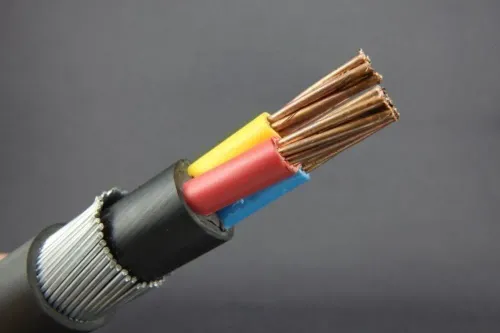
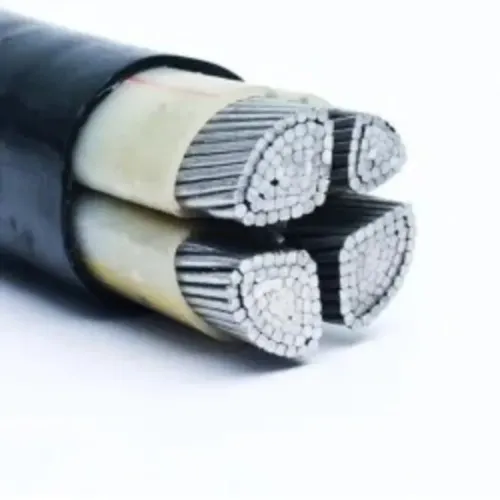
Inside the cable, the conductor carries power or signal, insulation keeps it electrically separated, and the screen surrounds it to control interference. An earth continuity conductor provides a deliberate low-resistance fault path, while armour mainly resists impact, crushing and penetration.
A copper or aluminium screen provides earth-fault continuity only when its size, bonding and construction support that duty.
| Cable type | Primary purpose | Main limitation |
|---|---|---|
| Screened power cable | Controls interference around power or control conductors | Does not replace mechanical protection |
| Shielded instrumentation cable | Protects low-level signals from noise | Requires correct pair screening and termination |
| Ordinary unscreened power cable | Carries electrical load | Offers no dedicated interference barrier |
| Armoured cable | Resists impact, crushing and penetration | Armour is not automatically an EMI screen |
An overall screen surrounds the complete cable group and blocks external interference. Individually screened pairs also limit crosstalk between analogue or communication circuits; an overall screen cannot provide the same pair-to-pair separation.
A Polycab screened cable therefore needs a defined construction, not just a label. Choosing a Polycab cable for industrial use does not remove the need for segregation, suitable tray routing or mechanical armour: parallel runs beside variable-frequency-drive outputs, motor cables or busbars can still introduce noise.
Which screened cable construction matches the circuit?
Complete the quotation request before choosing a polycab industrial cable. Specify:
- Rated voltage; conductor material and class; cross-sectional area; design current; permissible voltage drop; short-circuit withstand
- Insulation and sheath compound; ambient temperature; installation method; minimum bending radius
- Fire or chemical-resistance requirement; applicable standard; required test certificates
- Individually screened instrumentation pair, overall-screened multi-pair cable, or screened power/control cable
“Screened cable” alone is incomplete. A polycab cable for industrial use must match the circuit and its termination method.
| Option | Coverage and performance | Trade-offs |
|---|---|---|
| Copper tape | Near-total coverage, low transfer impedance, strong fault-current path | Stiffer, harder termination, tape can split during pulling |
| Copper wire braid | High flexibility and useful coverage | Lower coverage than tape; braid can snag or spread during installation |
| Tinned-copper braid | Flexible, corrosion-resistant braid with good high-frequency performance | Costs more and still needs careful termination |
| Copper screen | Define whether this means tape, braid or concentric wires before comparing | Coverage, transfer impedance and fault capacity vary by construction |
| Aluminium-polyester foil | High coverage and light weight | Limited fault-current capacity; foil can tear |
| Foil plus drain wire | Good noise coverage with a practical bonding path | Drain wire and foil termination are easily damaged |
For VFD and motor feeders, check reflected-wave voltage, common-mode current, symmetrical earthing, screen transfer impedance and the drive manufacturer’s EMC instructions. For control or communication circuits, request capacitance, impedance, pair balance and pair-screen details where the protocol requires them.
A cable with the right conductor size can still fail on signal integrity, grounding or gland compatibility.
How should the screen be grounded and kept continuous?
Bond the screen at one end or both ends only after the instrumentation, EMC and earthing design has set the method. Single-ended bonding can reduce low-frequency circulating currents in some instrumentation circuits; both-ended bonding usually provides a lower-impedance path for high-frequency interference.
| Bonding method | Main benefit | Main caution |
|---|---|---|
| Single-ended | Limits low-frequency circulating-current loops | High-frequency noise can bypass the intended screen path |
| Both-ended | Improves high-frequency EMC performance | Requires controlled equipotential and protective-earth design |
Check the choice against protective earth, hazardous-area rules and equipotential bonding. Do not assume one method suits every circuit, even when the same Polycab screened cable serves both systems.
Use a short, circumferential 360-degree termination through a suitable gland or connector. A long pigtail adds inductance, so its screen path becomes much less effective as frequency rises. Agree the gland, connector, termination kit and bonding method before ordering from a screened cable supplier in Chennai.
Preserve continuity through every gland, joint, termination kit, panel entry, tray transition and equipment enclosure. Inspect for these failures:
- A gland that does not clamp the screen
- An unbonded braid
- Foil folded back without a drain-wire connection
- A screen cut short at the termination
- A joint where the screen stops instead of continuing across
A screen does not replace armour or a protective-earth conductor. For Chennai outdoor routes, specify a sheath and ingress protection suited to humidity, monsoon water, salt contamination and ultraviolet exposure; screening alone does not make the installation weatherproof.
Where does screened cable earn its cost, and where is another design needed?
Screening earns its cost where electromagnetic noise threatens a signal or control function: variable-frequency-drive outputs, motor feeders, PLC and control-panel wiring, instrumentation routes, substations, switchyards, and high-frequency switching beside sensitive circuits. It will not rescue poor routing; parallel runs beside VFD outputs, motor cables or high-current busbars can still induce interference.
| Option | Main value | Limitation |
|---|---|---|
| Copper tape or screen | Broad coverage and a defined EMC path | Less flexible; termination needs care |
| Copper wire braid | Flexible, durable screening with good coverage | Screen resistance and coverage depend on braid design |
| Foil with drain wire | Economical coverage for control or instrumentation circuits | Drain-wire termination becomes the weak point |
| Steel armour | Impact, crushing and penetration resistance | Not automatically an effective EMI screen |
Do not treat Polycab cable for industrial use as a complete choice until the screen path, termination and installation route are defined. Screening alone is the wrong design when you need steel armour, a fire-performance classification, chemical or water resistance, or a tighter bend radius than the cable permits.
Reject a construction if its screen cannot carry prospective fault current, its outer diameter does not suit the gland, or its termination cannot remain accessible for maintenance.
Use this go/no-go check:
- Identify the interference source.
- Define the screen bonding and termination path.
- Check voltage, fault duty, environment, armour and bend radius.
- Compare the complete datasheet and test documents for the Polycab industrial cable, not the label alone.
What should you verify before ordering Polycab screened cable in Chennai?
Ask for the exact Polycab part number before comparing price. For Polycab cable for industrial use screened cable in Chennai, verify:
- Conductor size and material, voltage rating, screen material and coverage, pair-wise or overall screening
- Insulation and sheath compounds, outer diameter, minimum bending radius and permissible current
- Short-circuit rating, drum length, manufacturing date, batch traceability, applicable standard and test certificate
Match the data sheet to the gland, joint kit, panel entry and installation route. A cable that fits the conductor area can still fail because its outer diameter will not suit the gland or its bending radius exceeds the available route.
| Option | Compare | Why it matters |
|---|---|---|
| Nominal conductor area | Cross-section alone | The same area can have different resistance and current ratings |
| Electrical construction | Resistance, capacitance, impedance and screen coverage | Capacitance or impedance can damage analogue and communication performance |
| Physical construction | Sheath compound, outer diameter and bending radius | These determine environmental suitability and termination compatibility |
For a motor or VFD circuit, also check the manufacturer’s EMC instructions, reflected-wave voltage, common-mode current and symmetrical earthing. Agree the screen termination before ordering; a short 360-degree gland connection is not equivalent to a long pigtail.
Inspect drum markings, seals and delivery condition on arrival. Reject a visually similar substitution if it is unscreened, differently rated or differently constructed. Prabhat Cables Pvt.
Ltd, a screened cable supplier in Chennai, can support this comparison when you provide the circuit specification, not merely “industrial screened cable.” The quotation should identify the Polycab screened cable construction and state how it will be terminated, bonded and tested.
Related product
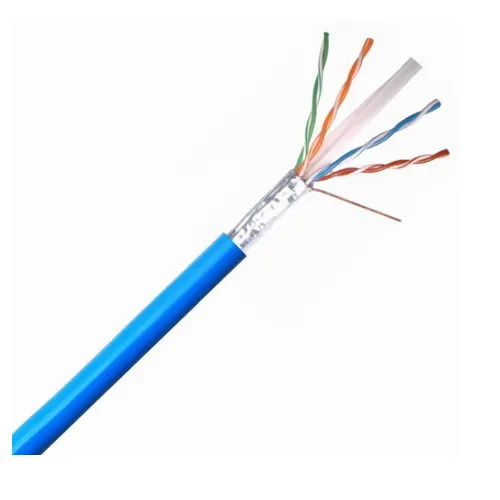 | Polycab Screened Cables Polycab screened cables are power cables designed with a metallic shield (screen) to minimize electromagnetic interference (EMI) and ensure signal... View product → |
Frequently asked questions
What does a screen do in an industrial cable?
A metallic screen intercepts capacitive, radio-frequency and electromagnetic noise, then carries it to a reference or earth path. It does not carry the intended load current.
How is screened cable different from armoured cable?
A screen controls electrical interference, while armour provides mechanical protection against impact, crushing and installation damage. Some cables include both features.
How should a screened cable screen be grounded?
Keep the screen electrically continuous through glands, joints and terminations, then bond it according to the circuit design. Ground one or both ends based on noise frequency, fault-current and safety requirements.
What should you verify before ordering Polycab screened cable in Chennai?
Confirm conductor material and size, rated voltage, screen type and coverage, insulation and sheath materials, temperature rating, armour requirement, drum length and test documents with a screened cable supplier in Chennai.