A flame-retardant label does not tell you whether a coaxial cable suits your frequency range, connector, installation route or fire-safety requirement. By checking the exact model, impedance, attenuation, sheath claims and test documents, you can decide whether the cable is a sound purchase rather than relying on a product description.
Key takeaways
- Flame retardance limits sheath flame spread; it does not preserve signals during fire.
- Match impedance, connectors, frequency range and signal equipment before ordering.
- Check sheath markings, cable specification, length and installation bend limits.
- Choose it when fire performance matters and the cable suits your RF system.
What does flame retardant mean for a coaxial cable?
A flame-retardant coaxial cable limits flame propagation along its sheath and self-extinguishes under the specified test conditions. It is not designed to keep carrying RF signals during a fire, preserve circuit integrity, or operate after prolonged heat exposure.
A flame-retardant jacket also does not prove outdoor suitability; UV resistance, water protection and temperature ratings require separate confirmation.
| Term | What it means | What it does not prove |
|---|---|---|
| Flame retardant | Limits flame spread and self-extinguishes under a named test | Continued operation during fire, low smoke or halogen-free emissions |
| Fire resistant | Maintains circuit integrity for a stated time under a fire test | That the cable also limits smoke or flame propagation in every installation |
| Low smoke | Produces a restricted amount of smoke during burning | Halogen-free construction |
| LSZH | Low-smoke, zero-halogen sheath construction | RF performance, outdoor durability or fire survival |
For a polycab flame retardant cable, confirm the exact catalogue number rather than relying on a generic product description. Check the sheath marking, current datasheet and test certificate for the applicable IEC 60332 result: IEC 60332-1-2 covers a single insulated wire or cable, while grouped cables require evidence from the IEC 60332-3 series.
FR PVC can release corrosive hydrogen chloride smoke; verify IEC 61034 and IEC 60754 evidence when low-smoke or LSZH performance matters.
Will the cable match your signal system?
A 75-ohm system needs 75-ohm cable, connectors and terminations. This covers most CATV, MATV, satellite-TV and broadband installations. Use 50-ohm coaxial cable for equipment designed around 50 ohms, such as many radio-frequency links; mixing impedances creates reflections, return loss and reduced signal margin.
The RG label is not a complete specification. Compare the exact catalogue number and datasheet at your operating frequency, because attenuation rises with both frequency and length.
| Construction | Attenuation and conductor | Dielectric and shielding | Connector compatibility |
|---|---|---|---|
| RG-6 | Lower loss than RG-59 in many designs; usually a larger centre conductor | Larger dielectric; foil plus braid is common, but coverage varies | F compression or crimp connectors matched to the cable’s outer diameter |
| RG-59 | Higher loss on long or high-frequency runs; usually a smaller conductor | Smaller dielectric; shielding may be foil, braid or both | F, BNC or other connectors only when their entry diameter and strip dimensions match |
| RG-11 | Lower loss over long 75-ohm runs; larger conductor and cable diameter | Larger dielectric; shield construction varies by model | Requires RG-11-specific connectors and more installation space |
| RG-58 and other 50-ohm types | Designed for 50-ohm systems; loss varies sharply by construction | Often smaller, solid-polyethylene dielectric; shield coverage varies | Commonly BNC or N-type, but select the connector for the exact outer diameter |
Check conductor material and size, dielectric type, braid coverage and attenuation figures rather than choosing by appearance. A search for polycab co axial cables is only a starting point; match the quotation, reel marking and approved connector to the exact model.
How does the flame-retardant sheath affect installation?
A flame-retardant sheath can make installation less forgiving: a thicker or stiffer jacket needs more bend space and resists pulling through crowded conduits. Use the exact datasheet bend radius, pulling-tension limit and cable diameter; do not drag the cable by its centre conductor or force it around a sharp corner.
Crushing is another failure point. Tight cable ties, staples, tray covers and heavy coils can deform the dielectric, changing impedance and increasing return loss. Leave space for the specified bend radius rather than packing the coaxial cable against the conduit wall or other cables.
Keep coaxial cable separated from power cables, especially near motors, inverters and fluorescent-light wiring. Cross power cables at 90 degrees where routes meet, and use a bonded metallic partition or separate conduit when the design requires stronger noise control.
A flame-retardant jacket does not prove outdoor suitability. Rooftop or exposed runs need separate confirmation of UV resistance, water protection, operating temperature, jacket durability and messenger or other support arrangements.
At termination, bond the shield through the connector’s full contact surface and follow the equipment grounding design; a loose braid connection increases interference and can create a safety fault. Match the connector to the cable’s exact outer diameter, dielectric size and strip dimensions.
A connector that fits the thread but crushes the cable will still produce a poor RF connection.
What should you verify before buying a specific cable?
A reel is acceptable only when its markings, paperwork and measured performance identify the same cable. Do not approve a generic “Polycab flame retardant cable” search result; match the exact catalogue number to the quotation, current datasheet and reel.
1. Read the sheath continuously. Confirm manufacturer name, exact catalogue number, metre markings, impedance, voltage rating and any flame-test marking. Check the conductor size and material, dielectric, sheath compound and shield construction against the datasheet.
2. Confirm the required length and frequency range. Use the attenuation table at your actual operating frequencies and planned run length; an RG label or large outside diameter does not prove low RF loss.
3. Verify the standard named for the product. Check IS 5801 where applicable, and ask for the IEC 60332-1-2 test evidence for a single cable. Do not treat that result as an IEC 60332-3 bundle rating.
4. If the project specifies CPR, record the exact CPR classification, test basis and declaration. Do not infer it from “flame retardant” on the jacket.
5. Inspect shielding details: foil, braid, braid coverage or screen count, and any transfer-impedance or shielding-effectiveness data. Confirm the connector matches the stated outer diameter.
6. Request the current manufacturer datasheet, test certificate, batch or lot number and tax invoice. A polycab dealer, including a polycab dealer in bhubaneswar such as Prabhat Cables Pvt. Ltd, should help you retain these records.
7. At delivery, compare the reel label and metre marks with the order, then inspect printing continuity, crushing, cuts, moisture and sealed ends. For critical links, sample-test continuity, centre-to-shield shorts, impedance or return loss and attenuation.
Related product
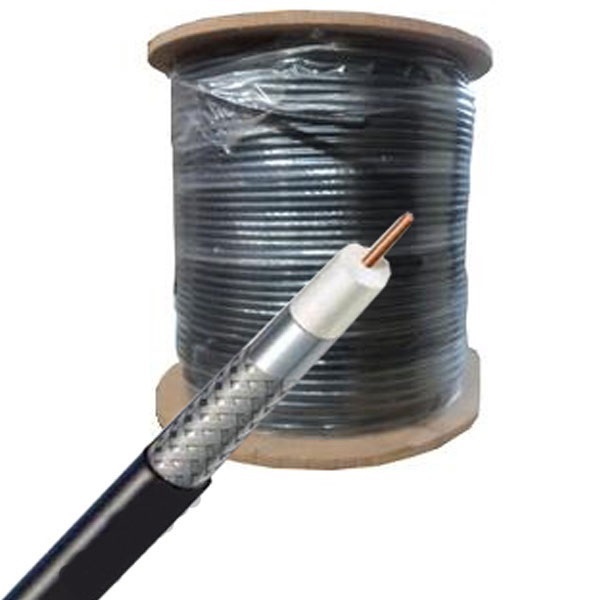 | Polycab Co-Axial Cables Polycab coaxial cable is a type of cable designed for transmitting high-frequency electrical signals, commonly used in cable television (CATV) and... View product → |
When is this cable worth choosing?
Choose a polycab flame retardant cable when the exact catalogue number matches your system’s impedance, frequency range, attenuation limit, connector type, bend radius and installation conditions.
Accept it only when the current datasheet and cable marking document the flame claim, such as the applicable IEC 60332 test; do not treat “FR” in a search result as proof.
| Option | Choose it when | Check before approval |
|---|---|---|
| Flame-retardant coaxial | You need reduced flame propagation for an indoor run and RF performance is within the design limit | Confirm the exact model, sheath compound, test standard and bundle-installation requirement |
| LSZH coaxial | Smoke toxicity and corrosive halogen-acid emissions matter in occupied or escape areas | Look for separate low-smoke and halogen-free evidence, such as IEC 61034 and IEC 60754; FR alone is insufficient |
| Fire-resistant or circuit-integrity coaxial | The link must continue operating during fire exposure | Require a fire-resistance or circuit-integrity rating; flame retardance does not maintain RF service |
| Outdoor-rated coaxial | The route crosses a roof, façade or exposed plant area | Verify UV resistance, water protection, temperature range, jacket durability and support arrangements |
| Lower-attenuation coaxial | A long run would push signal loss beyond the receiver or distribution budget | Compare the manufacturer’s attenuation table at your operating frequency; choose the larger or better construction when needed |
If none of these conditions fits, compare another cable family rather than forcing an indoor FR model into the job. A documented fire claim cannot compensate for the wrong impedance, excessive loss or an unprotected outdoor jacket.
Frequently asked questions
What does flame retardant mean for a coaxial cable?
It means the cable sheath limits flame propagation and self-extinguishes under specified test conditions. It does not keep carrying RF signals during a fire or after prolonged heat exposure.
Will a flame-retardant coaxial cable match your signal system?
Check the cable’s impedance, frequency range, attenuation, connector type and equipment requirements. A flame-retardant sheath does not guarantee signal compatibility.
How does the flame-retardant sheath affect installation?
Compare the sheath’s flexibility, minimum bend radius, outside diameter and pulling requirements with your route. Do not exceed the manufacturer’s bend or compression limits.
What should you verify before buying a specific cable?
Verify the exact model, specification sheet, sheath markings, impedance, frequency performance, cable length, connector requirements and seller documentation.
When is a flame-retardant coaxial cable worth choosing?
Choose it when limiting flame spread along the cable route is important and its RF specifications match your system. It is not the right choice based on fire performance alone.