Choosing an HT cable by voltage label alone can produce the wrong conductor size, insulation system, armour arrangement or termination kit. By the end, you will be able to interpret the voltage grade, compare XLPE and PVC, select armoured construction for the route, and demand the documents and tests that make a purchase traceable.
Key takeaways
- Choose voltage rating from the system’s operating voltage and insulation coordination.
- Specify conductor, XLPE insulation, screen, armour and sheath before comparing prices.
- Match cable size and installation method to load, route length, soil and ambient conditions.
- Demand test certificates, batch details and delivery documentation before accepting cable.
Which Polycab HT cable benefits matter in real installations?
The practical Polycab HT cable benefits are continuous high-voltage service, XLPE insulation performance, resistance to electrical stress, lower dielectric loss than many older insulation systems, and protection from mechanical damage. XLPE also permits a higher conductor operating temperature than PVC when the design and accessories support it.
| Feature | Benefit in service | Important limitation |
|---|---|---|
| XLPE insulation | Handles electrical stress and heat effectively | Defects can still cause partial discharge |
| Metallic screen | Controls the electric field around the insulation | Requires correct bonding and earthing |
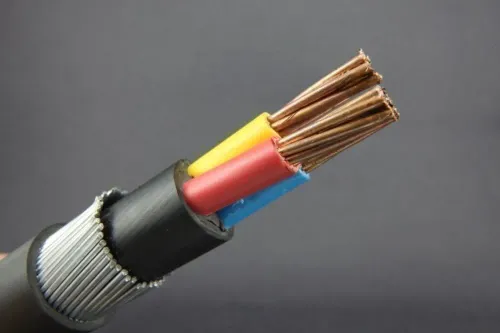
| Armour | Resists impact and can form part of the earth-fault path | Does not replace the screen or a designed fault-current path |
Reliability belongs to the complete system, not the cable alone. The armour does not replace metallic screening, bonding, earthing, glands, termination kits or correctly rated joints.
A continuity check only proves that the conductor is unbroken. It will not reveal every insulation, screen, joint or termination defect, and partial discharge can threaten long-term service before a short circuit occurs.
Treat the benefits as conditional on correct joints, terminations, thermal calculations and route-specific testing. Before energisation, check continuity, insulation resistance where applicable, sheath integrity, and an appropriate AC or VLF withstand or diagnostic test selected by the project standard and manufacturer. An unsuitable DC high-voltage test can mislead you or stress XLPE cable.
How do 3.3 kV, 6.6 kV, 11 kV, 22 kV, 33 kV and 66 kV requirements differ?
A “3.3 kV” or “11 kV” label describes the network, not the complete cable specification. Ask for the system voltage, the cable’s rated voltage designation and the equipment’s highest system voltage, Um; an 11 kV feeder commonly has Um = 12 kV.
| Network label | Common cable designation | What the two numbers mean |
|---|---|---|
| 3.3 kV | 1.9/3.3 kV | 1.9 kV is the phase-to-earth rating; 3.3 kV is the phase-to-phase rating |
| 6.6 kV or 11 kV | 6.6/11 kV | 6.6 kV is phase-to-earth; 11 kV is phase-to-phase |
| 22 kV | 12.7/22 kV | 12.7 kV is phase-to-earth; 22 kV is phase-to-phase |
| 33 kV | 19/33 kV | 19 kV is phase-to-earth; 33 kV is phase-to-phase |
| 66 kV | Project-specific designation | Confirm the cable rating, Um, insulation coordination and accessory system with the designer |
Low-voltage, medium-voltage and high-voltage descriptions are useful categories, but they do not replace the rated designation. A 66 kV project needs different insulation coordination, screening, terminations, joints and test planning from an 11 kV feeder.
Request the declared product standard and test-compliance statement. For applicable XLPE-insulated, thermoplastic-sheathed cables up to and including 33 kV, check IS 7098 (Part 2). Voltage grade alone cannot select conductor area or current capacity: installation method, load, soil, grouping and short-circuit duty decide those values.
This matters whether you source Polycab HT cable in Bhubaneswar or elsewhere.
What cable construction should you specify before comparing quotes?
Give every high voltage cable dealer the same complete schedule, including a polycab armored cable dealer. Specify:
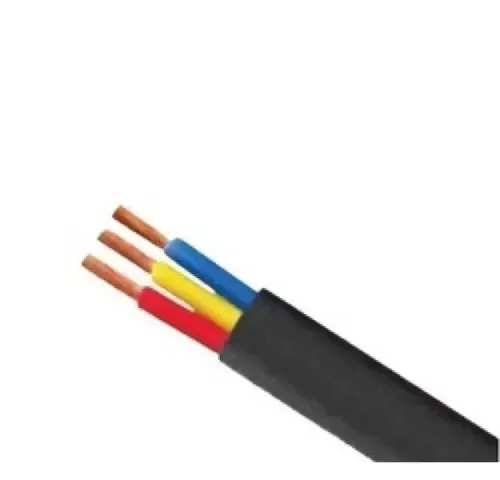
- Number of cores, conductor material, cross-sectional area and flexibility class
- Voltage grade, including the rated voltage designation and Um
- XLPE or PVC insulation, screen construction and outer sheath material
- Armour material, applicable standard and installation method
- Direct burial, outdoor, industrial, duct, tray, rodent or impact exposure
- For single-core AC circuits, non-magnetic armour or an engineered unarmoured arrangement
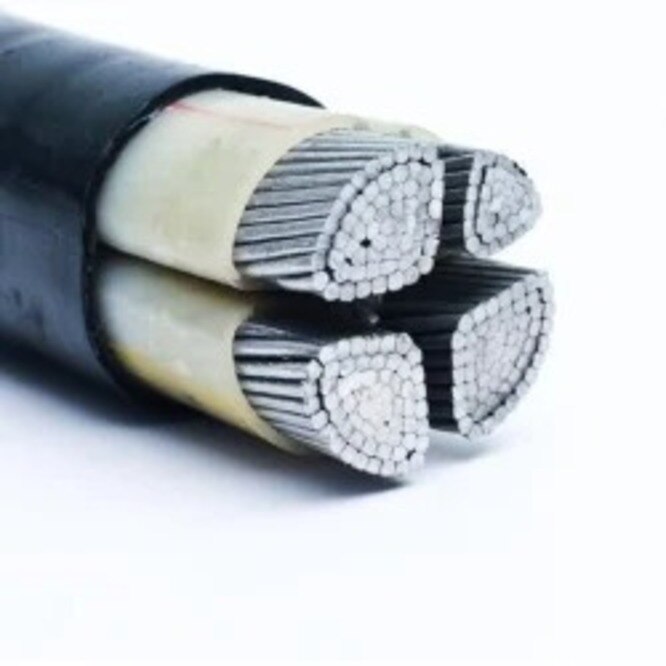
Do not treat aluminium as a like-for-like copper substitute. Check DC resistance, ampacity, voltage drop, lugs, jointing method, oxide control, tightening torque and compatible termination hardware.
| Option | Electrical and physical effect | Cost and installation effect |
|---|---|---|
| XLPE | Higher permissible conductor operating temperature and favourable dielectric characteristics; commonly assessed for higher-voltage duty | Accessory selection and thermal design must match the insulation system |
| PVC | Suits lower-voltage or different duty requirements; lower permissible conductor temperature than XLPE | Confirm the voltage grade and operating temperature before substitution |
| Copper | Higher conductivity and ampacity for a given area, lower voltage drop, greater weight | Higher purchase cost; termination and handling are usually straightforward |
| Aluminium | Lower conductivity and ampacity for the same area, greater voltage drop, lower weight | Lower purchase cost, but larger sizing and more installation labour at joints and terminations may be required |
Armoured construction suits direct burial, outdoor runs, industrial sites, ducts and trays where impact or rodent damage threatens the sheath. For single-core AC, conventional steel armour can create circulating-current losses and heating; specify aluminium or another non-magnetic armour where required.
How do route conditions change HT cable size and installation requirements?
A cable cannot be selected safely from nominal voltage and conductor area alone. Route conditions determine continuous ampacity, fault withstand, accessories and installation method; an open-air rating copied onto a buried route can overheat a Polycab HT cable in Bhubaneswar.
1. Calculate continuous ampacity using ambient temperature, soil thermal resistivity, burial depth, grouping, spacing, duct loading, tray arrangement, sheath losses and permissible conductor temperature. Do not apply an open-air table to a buried installation.
2. Check short-circuit withstand separately from continuous rating. Verify the conductor fault-current capacity and the screen or armour fault-current path, including bonding and earthing duration.
3. Design for monsoon conditions. Specify an intact sheath, drainage, route elevation and longitudinal or radial water blocking where wet trenches demand it. Armouring provides mechanical protection; it does not make the cable waterproof.
4. Match accessories to the complete construction. A 33 kV termination or joint kit must suit conductor size, insulation diameter, screen arrangement, sheath, armour treatment and environment, not conductor area alone.
5. Set the pre-energisation test plan around the installed route: conductor continuity, applicable insulation resistance, sheath integrity and an appropriate AC or VLF withstand or diagnostic test. An unsuitable DC high-voltage test can mislead the diagnosis or stress XLPE insulation.
What should you demand from a Polycab armored cable dealer before delivery?
The quote must identify the exact cable, not merely say Polycab HT cable. Ask for the complete designation, including voltage class, Um, core count, conductor material and flexibility class, cross-sectional area, XLPE insulation, screen, armour, sheath, applicable standard and accessories.
| Record | What to demand | Why it matters |
|---|---|---|
| Routine test | Conductor resistance, withstand voltage and partial-discharge results, linked to the drum number | Confirms the supplied length passed production checks |
| Type test | Separate type-test evidence for the stated construction and voltage class | Shows design qualification, not just batch testing |
| Conformity | A separate certificate of conformity and IS 7098 (Part 2) compliance statement where applicable | Connects the product to its declared standard |
Before dispatch, require sealed cable ends, an undamaged sheath, legible drum markings, manufacturing length and documentation matching the drum. An unsealed XLPE end can admit moisture and complicate termination.
Use this acceptance checklist before unloading:
- Voltage class and Um; core count; conductor material; cross-sectional area and flexibility
- Insulation, screen, armour and sheath construction
- Standard, accessories, installation conditions and route-specific test requirements
- Drum number, manufacturing length, routine-test records, type-test evidence and conformity certificate
For the search phrase polycab armored cable dealer ht cable for benefits in bhubaneswar, traceability is the practical benefit: an authorised Polycab armored cable dealer such as Prabhat Cables Pvt. Ltd can provide an invoice-linked warranty route and help separate genuine cable from a cheaper substitute.
Compare each high voltage cable dealer quotation on technical equivalence, not price alone.
Related product
 | Polycab Flexible Cables Polycab flexible cables are electrical cables designed with enhanced flexibility for various applications, including those involving movement,... View product → |
Frequently asked questions
Which Polycab HT cable benefits matter in real installations?
XLPE insulation supports continuous high-voltage service, resists electrical stress and has lower dielectric loss than many older insulation systems. Armour adds mechanical protection, while the permissible conductor temperature depends on the design and accessories.
How do HT cable voltage ratings from 3.3 kV to 66 kV differ?
The rating determines insulation design, screening, accessories, clearances and testing requirements. Select the cable for the system voltage and confirm that joints, terminations and switchgear match the same voltage class.
What cable construction should you specify before comparing quotes?
State the conductor material and size, number of cores, XLPE insulation, metallic screen, armour type, outer sheath, voltage grade and applicable test requirements. Quotes are not comparable when these details are missing.
What should you demand from a Polycab armored cable dealer before delivery?
Request the manufacturer’s datasheet, cable drum length, batch or manufacturing details, routine test certificate, packing information and warranty documents. Inspect the drum, seals, cable ends and sheath for damage before signing acceptance.