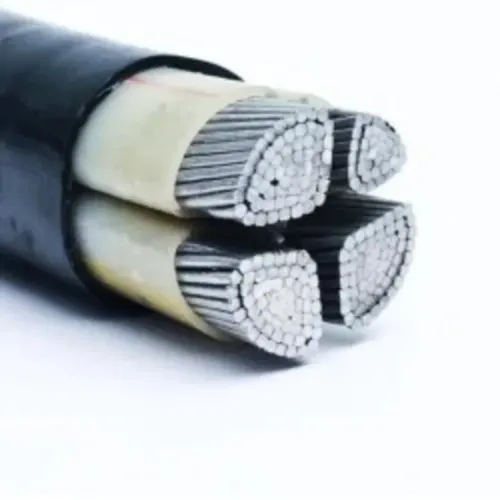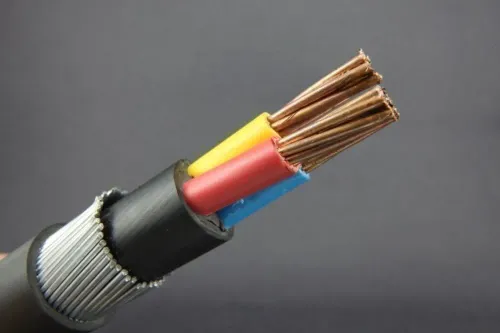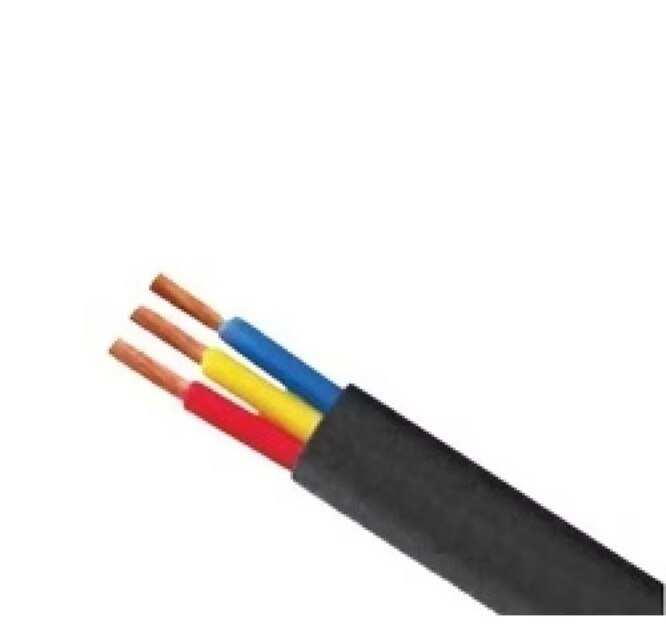
A quotation that says only “Polycab solar cable” leaves out the details that determine electrical performance, outdoor life and installation cost. By the end, you will know which specification fields to request, how to size a DC run, how to distinguish PV cable from ordinary wire, and what evidence to retain when buying from a Bhubaneswar dealer.
Key takeaways
- Request the exact Polycab SKU and current datasheet before comparing quotations.
- Specify conductor size, voltage rating, temperature range, sheath and compliance documents.
- Calculate voltage drop using one-way route length, current and conductor resistance.
- Check polarity, insulation resistance, connectors and earthing before energising each PV string.
Which Polycab solar cable specifications belong on the quotation?
Request the exact Polycab SKU and current datasheet before comparing prices. Polycab solar cable specifications should identify the selected reel, not merely say “solar cable.” If your enquiry uses the phrase “cable dealers polycab solar cable for specifications,” require the same detail in writing.
Ask the quotation to state:
- Conductor: tinned copper, conductor class, and cross-sectional area in mm²
- Insulation and sheath materials
- Nominal voltage, DC voltage rating, and stated AC rating
- Continuous operating temperature and permissible short-circuit temperature
- Nominal outer diameter
- Packing length and price basis: per metre or per drum
A commonly specified PV construction is single-core, flexible, tinned copper with halogen-free, cross-linked insulation and sheath. Confirm those details on the selected reel label or datasheet; “copper cable” alone proves nothing about photovoltaic suitability.
| Designation | What to record | What not to assume |
|---|---|---|
| EN 50618 | The exact EN 50618 wording shown in the documentation | It is interchangeable with every other PV standard |
| IEC 62930 | The exact IEC 62930 reference shown for that SKU | It automatically means the same construction as EN 50618 |
| IS 17293 | The exact Indian Standard reference printed on the documents | It replaces the manufacturer’s stated voltage or temperature limits |
H1Z2Z2-K is a photovoltaic cable designation associated with halogen-free, cross-linked insulation and sheath. Ask whether the offered cable is intended for module-to-module and string wiring, battery connections, or another DC circuit.
For a 1.5-kV design, record the exact marking, such as 1.5 kV DC or 1.8 kV DC maximum system voltage, plus the stated AC rating. Reject “high-voltage solar cable” as a complete specification.
Where does PV cable belong, and what outdoor tests matter?
Single-core PV cable runs from modules through string extensions and combiner boxes to the inverter’s DC input. AC cable starts after the inverter and must suit the inverter output, distribution board and grid connection; suitability in one section does not transfer to another.
| Type | What it proves | What it does not prove |
|---|---|---|
| H1Z2Z2-K photovoltaic cable | A certified PV construction with documented insulation, sheath and environmental performance | That every SKU suits battery or AC circuits |
| PVC building wire | Basic voltage insulation | Complete photovoltaic qualification for exposed string wiring |
| General flexible cable | Flexibility for its stated application | UV, ozone, weathering or water resistance |
| XLPE or XLPO cable | A named insulation material | Full PV environmental-test compliance |
| HT cable | A high-voltage application category | Correct DC string construction or rooftop durability |
Check the Polycab solar cable specifications and reel marking for explicit resistance to sunlight and UV, ozone, humidity, water, heat, cold, abrasion and flame propagation. Also confirm the stated standard, such as EN 50618, IEC 62930 or IS 17293; these designations are not interchangeable.
EN 50618-type specifications commonly state about −40 °C to +90 °C continuous conductor operation and about 120 °C during a short circuit. Confirm the exact Polycab values. A 25- or 30-year design-life claim applies only under stated conditions; it is not automatically a warranty or permission for immersion, mechanical abuse or poor terminations.
How do you calculate the correct solar cable size and voltage drop?
A 4 mm² or 6 mm² conductor is appropriate only after you check both ampacity and voltage drop. Start with string current, the number of parallel strings, route length, installation method, ambient temperature, cable grouping and loaded conductors. Then check fault-current withstand; nominal cross-sectional area alone is not a complete current rating.
| Option | What it means | When it applies |
|---|---|---|
| 4 mm² | Smaller conductor with higher resistance per metre | Use only when corrected ampacity, fault current and voltage-drop calculations pass |
| 6 mm² | Lower resistance and voltage loss, with greater material and termination demands | Use when the route, temperature correction or voltage-drop limit makes 4 mm² inadequate |
| Larger area | Further reduction in resistance and heating | Use for long runs, high current, grouped cables or a tight voltage-drop limit |
For a two-conductor DC run, use total circuit length: positive one-way distance plus negative one-way distance. A 40 m one-way route with 12 A current and selected conductor resistance of 4.6 milliohms per metre gives 80 × 12 × 0.0046 = 4.416 V drop.
Divide 4.416 V by the string operating voltage and multiply by 100. Compare that percentage with the project’s permitted DC voltage-drop limit.
Repeat the check at relevant operating temperatures and for parallel-string collection paths. A larger conductor costs more and needs extra stripping effort, termination space, conduit capacity and compatible connectors. Record the calculation in the cable dealers Polycab solar cable specifications rather than accepting a 4 mm² or 6 mm² suggestion as the design.
What should a Bhubaneswar cable dealer prove before dispatch?
Before dispatch, make the quotation specific enough to audit against the reel that arrives. Request the exact Polycab SKU, current datasheet, reel label, batch or lot number, test certificate and invoice. “Solar cable” alone is not a specification.
| Quotation field | What to verify |
|---|---|
| Conductor | Size in mm², material and class |
| Construction | Insulation and sheath materials |
| Compliance | Exact standard named, such as EN 50618, IEC 62930 or IS 17293 |
| Electrical rating | Nominal voltage, DC voltage designation and continuous and short-circuit temperature limits |
| Dimensions and sale unit | Nominal outside diameter, packing length, and price per metre or per drum |
Match every field with the delivered reel label and datasheet. Retain these records with the purchase order; a branded jacket or printed logo does not prove the cross-section, standard compliance or authenticity.
Ask the Polycab solar cable dealer to state whether the cable is for DC PV strings, battery wiring or another circuit. Confirm that each connector suits the cable’s cross-section and outside diameter and carries suitable current and voltage ratings. Use the connector manufacturer’s specified crimping tool and die; never mix mating connectors from different manufacturers.
Prabhat Cables Pvt. Ltd can help a business buyer compare cable dealers Polycab quotations in Bhubaneswar when the enquiry requires this documented specification.
Related product
 | Polycab Solar Cables Polycab solar cables are specifically designed for solar power systems, offering high-quality, reliable, and durable wiring solutions for efficient... View product → |
What must be checked before a PV string is energised?
A correctly labelled reel does not prove that an installed PV string is safe to energise. Check the cable on site, because a reversed extension, loose crimp or mismatched connector can cause contact resistance, heating and water ingress.
1. Confirm that the cable outer diameter suits the selected connector, gland, conduit and clips. The assembly must not crush the cable or force it into an excessive bend.
2. Inspect exposed runs for sharp edges, repeated rubbing, unsupported spans and water paths. Outdoor resistance does not protect a cable from mechanical damage or permanent immersion.
3. Treat red and black jackets as intended polarity markings, not safety proof. Before connecting the inverter, test every string for polarity, continuity, insulation resistance and open-circuit voltage using the project-approved procedure and instruments with suitable ratings.
4. Examine each termination. Check crimp-barrel condition, conductor insertion depth, connector locking and strain relief. Use the connector maker’s specified crimping tool and die, and do not mix mating connectors from different manufacturers.
5. Record each result with the reel label, batch or lot number, datasheet, quotation, test certificate and invoice. A Polycab solar cable dealer should be able to help link the delivered reel to the selected polycab solar cable specification; branding and jacket printing alone cannot establish that match. Keep the record for precise fault tracing.
Frequently asked questions
Which Polycab solar cable specifications belong on a quotation?
Ask the quotation to state the exact Polycab SKU, conductor cross-sectional area, conductor material, voltage rating, insulation and sheath materials, temperature range, colour, reel length, standard and datasheet revision.
Where does PV cable belong, and what outdoor tests matter?
Use PV cable for the DC wiring between modules, string junctions, combiner boxes and the inverter. Check the datasheet for UV resistance, ozone resistance, water resistance, flame performance, insulation integrity and suitability for outdoor temperature exposure.
How do you calculate the correct solar cable size and voltage drop?
Use the design current, total circuit length and conductor resistance at operating temperature. For a two-conductor DC circuit, calculate voltage drop across the positive and negative path, then compare it with the system voltage and your project limit.
What should a Bhubaneswar cable dealer prove before dispatch?
Request the exact SKU, current datasheet, manufacturer packaging, batch or reel identification, test documentation and a tax invoice. Match the markings on the reel and cable against the approved quotation before accepting delivery.
What must be checked before a PV string is energised?
Confirm polarity, open-circuit voltage, connector compatibility, insulation resistance, continuity, cable routing, bend radius, protection from sharp edges, earthing and secure terminations before closing the DC isolator.