A cable that bends easily during installation is not automatically suitable for repeated movement, vibration, moisture or heat. By comparing conductor class, electrical ratings, sheath construction, bending limits and supply conditions, you can approve a genuine equivalent instead of accepting a brand-only substitute that fails in service.
Key takeaways
- Choose cables rated for the movement and bend radius your installation demands.
- Match insulation and sheath materials to heat, oil, moisture, sunlight and abrasion.
- Confirm conductor size, voltage rating, temperature range and bending limits in the datasheet.
- Give the dealer application details, then inspect the proposed equivalent before approval.
What makes a flexible cable suitable for the job
A cable is genuinely designed for flexibility when its conductor construction, insulation, sheath and bending limits are specified for movement—not merely when it feels easy to coil.
Easy installation proves only that you can route it without much force; it does not prove that repeated bending will not break strands, crack insulation or fatigue the sheath.
For flexible cable alternatives in Bhubaneswar, check the product datasheet and quotation for:
- Conductor class under IS 8130, nominal cross-sectional area, strand count and strand diameter
- Minimum bending radius, stated as a multiple of the cable diameter
- Insulation temperature rating, voltage grade and permissible current for the installation method
- Sheath material, moisture and oil resistance, UV suitability, and allowable flexing cycles or test conditions
- The intended motion: occasional repositioning, pendant service, festooning, drag-chain travel, reel operation or torsional movement
A PVC building wire can carry the required current yet fail early in a moving machine. Fine or extra-fine stranding improves bending performance, but it does not automatically increase current capacity and may require compatible ferrules, lugs and terminal torque.
Do not approve a replacement because its copper size matches the Polycab reference. Match conductor class, insulation, sheath construction, bending radius and motion rating; aluminium also requires redesigned sizing and approved terminations because equal cross-sectional area does not provide equal resistance or joint performance.
Match the cable type to movement, environment and installation
A less-flexible stranded cable is usually the sounder choice for fixed wiring because extra-fine strands add cost and may require matching ferrules, lugs and terminals. Use a cable designed for the actual motion profile, not one that merely bends easily during installation.
| Option | Appropriate use | Check before substitution |
|---|---|---|
| Ordinary stranded building wire | Fixed wiring with no operating movement | Confirm conductor class, terminal compatibility and tightening torque |
| PVC flexible cable | Occasional repositioning, pendant connections or light vibration | Do not use for continuous flexing; repeated movement can crack the insulation |
| Rubber flexible cable | Vibration, wet areas and demanding portable equipment | Confirm water resistance, oil resistance and the rated temperature range |
| Industrial continuous-flex cable | Drag chains, machine travel and repeated reciprocating movement | Match the cable to drag-chain, torsional or travel service and its stated bend radius |
| Festoon cable | Crane, hoist and festoon systems | Select the festoon construction and suspension method together |
| Tight-bend control cable | Panels, machinery and confined cable routes | Compare minimum dynamic bend radius, outside diameter and gland dimensions |
| Outdoor-rated cable | Exposed runs and sunlight | Require a UV-resistant sheath and confirm protection against rain and temperature changes |
For Polycab flexible cable availability in Bhubaneswar, ask for the exact size, core count, colour, packing length and voltage grade. Request the batch or lot, manufacturing date and sealed-coil or cut-length status.
- Reject a substitute that changes termination geometry, sheath diameter or bending radius without checking glands, ferrules and enclosure entries.
- Do not replace copper with aluminium without redesigning conductor size and approving the termination system.
Size the conductor and verify the technical datasheet
Select the conductor cross-sectional area from the design current, installation method and permissible voltage drop—not from the reference cable’s size alone. Apply the datasheet’s current-carrying capacity after ambient-temperature, grouping and enclosure derating; then check short-circuit withstand for the protective-device clearing time.
A copper replacement and an aluminium replacement are not equivalent at the same area. Aluminium has higher resistivity, so it needs a redesigned size, compatible lugs or terminals, oxide-control preparation and allowance for mechanical creep. Do not approve it against a copper schedule without an engineer-approved termination system.
| Check | Reference cable | Proposed alternative | Pass condition |
|---|---|---|---|
| Conductor | Material, nominal area, class under IS 8130 | Same details, including strand construction | Current and voltage-drop calculations remain acceptable |
| Electrical | Rated voltage, insulation temperature, current capacity, short-circuit rating | Manufacturer’s declared values | Ratings meet or exceed the installation design |
| Flexibility | Conductor class and minimum bend radius | Class, strand fineness and bend radius | Suits the actual movement and available space |
| Mechanical | Overall diameter, sheath, gland and termination dimensions | Measured or declared dimensions | Glands, ferrules, lugs and enclosure entries fit |
Request the complete technical datasheet, not a quotation stating “flexible cable.” Compare insulation and sheath compounds, number of cores, voltage-drop data, minimum bend radius and allowable flexing conditions.
Fine or extra-fine stranding improves bending performance; it does not automatically increase current capacity. Record every value in an equivalence schedule before purchase, and reject any alternative whose datasheet omits the installation basis for its ampacity.
Give a dealer the information needed to find a genuine equivalent
Do not approve an alternative from a brand name or quotation alone. Ask the Bhubaneswar supplier to complete a technical equivalence schedule and match every field against the actual coil or drum.
1. Confirm stock using the exact conductor material and class, nominal cross-sectional area, number of cores, colour, insulation type, voltage grade and packing length. Ask for the available batch or lot, manufacturing date, drum or coil length, and whether the quoted quantity is factory-sealed or cut length.
2. Request the cable designation, applicable IS number, strand construction under IS 8130, insulation and sheath compounds, temperature rating, current-carrying capacity for your installation method, voltage-drop data and minimum bend radius. “Flexible” alone does not confirm fine stranding or repeated-flexing performance.
3. Inspect photographs or records from the actual pack showing manufacturer identification, designation, voltage grade, core and size marking, IS number, batch or lot traceability and the BIS Standard Mark where certification is claimed. Reject a certificate that cannot be tied to the supplied batch.
4. Check compatibility before accepting copper-to-aluminium substitution. Aluminium needs a redesigned cross-section, suitable lugs, oxide-control preparation and approved terminations; compare outside diameter, sheath diameter, insulation thickness, ferrule size and gland sealing.
5. Fix delivery quantity, dispatch date, transport responsibility and replacement terms for damaged or short packing. Prabhat Cables Pvt. Ltd can use this same schedule when comparing a Polycab cable dealer flexible cable for options in Bhubaneswar with another supplier.
A Polycab flexible cable dealer in Bhubaneswar who cannot provide these details has not demonstrated a genuine equivalent.
Related products
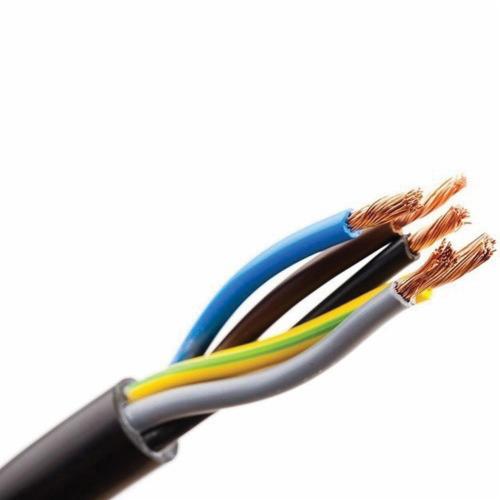 | Polycab Flexible Cables Polycab flexible cables are electrical cables designed with enhanced flexibility for various applications, including those involving movement,... View product → |
 | Polycab Festoon Cables Polycab Festoon Cables are specialized flat, flexible cables designed for use in festoon systems, particularly on cranes, hoists, and lifts. View product → |
Approve the substitute only after inspection and service-risk checks
Approve a substitute only after the physical sample and technical schedule agree. A matching copper cross-section is not enough: confirm conductor material, conductor class, insulation temperature rating, voltage grade and applicable standard, such as IS 694 for PVC-insulated cables rated up to 1,100 V.
Cut a sample and inspect the conductor. Fine, consistent strands should match the stated class; dark oxide, broken strands, uneven lay or a smaller conductor is a rejection point. Do not replace copper with aluminium without a redesigned cross-section and an approved termination system, because aluminium brings oxide formation and mechanical creep.
Inspect the insulation and sheath along the full sample. Look for uniform thickness, clean printing, cracks, pinholes, swelling, sticky surfaces and flattened sections. For wet, outdoor or washdown service, verify the stated moisture barrier, sheath compound, UV resistance and ingress protection arrangement; a thicker-looking sheath does not prove water resistance.
Compare the substitute’s physical dimensions with the installed cable:
- Outside diameter and sheath diameter: confirm gland range and enclosure sealing.
- Insulation diameter and strand fineness: confirm ferrule, lug and terminal fit.
- Minimum bend radius: confirm the machine route will not force a tighter bend.
- Core identification and packing length: prevent rewiring and shortage at installation.
Finally, demand flex-life data for the actual movement, bend radius, speed, temperature and travel distance. Reject the alternative if the manufacturer cannot state a test basis, ageing limit or replacement interval. Record the sample, batch number, inspection photographs and approval signature before ordering.
Frequently asked questions
What makes a cable suitable for flexible movement?
Check the conductor strand construction, insulation, sheath, rated bend radius and movement duty. A cable that coils easily is not automatically designed for repeated flexing.
How do you match a flexible cable to the installation?
Describe whether the cable will remain fixed, flex occasionally, drag repeatedly or move continuously. Then check exposure to heat, oil, moisture, sunlight, chemicals and abrasion.
What technical details should you verify before choosing an alternative?
Compare conductor cross-sectional area, material, voltage rating, current capacity, insulation temperature rating, sheath type, outer diameter and minimum bend radius in the technical datasheets.
What information should you give a Polycab flexible cable dealer in Bhubaneswar?
Provide the equipment type, cable length, movement pattern, installation route, load, ambient conditions, voltage, termination method and the original cable markings or datasheet.
When should you reject a proposed flexible cable substitute?
Reject it when its construction, ratings, bend limits, environmental resistance, markings or documentation do not match the application and service-risk requirements.
Related product
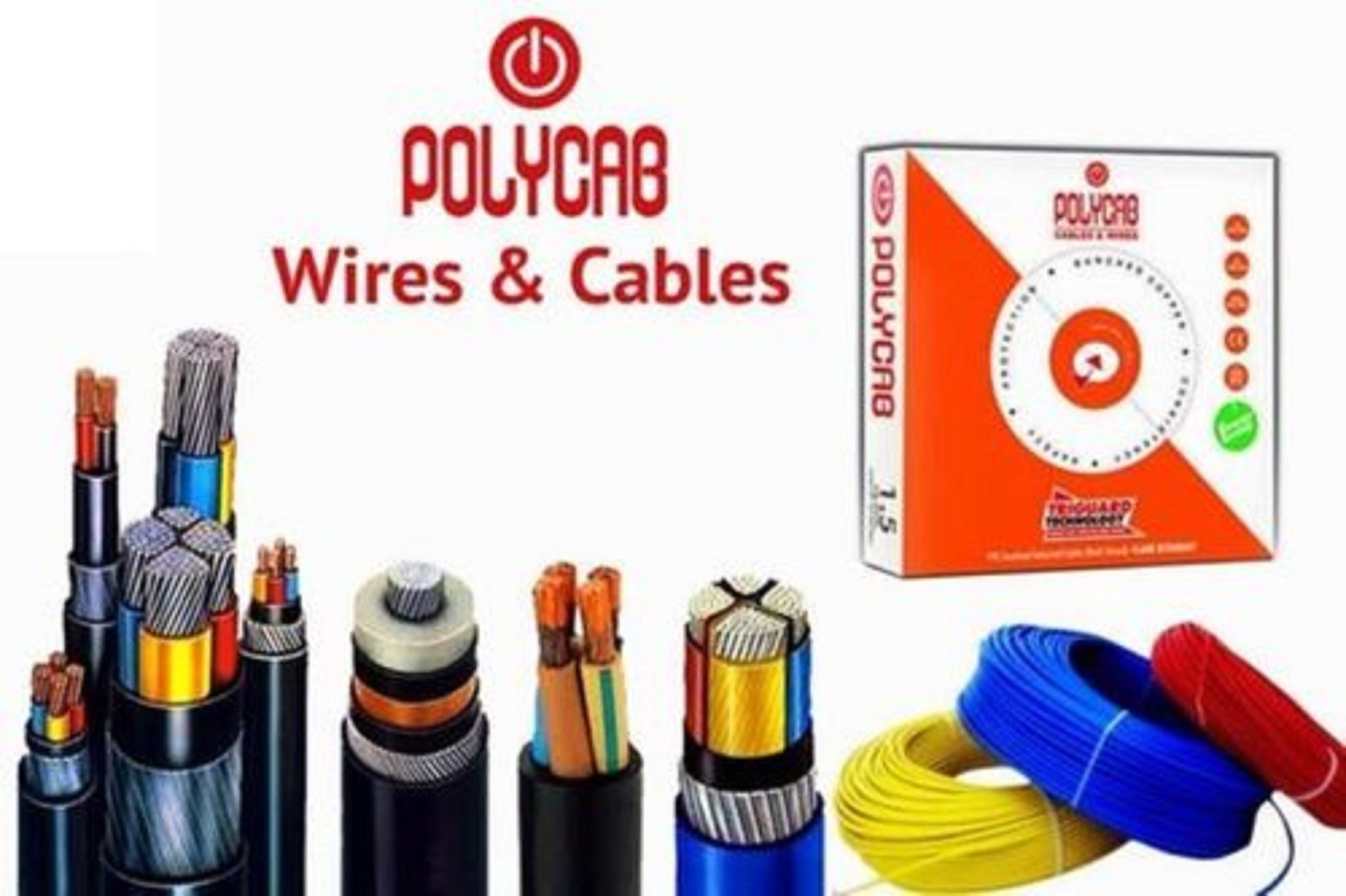 | Polycab Industrial Wires Polycab Industrial Wires are a range of electrical wires and cables designed for use in various industrial applications. View product → |