A flexible cable can fail through broken conductor strands, cracked insulation, overheated terminals, abrasion or moisture ingress long before its outer appearance makes the cause obvious. By tracing the damage, checking the installation and matching the cable to its electrical and movement duty, you can distinguish a selection error from a termination fault, overload or unrelated equipment problem.
Key takeaways
- Match conductor size, voltage rating, flexing duty and environment before purchase.
- Inspect damage location to distinguish conductor breaks, insulation cuts, heat and loose terminations.
- Test continuity and insulation resistance before replacing the cable or connected equipment.
- Ask a Pune dealer to verify packaging, product markings, batch details and invoice.
What the damage pattern reveals about a flexible-cable failure
The damage location and test result usually identify the failure mechanism: an open conductor, damaged insulation, cut sheath, overheating or an intermittent connection leaves a different pattern.
- Conductor breakage: continuity disappears when you flex the cable near a plug, gland, bend or drum exit. Repeated bending, twisting, pulling by the conductors, tight coiling or crushing can fatigue fine strands while the outer sheath still looks intact.
- Insulation damage: cracked, brittle, melted or discoloured insulation points to excessive bending, heat, chemicals or a voltage-related breakdown. A continuity pass does not make it safe; measure insulation resistance at the test voltage specified for the circuit and cable.
- Sheath cuts: a slice, abrasion groove or flattened section exposes the cable to moisture and later insulation failure. Record whether damage is localised at a routing point or runs along the cable.
- Overheating: brown terminals, melted insulation, a hard kink or a burnt smell indicate excess current, poor ventilation or contact resistance. Measure terminal temperature under load; a loose terminal can heat without creating an open circuit.
- Intermittent continuity: a circuit that fails only while moving the cable suggests broken strands, a loose lug, unsuitable terminal or missing cord grip. Check earth continuity where applicable and inspect both ends before condemning the cable.
Retain the failed length with its markings and batch details. This evidence helps trace polycab flexible cable problems and separates product failure from incorrect routing, termination or operating conditions.
Choose the cable for its movement duty, load and environment
Start with movement, not the word “flexible”. Repeated bending, twisting, dragging and coiling require a cable whose conductor class and construction match that duty; IEC 60228 Class 5 and Class 6 conductors are intended for greater flexibility than Class 2 rigid conductors.
| Duty | Suitable construction | Main risk if mismatched |
|---|---|---|
| Occasional repositioning | Flexible Class 5 conductor | Strand fatigue from repeated movement |
| Continuous machine movement | Product specified for continuous flexing | Conductor breakage and insulation wear |
| Drag-chain travel | Drag-chain-rated cable with stated bending radius | Kinking, abrasion and premature open circuits |
| Crane, hoist or festoon service | Cable specifically rated for that system | Pulling, twisting and unsupported weight |
Then verify the electrical load. Select conductor cross-section from the calculated design current, installation method, ambient temperature and grouping; check voltage drop over the full run, not only the cable’s ampere rating. An undersized conductor can overheat while still passing a continuity test.
Check the product datasheet for:
- Rated voltage and conductor size
- Maximum operating temperature and low-temperature flexibility
- Minimum bending radius during installation and movement
- PVC or other insulation and sheath compound
- Resistance to oil, solvents, sunlight, moisture, heat and abrasion
If you searched for polycab flexible cable for failure in pune, ask an authorized dealer to match these details before dispatch. Request the exact datasheet, drum length, batch information, invoice, applicable certification and licence details. A correct supply prevents a wrong-duty substitution; it does not compensate for overload, sharp routing or bending at the termination.
Why terminations, routing and moisture cause early failure
A sound flexible cable can become hot or intermittent at its ends. A loose terminal creates contact resistance and heat; excessive tightening can crush strands or insulation. An unsuitable lug may not grip fine-stranded conductors, while clamping the insulation instead of the designed sheath leaves the conductor carrying movement.
Without a cord grip, pulling the cable transfers force directly to the terminal.
- Bend or twist the cable at the plug, gland or terminal, and the conductor strands can separate at the highest-stress point.
- Exceed the product’s specified minimum bending radius, and a kink can damage insulation before continuity disappears.
- Pull the cable by its conductors, suspend unsupported weight, or drag it across an abrasive edge, and the sheath can cut or the termination can loosen.
- Pack it into a conduit, tray bundle or poorly ventilated enclosure without checking installation-specific current capacity, and heat can build beyond the cable’s allowable conductor temperature.
| Installation error | Result | What to check |
|---|---|---|
| Loose or unsuitable termination | Hot joint, flickering load or intermittent continuity | Correct lug, terminal compatibility, cord grip and torque |
| Tight bend or crushed route | Cracked insulation, strand breakage or short circuit | Product datasheet bending radius and physical support |
| Unsealed gland or exposed connector | Low insulation resistance and corrosion | Correct IP-rated gland, plug or junction box |
| Standing water or capillary entry | Water-damaged conductor and nuisance tripping | Sealed ends, drainage and route above pooled water |
The cable’s own rating does not make the assembly waterproof. Cutting off a sealed end or leaving a connector exposed through Pune’s monsoon can admit moisture even when the cable itself is suitable. Retain the damaged section, markings and batch details; damage at a gland, bend or drum exit often identifies the installation error.
How to test the cable without replacing the wrong component
Isolate the circuit, lock off the supply and prove dead with a correctly rated tester before touching the cable. Do not test insulation resistance through a motor, electronic drive, RCD or surge-protection device; disconnect sensitive equipment or follow its manufacturer’s procedure.
1. Inspect the complete run without cutting it. Look for crushed sheath, moisture at a gland, loose strands at a lug, heat-darkened terminals and damage at the plug, bend or drum exit. Retain the failed length, markings and batch details for investigation.
2. Check continuity end-to-end with both ends disconnected. Wiggle the cable along its route while testing; a reading that opens and closes indicates broken strands or an intermittent termination. Test each conductor separately and check that no conductor is connected to another.
3. Measure insulation resistance between each conductor and between conductors and earth, using the test voltage specified for that installation. Low insulation resistance points to insulation, moisture, sheath or gland damage, while good continuity alone does not prove safety.
4. Energise only after reassembly and measure voltage at the source and at the socket or motor while the load runs. A large drop under load points to cable length, undersizing, a loose lug, socket contact or MCB connection; compare readings at each terminal to locate the high-resistance point.
5. Check the MCB’s supply and load terminals, trip behaviour and rating, then verify earth continuity and RCD operation with suitable test equipment. A Polycab flexible cable dealer in Pune can help trace the retained cable through its invoice and batch information, but testing must identify the failed component before replacement.
What an authorized dealer should verify before dispatch
Before dispatch, a competent Polycab dealer should match the cable to the duty you specified, not to a similar-looking catalogue image. This check reduces the risk of receiving a cable with the wrong conductor class, core count, voltage rating or sheath compound.
1. Confirm the conductor cross-section, copper conductor class under IEC 60228, number of cores, insulation material, sheath material, rated voltage and temperature range. Repeated movement calls for the specified flexible class, such as Class 5 or Class 6, not a rigid Class 2 substitute.
2. Compare the datasheet with the installation: continuous flexing, occasional movement, drag-chain travel, festoon equipment, portable tools, pumps or fixed routing. Check ampacity and voltage drop for the run, including motor-starting load; a larger conductor may be necessary even when the protective-device rating stays unchanged.
3. Verify the Indian Standard printed on the cable and datasheet. IS 694 covers PVC-insulated cables and cords up to and including 1,100 V, but it does not automatically cover every flexible-cable application.
4. Record the drum length, batch or lot number, packaging condition and invoice. For a BIS-marked product, compare the licence number with the current BIS licence record and request available test documents.
5. Keep these records with the undamaged cable markings. Prabhat Cables Pvt. Ltd can use them to route a traceable complaint instead of treating an unidentified cut sample as a generic wire.
A Polycab authorized dealer in Pune should explain these checks before dispatch. A Polycab dealer in Pune or any Polycab authorized dealer cannot replace the designer’s load calculation or installer’s inspection.
Related products
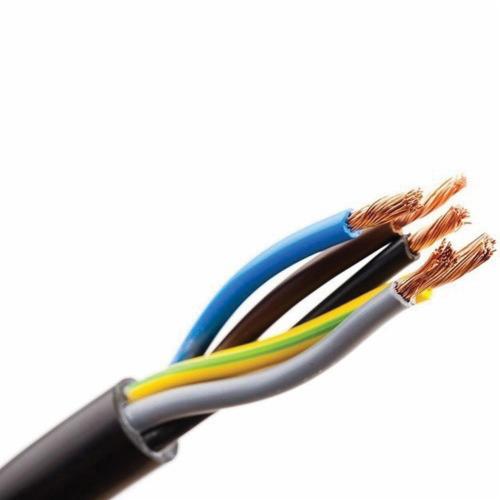 | Polycab Flexible Cables Polycab flexible cables are electrical cables designed with enhanced flexibility for various applications, including those involving movement,... View product → |
 | Polycab Festoon Cables Polycab Festoon Cables are specialized flat, flexible cables designed for use in festoon systems, particularly on cranes, hoists, and lifts. View product → |
Frequently asked questions
What does the damage pattern reveal about a flexible-cable failure?
An open conductor points to a broken core, while melted insulation indicates overheating. A cut sheath suggests abrasion or sharp-edge contact, and an intermittent reading points to a loose or fractured connection.
How do you choose a flexible cable for its movement duty?
Match the cable’s conductor size and voltage rating to the load, then check whether its construction suits occasional bending, continuous flexing, dragging or fixed installation. Account for oil, heat, moisture and abrasion exposure.
Why do terminations, routing and moisture cause early flexible-cable failure?
Loose terminals create heat, tight bends stress conductors, sharp edges cut the sheath, and moisture reduces insulation reliability. Use suitable glands, bend radius, strain relief and protected routing.
How can you test a flexible cable without replacing the wrong component?
Isolate the cable, inspect it, check continuity core by core and measure insulation resistance with an appropriate insulation tester. Compare the readings with the cable and equipment requirements before replacing parts.
What should an authorized Polycab dealer verify before dispatch?
The dealer should confirm the requested cable construction, conductor size, voltage grade and application, then check the manufacturer’s markings, sealed packaging, batch details and invoice against the order.